OpenArt Arena
OpenArt's public leaderboards that rank AI image and video models by creative task — filmmaking, motion design, video editing, lip sync, graphic design, e-commerce — via blind, expert-led comparisons.
Last verified · 2026-10-23 · by Moe Ameen
Published 2026-09-15 · Updated
Short answer
OpenArt Arena is a set of public leaderboards, launched September 15, 2026, that rank AI image and video models by task, such as filmmaking, lip sync, motion design and graphic design. Judges pick the better of two blind outputs, and OpenArt scores the votes with the Bradley-Terry model. At launch, Seedance 2.5 led overall video and GPT Image 2 led graphic design. Arena generates nothing itself.
Key takeaways
- OpenArt Arena ranks AI image and video models per creative task, not with one overall score.
- Rankings come from blind pairwise votes, scored with Bradley-Terry and 95% confidence intervals.
- At launch, Seedance 2.5 led video, Seedream 5.0 Pro led images and GPT Image 2 led graphic design.
- OpenArt has not published judge counts, total votes or full prompt sets.
- OpenArt sells access to these models, so the leaderboard sits inside the market it ranks.
What is OpenArt Arena?
OpenArt Arena is a set of public leaderboards, launched on September 15, 2026, that rank AI image and video generation models by the specific creative job rather than a single overall score. It comes from OpenArt, a roughly four-year-old San Francisco company co-founded by former Googlers Coco Mao and John Qiao, whose commercial creation platform aggregates more than 100 image and video models. Arena breaks video ranking into boards like filmmaking, motion design, video editing, and lip sync, and image ranking into boards including graphic design, e-commerce, and film-oriented imagery — each with its own overall ranking.
The ranking method is a preference benchmark, not a spec sheet. Evaluators see two model outputs for the same prompt and pick the better one, blind and side-by-side, and OpenArt aggregates those choices with the Bradley-Terry statistical model, publishing rankings with 95% confidence intervals.
Judging is two-tiered: a small "Creative Expert Council" of named practitioners (Emmy-winning director William Lau, creative technologist Willonius Hatcher, marketing leader David Shing, and others from organizations such as Edelman and UCLA), plus roughly 800 to 1,000 "tastemakers" OpenArt said it was recruiting from its users and outside creative fields. Read that number as a plan rather than a verified count of completed evaluations.
At launch, ByteDance's Seedance 2.5 led overall video and Seedream 5.0 Pro led overall images, with OpenAI's GPT Image 2 topping graphic design and Alibaba's Wan 3.0 edging ahead on video editing. Two honest caveats: OpenArt didn't disclose final judge counts, total pairwise judgments, or complete prompt sets (it says it will publish partial prompt sets and withhold others to limit benchmark-tuning), and OpenArt is a commercial platform that plans to wire Arena into its own model selector — so the leaderboard sits inside the market it evaluates.
The clean framing for a creator: Arena is a decision tool, not a production tool. It helps you choose which generator to open for a given job. It generates nothing itself, holds no concept of your brand, makes no captions or carousels, and publishes nowhere.
What can you do with OpenArt Arena?
- A per-task shortlist of which model to use — e.g. the top-ranked model for lip sync, motion design, or graphic-design imagery
- A quick read on where a specific model (Seedance 2.5, Wan 3.0, Seedream 5.0 Pro, GPT Image 2) stands for the job you have
- Confidence intervals to see whether a #1 vs #2 gap is real or noise before you commit credits to a model
- A running sense of how model rankings shift month to month as new versions ship
- A starting point for model selection inside OpenArt, which plans to surface these rankings in its own model picker
What can't OpenArt Arena tell you?
Arena answers exactly one question — which model wins a given job — and answers it well. What it has no concept of is you: your brand voice, your recurring on-camera identity, your posting calendar, or the fact that one good asset needs to become a dozen posts. That's the entire job Kompozy does, and it's why the two fit together rather than compete. Arena optimizes the model you pick; Kompozy is a full content generation and publishing engine that turns whatever that model produces into a finished, on-brand week — and generates the formats no leaderboard ranks at all.
Start with the highest-value handoff a leaderboard can't touch: consistency across a set. Take a single image from the graphic-design leader and, under one Persona Brief that locks your voice and banned words, Kompozy fans it into brand-exact Carousel Posts and Quote Graphics via HyperFrames, a Blog Article, native Text Posts, and an Email Newsletter — one idea, one voice, every format.
A video from the top clip model becomes captioned Clipped Shorts reframed per platform. Then Kompozy schedules and publishes the whole set across the eight social platforms plus blog and email with Autopilot, behind a per-post review gate. And for the thing Arena's models can't give you — a consistent presenter your audience recognizes week over week — Kompozy generates its own face-locked Persona Shorts directly. Pick the model with Arena; build the brand with Kompozy.
- Check the relevant Arena board for the job at hand — graphic design, lip sync, motion design — and note the top-ranked model and whether the gap over #2 is meaningful.
- Generate your raw asset with that model (image or video) wherever you run it.
- Drop the output into Kompozy Quick Ingest as the source for a new content unit.
- Set your Persona Brief once, then fan the asset into every format — captioned clips, brand-exact carousels and quote graphics, text posts, a blog, and a newsletter, all in one voice.
- Review each piece behind the per-post gate, then schedule and publish across the eight social platforms plus blog and email with Autopilot.
What does this look like in Kompozy?
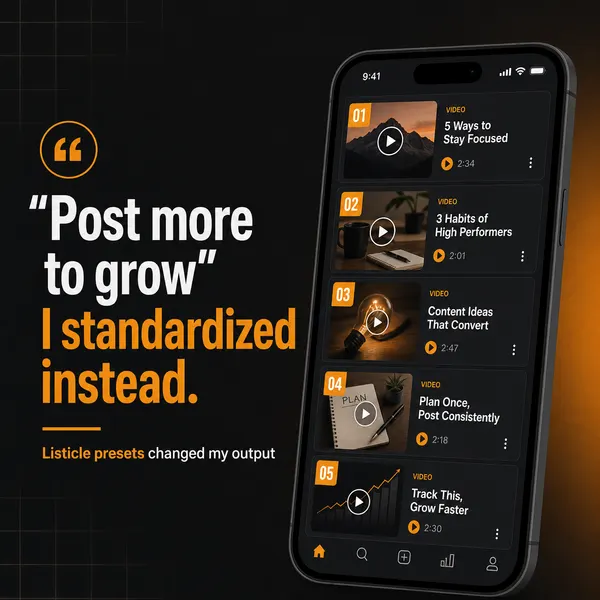
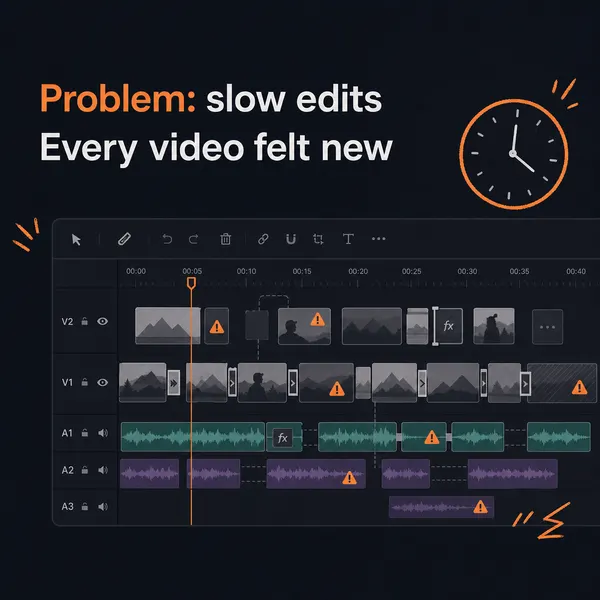
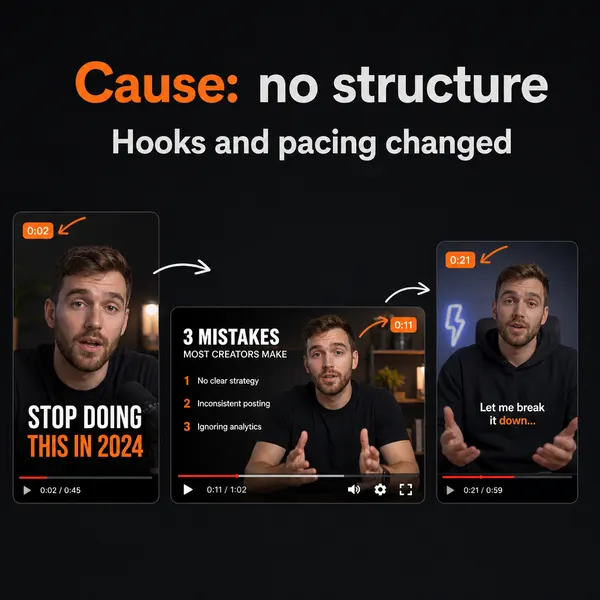
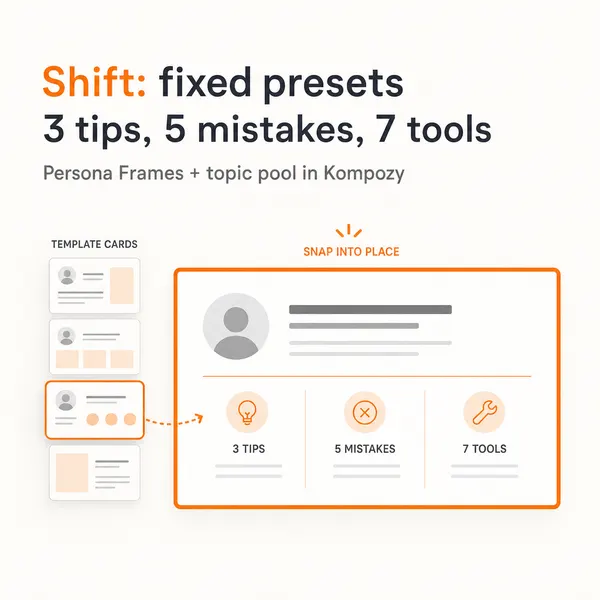
A real five-slide carousel made in the Kompozy workspace. It shows the format one strong image can be expanded into; it was not made with any model ranked on OpenArt Arena.
Who is this for, and who should skip it?
Best for:
- Picking a model for a specific job, like lip sync or graphic design, before spending credits
- Checking whether a gap between the #1 and #2 model is real or within the confidence interval
Not ideal for:
- Anyone who needs a fully independent benchmark, since OpenArt also sells these models
- Creators looking for a tool that makes or publishes anything
- Teams that need full judge counts and prompt sets to audit the rankings
Frequently asked questions
What is OpenArt Arena?
OpenArt Arena is a set of public leaderboards, launched September 15, 2026, that rank AI image and video generation models by specific creative task — filmmaking, motion design, video editing, lip sync, graphic design, e-commerce, and more — using blind, side-by-side comparisons aggregated with the Bradley-Terry statistical model. It's a model-selection tool from OpenArt, not a generator.
Does OpenArt Arena generate images or video?
No. Arena ranks models; it doesn't create anything. You still generate with the ranked model wherever you run it, and Arena is being wired into OpenArt's own model selector to help pick. To turn a generated asset into captioned, on-brand posts across platforms, you use a content engine like Kompozy.
Which AI models rank highest on OpenArt Arena?
At launch, ByteDance's Seedance 2.5 led overall video (ahead of Alibaba's Wan 3.0 and Seedance 2.0) and Seedream 5.0 Pro led overall images ahead of OpenAI's GPT Image 2, which topped graphic design. Wan 3.0 edged ahead on video editing. Rankings change as models update, so check the live boards.
Can you trust OpenArt Arena's rankings?
Treat them as directional. The task-specific, blind pairwise method is reasonable, but OpenArt is a commercial platform that also serves these models and plans to integrate Arena into its own model picker, and it hasn't disclosed final judge counts or complete prompt sets. Useful for narrowing a shortlist; confirm the winner on your own output.
How do we know this?
We checked every figure, date, price and quote on this page against the sources listed below on 2026-10-23, and removed or corrected anything we could not confirm. VentureBeat attributes Seedream 5.0 Pro to Alibaba, so we no longer name its maker on this page. Kompozy plan and format details come from kompozy.io/pricing.
Sources
- VentureBeat — OpenArt's new Arena offers leaderboards for different media jobs (read 2026-10-23)
- Kompozy — Pricing (read 2026-10-23)
Related tools
- Seedance — ByteDance's cinematic video model — prompt-faithful, reference-accurate, and built for keyframe and camera control.
- Seedream 5.0 Pro — ByteDance's multimodal image model that reasons over a brief, renders dense text, and separates a finished image into editable layers.
- Wan3.0 — Alibaba's latest AI video model in the Tongyi Wanxiang (Wan) line. It generates clips up to about 30 seconds — roughly double the prior Wan 2.x generation — from text, images, or documents like PDFs and slide decks. Fully launched August 24, 2026.
- Midjourney — The text-to-image generator known for aesthetic quality and art direction — now also building a separate medical-imaging division.
- Google Veo 3 — Google DeepMind's video model that was the first to generate synchronized native audio — dialogue, sound effects, and music — inside the same pass as the video, with lip sync.