The honest Grok 4.7 alternative (2026) for creators who need finished content
Grok 4.7 is xAI's most powerful coding and knowledge-work model, not a content tool. The honest 2026 breakdown for creators — and where Kompozy takes over.
Published 2026-09-21 · Updated
Short answer
Grok 4.7 is xAI's strongest coding and knowledge-work model, released September 21, 2026 at $2 per million input tokens and $6 per million output, with a 500,000-token context. It researches, reasons and drafts, but it makes no images or video and publishes nothing. For code and drafting it's a strong pick. For finished, published posts, Kompozy Starter is $199/mo for 4 platforms, and Pro ($499/mo) covers 9.
Key takeaways
- xAI released Grok 4.7 on September 21, 2026 at the same $2/$6 per million token price as Grok 4.6.
- It has a 500,000-token context and scored 46.3% on CursorBench 4.0, up from 40.4% for 4.6.
- A fast variant runs at twice the output speed for twice the price.
- The model returns text. It doesn't make images or video, caption, schedule or publish.
- Kompozy turns one source into 25-35 outputs, from $199/mo on Starter (4 platforms). Pro ($499/mo) publishes to 9.
If you're here after searching "Grok 4.7 for content," start with the honest framing: Grok 4.7 and Kompozy are not the same kind of tool. Grok 4.7 is xAI's most powerful reasoning and coding model, released September 21, 2026 — a genuinely strong brain for research, drafting, and building. Kompozy is a content generation and publishing engine. One thinks and writes; the other produces finished media and ships it across platforms.
I run Kompozy, and I'll say plainly: Grok 4.7 is excellent at the job it was built for. It reasons over a 500,000-token context, holds hard multi-hour tasks, checks its own work more carefully than 4.6, and drafts fast. If your bottleneck is "I need to think through a dense source or draft some copy," Grok 4.7 is a fine, cheap way to do it, and you may not need anything else that day.
Here's the twist that sends people looking for an alternative anyway: 4.7 holds 4.6's price while getting better, so it's cheaper-per-idea than ever — which quietly tempts you to generate more raw drafts. But a wall of great drafts is not a content operation. Grok 4.7 generates no images, no video, no avatars, no captions, no carousels. It does not design to a brand template, does not enforce a brand voice across a team, and publishes to nothing. Cheaper, faster drafting only widens the gap between the text and the posted Reel.
This page is the honest comparison. Where Grok 4.7 is the right tool, I say so. Where Kompozy takes over, I show the exact handoff. Kompozy pricing is from kompozy.io/pricing; Grok 4.7 figures are from xAI's launch page and API docs, both checked on 2026-10-23.
What is Grok 4.7?
Grok 4.7 is a general-purpose large language model that returns text. xAI positions this release as its most powerful model for coding and knowledge work, built on a larger base than Grok 4.6 and trained with extended reinforcement learning on harder, multi-hour tasks. It keeps the 500,000-token context window, works longer on difficult problems while self-verifying more carefully, and posts across-the-board benchmark gains over 4.6 (CursorBench 4.0 46.3% from 40.4%, Terminal-Bench 4.0 37.6% from 20.3%, HealthBench Professional 56.7% from 48.5%). It is reachable through the xAI API, Grok Build, Cursor, and third-party coding harnesses and cloud platforms. For a creator, that translates to a very good research and drafting surface. You can brief it, paste a transcript, ask it to distill a report into a self-checked summary, get fifteen post angles, or have it reason through a content strategy. What it will not do is make anything you can post. It has no image or video generation, no audio, no design or caption layer, no scheduler, and no publishing connections. It is the reasoning-and-writing layer of a content stack, delivered as a raw model rather than a finished workflow.
Why do creators look for a Grok 4.7 alternative?
The gap is scope, not quality. Grok 4.7 does reasoning and drafting. A content workflow needs roughly eight things after the draft: media generation, captions, design to a brand template, voice consistency across formats, clip detection on long-form, scheduling, multi-platform publishing, and a review process. Grok 4.7 touches none of those. Here's where the friction lands. You feed Grok 4.7 a webinar transcript and it returns a sharp, self-checked brief and a great script. Now you need an avatar to speak it, captions burned in for silent autoplay, a matching carousel, a quote card, a blog version, a newsletter section, and all of it scheduled across six feeds in your brand voice. With Grok alone you now open HeyGen for the avatar, a captioning tool, an image generator, a design app, a blog CMS, an email tool, and a scheduler — then paste your brand rules into each one and hope the voice survives. That is a stack of subscriptions and zero shared brand memory. Other honest reasons creators look past a raw model for content: there is no Persona Brief equivalent — brand voice lives in a system prompt you re-paste every session, not a governed layer; at high effort 4.7 reasons at length, so output-token cost can climb faster than the low input price suggests; and using the API at all assumes a developer setup that most creators don't want to own. None of this makes Grok 4.7 a bad model. It makes it the wrong shape for "one source in, a week of finished posts out."
How does Grok 4.7 compare with Kompozy feature by feature?
| Feature | Grok 4.7 | Kompozy | Note |
|---|---|---|---|
| AI research / copy drafting | Yes — fast, self-checked | Yes — governed by Persona Brief | Both draft. Grok is the sharper raw reasoner; Kompozy keeps every draft on-brand. |
| Long-context reasoning (500K tokens) | Yes — flagship strength | Partial — runs managed Claude/OpenAI models | Grok wins on pure reasoning depth. Kompozy uses models tuned for its formats. |
| Agentic / multi-hour task work | Yes — the 4.7 headline | Partial — autopilot runs recurring batches | Grok is the better open-ended reasoner; Kompozy automates the recurring content run. |
| AI image generation | No | Yes | Photo posts, quote cards, carousel slides, infographics — Grok renders no pixels. |
| AI video / avatar generation | No | Yes | Kompozy generates HeyGen persona shorts, VFX hooks, and clipped shorts natively. |
| AI clip detection (long → short) | No | Yes | Drop a long video; Kompozy finds and cuts the moments. Grok can't touch video. |
| Auto-captions / burned-in subtitles | No | Yes | Kompozy burns branded captions on every short; Grok has no video layer at all. |
| Brand-exact carousels / design (HyperFrames) | No | Yes | Pixel-exact templated design. A raw model outputs no layout. |
| Brand-voice governance layer | Partial — system prompt only | Yes — Persona Brief per workspace | Grok's "voice" is a prompt you re-paste; Kompozy governs tone and banned phrases persistently. |
| Multi-platform scheduling & publishing | No | Yes | Kompozy publishes to eight social platforms plus blog and email. Grok publishes nowhere. |
| Autopilot / unattended runs | No | Yes | Kompozy ingests a source and queues a batch on a schedule; Grok only runs in a live prompt. |
| Blog + newsletter output | Partial — writes text, no formatting or send | Yes — formatted draft + newsletter body, published | Grok writes the words; Kompozy formats, brands, and ships them. |
| Coding / whole-project software work | Best-in-class — the 4.7 headline | No — not a dev tool | If you want to build an app or ship code, Grok wins outright. That's not Kompozy's job. |
| Pricing model | Usage-based API tokens | Monthly credits | Grok bills per token (output-heavy at high effort); Kompozy bills predictable monthly credits. |
How much does Grok 4.7 cost compared with Kompozy?
| Tier | Grok 4.7 plan | Grok 4.7 price | Kompozy plan | Kompozy price |
|---|---|---|---|---|
| Entry | Grok 4.7 API (standard) | $2/M input, $6/M output | Kompozy Starter | $199/mo (5,500 credits) |
| Mid | Grok consumer plans | Subscription via Grok apps; see x.ai | Kompozy Pro | $499/mo (18,000 credits) |
| Top | Grok 4.7 fast variant | About 2x standard rate | Kompozy Enterprise | Contact Sales |
What does Grok 4.7 do well?
- xAI's most powerful coding and knowledge-work model as of its September 2026 launch.
- Genuinely good, self-checked drafting — briefs, scripts, outlines, summaries — at a low input-token price.
- 500,000-token context window handles large source documents and long transcripts in one pass.
- Extended training on harder, multi-hour tasks with more careful self-verification than 4.6.
- Holds 4.6's $2/$6 headline price while improving across xAI's launch benchmarks.
- Configurable reasoning effort, so you can trade depth against speed and cost.
- Wide availability: xAI API, Grok Build, Cursor, and third-party coding harnesses and cloud platforms.
Where does Grok 4.7 fall short for content creators?
- Generates no images, video, avatars, or audio — it produces zero postable media.
- No captions, no design, no brand template, no carousel layout — a raw model outputs text only.
- Publishes to nothing: no TikTok, Reels, Shorts, scheduler, or autopilot.
- No governed brand-voice layer — tone lives in a system prompt you re-paste each session.
- Reasons at length at high effort, so output-token cost can climb well past the low input rate.
- The fast variant, with twice the output speed, costs twice the price.
- API use assumes a developer setup most creators don't want to build or maintain.
- No clip detection — it cannot see or cut long-form video into shorts.
When should you pick Grok 4.7?
- Your task is research, drafting, or planning — not producing media. Grok 4.7 is a sharper, cheaper way to reason through a dense source and write copy than any content engine's built-in writer.
- You need to ship code or run long agentic tasks. This is the 4.7 headline. Coding and multi-hour agent work are exactly what it was tuned for; Kompozy does none of that.
- You want to reason over a very large document in one pass. The 500,000-token window ingests big transcripts and reports that a format-specific tool would chunk.
- You already have a full media and publishing stack and only need a better writing brain. If design, video, and scheduling are already handled, a raw model slots in as the drafting layer at low input cost.
When should you pick Kompozy instead of Grok 4.7?
- Your bottleneck is finished content, not first drafts. Kompozy turns one source into 25-35 outputs across video, image, text, blog, and newsletter. Grok hands you text and stops.
- You need avatar video, clips, carousels, or images — not just words. Kompozy generates all of it natively: HeyGen persona shorts, clipped shorts, HyperFrames carousels, quote cards, photo posts.
- You want brand voice pinned once, not re-prompted every session. A Persona Brief governs tone, banned phrases, and audience per workspace across every format. Grok's voice is a prompt you keep pasting.
- You want it scheduled and published across platforms. Kompozy fans a batch out to eight social platforms plus blog and email from one queue. Grok publishes nowhere.
- You want the pipeline to run unattended. Autopilot ingests a source and queues a reviewed batch on a schedule. A raw model only works inside a live prompt.
- You want predictable monthly cost instead of metered tokens. Kompozy Starter $199/mo (5,500 credits) and Pro $499/mo (18,000 credits) price by generation volume, not by how many output tokens a long reasoning run burns.
Should you use Grok 4.7 or Kompozy for content?
Here's the honest pitch. Grok 4.7 is a superb engine — for research, coding, and drafting. But an engine is not a car. To turn Grok's output into content people actually see, you'd bolt on a video generator, a captioning tool, an image model, a design app, a blog CMS, an email platform, and a scheduler — then re-teach each one your brand voice. That's the stack Kompozy replaces with a single pipeline.
Kompozy does the drafting a model like Grok does, then keeps going through everything a raw model can't reach. From one source it generates the avatar short with burned-in captions, the brand-exact carousel, the quote cards and photo posts, the blog draft, and the newsletter body — all in your voice through a Persona Brief — then schedules and publishes the set across eight social platforms plus blog and email, and can run the whole loop on autopilot into a per-post review queue. You're not wiring Grok into it, either; Kompozy runs its own generation on managed Claude and OpenAI models, so if you love Grok for research and planning, keep using it and paste its briefs in as raw material.
So split it by your real bottleneck. If the hard part of your week is reasoning and writing, Grok 4.7 is a great, cheap tool and you may need nothing else. If the hard part is producing and distributing the finished posts — the video, the design, the captions, the schedule — that's the exact gap Kompozy is built to close. Start on Kompozy Starter at $199/mo, keep Grok for the drafting it's brilliant at, and run one real week. You'll know by Friday which side of the line your work lives on.
What does this look like in Kompozy?
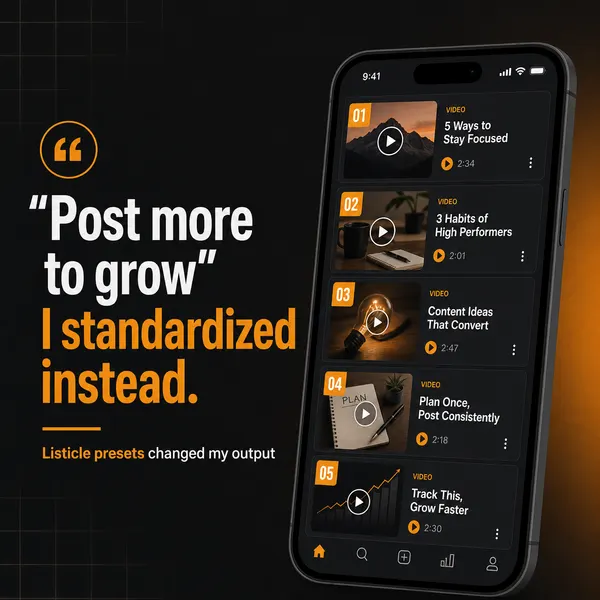
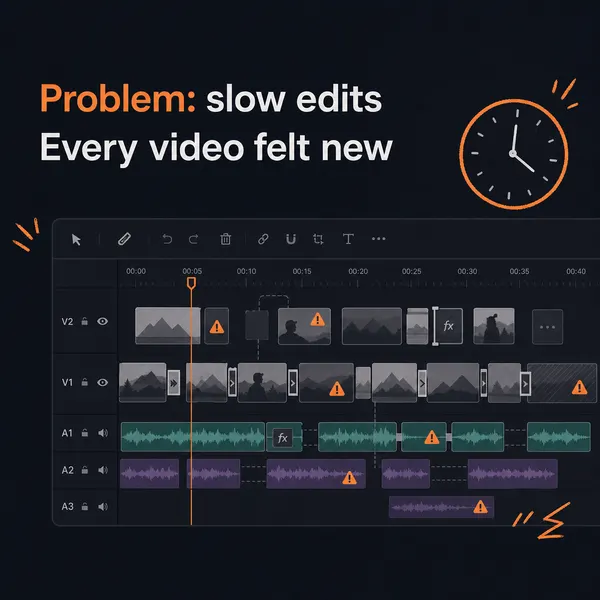
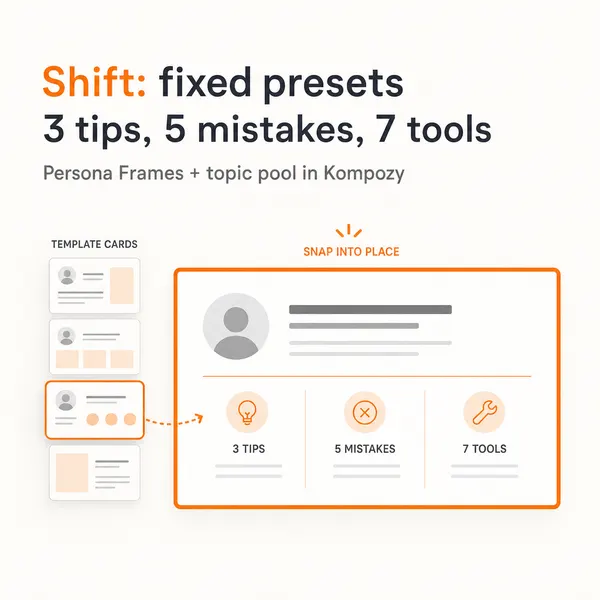
A five-slide carousel generated in the Kompozy workspace. A text model like Grok 4.7 can draft the copy, but it cannot render this post.


Who is this for, and who should skip it?
Best for:
- Creators whose bottleneck is finished content, not first drafts
- Teams that need avatar video, clips, carousels and images, not just words
- Brands that want one voice pinned once and an unattended publishing pipeline
Not ideal for:
- Developers shipping code or running long agentic tasks (Grok 4.7 wins)
- Research and drafting over very large documents in one pass
- Teams that already have media and publishing covered and only want a better writing model
Frequently asked questions
Can Grok 4.7 create social media posts?
It can draft the text of a post — a caption, a script, a thread — quickly and well, and it can distill a long source into that draft. It cannot generate the image, video, or carousel that post needs, add captions, design to a brand template, or publish it anywhere. For finished, scheduled posts you pair it with a content engine like Kompozy, or use Kompozy's own writer.
Is Grok 4.7 better than Kompozy?
They're different categories, so "better" depends on the job. Grok 4.7 is a better reasoning and coding model — that's not close. Kompozy is a content generation and publishing engine that produces media and ships it across platforms, which Grok does not do at all. Use Grok to research and draft; use Kompozy to produce and publish.
How much does Grok 4.7 cost versus Kompozy?
Grok 4.7 bills per token via the xAI API — $2 per million input and $6 per million output, the same price as 4.6, and a fast variant with twice the output speed costs twice as much. Kompozy is flat monthly credits: Starter $199/mo (5,500 credits) and Pro $499/mo (18,000 credits). Grok also has consumer subscription plans that include no publishing.
Can I use Grok 4.7 and Kompozy together?
Yes, and many people do. Use Grok 4.7 as the research and drafting brain — distill a source into a brief and a batch of angles — then paste that into Kompozy, which generates the video, images, carousels, blog, and newsletter and publishes them across platforms. Kompozy runs its own managed models, so no API wiring is required.
Does Grok 4.7 publish to TikTok, Reels, or a schedule?
No. Grok 4.7 has no publishing connections and no scheduler; it returns text (and code) in a chat or API response. Kompozy fans finished content out to eight social platforms plus blog and email from one queue, and can run it unattended on autopilot.
How do we know this?
On 2026-10-23 we checked every Grok 4.7 figure on this page against xAI's September 21 launch post and its API models page. We corrected one benchmark figure and removed long-context and cached-token pricing details those pages don't state. Benchmarks are xAI's own. Kompozy plan details come from kompozy.io/pricing.
Sources
- xAI — Introducing Grok 4.7 (2026-09-21) (read 2026-10-23)
- xAI Docs — Models (read 2026-10-23)
- Kompozy — Pricing (read 2026-10-23)
- Kompozy — Home (read 2026-10-23)
- AI Content Repurposing — The complete methodology for turning one source into 25-35 pieces of native-format content across every platform — without producing AI slop.
- Autonomous Content Creation — Most "autonomous" AI content is slop.
- AI Brand Voice & Persona — Without a Persona Brief, every AI output averages to the LLM default voice.