The honest Xelta AI alternative (2026) for creators who need brand-consistent content published everywhere
Xelta AI is a broad creative studio. Kompozy generates and publishes brand-consistent content across 9 platforms. The honest 2026 alternative comparison.
Published 2026-09-04 · Updated
Short answer
Xelta AI is a credit-based creative studio that puts 100-plus generation models, including Seedance 2.5, Kling and Veo 3.1, behind one balance, with plans from $9.99 to $79.99 a month. It is strong for making assets such as 60-minute microdramas and AI comics. Kompozy is the alternative when you need a recurring, on-brand content calendar published across social platforms, blog and email.
Key takeaways
- Xelta AI runs 100-plus image, video and audio models behind one credit balance.
- Plans run $9.99, $34.99 and $79.99 a month, plus $6 and $12 credit packs.
- Its SocialVerse module autoposts to Instagram, LinkedIn, Facebook, YouTube, WhatsApp and Telegram.
- Kompozy adds a Persona Brief for brand voice, a consistent persona and blog and email publishing.
- Many teams can use both: make the hero asset in Xelta, then repurpose and publish it in Kompozy.
If you searched "Xelta AI alternative," start by naming the job you need done. Xelta is an all-in-one AI creative platform and a capable studio: 100-plus models behind one credit balance, with range that runs to 60-minute microdrama series and full AI comics. This page is not going to pretend it is weak, because it isn't.
I run Kompozy, and the honest framing is that Xelta and Kompozy overlap on "generate content" but part ways on what happens next. Xelta is optimized for producing a wide range of ambitious assets fast. Kompozy is optimized for running a brand's recurring content operation: turning one idea into a week of on-brand posts, governing voice with a Persona Brief, keeping a persona's identity consistent across every render, clipping long-form into shorts, and publishing across the eight social platforms plus blog and email behind a per-post review. Xelta includes some publishing via SocialVerse; it is a lighter layer than a full distribution pipeline.
So the real question isn't "which tool is better," it's "which half of the workflow is your bottleneck." If your bottleneck is making standout creative assets — cinematic clips, microdramas, ad variants — Xelta is a strong answer and you may just want a distribution engine downstream of it. If your bottleneck is producing consistent, scheduled, on-brand content everywhere your audience is, an all-in-one asset studio is the wrong shape for that, however broad its model menu gets.
Everything below was re-checked against Xelta's own site on 2026-10-23. No invented weaknesses — where Xelta is strong, it is stated plainly.
What does Xelta AI do?
Xelta AI is a credit-based AI creative platform that puts more than 100 generation models (including Seedance 2.5, Kling v2.5, Veo 3.1, Wan 3.0 and GPT Image 2) behind one studio. It covers image and video generation, voiceovers and dubbing with lip-sync, AI Comic Flow for turning a story idea into a full comic, 60-minute microdrama series, a Photo Lab, and SocialVerse, which creates video and autoposts to Instagram, LinkedIn, Facebook, YouTube, WhatsApp and Telegram. What it is optimized for is breadth of creation — making a wide range of assets fast from many models in one place. What it is not built to be is a brand-operations system that governs one voice across a recurring calendar and distributes finished content across a full multi-platform surface including blog and email.
Why look for a Xelta AI alternative?
The reason to pair Xelta with something else — or to look past it for a content operation — is workflow shape, not creative quality. Xelta makes assets; it does not run an ongoing, brand-consistent publishing pipeline. There is no dedicated brand-voice layer to keep a week of posts sounding like one person across formats. There is no recurring-persona system for a consistent on-camera identity post after post. Its publishing, via SocialVerse, reaches a limited set of networks and doesn't extend to blog (WordPress/GHL) or email (Mailchimp). And it isn't built to take one long-form video and clip it into a scheduled run of shorts. None of that makes Xelta weak — on cinematic range and raw model breadth it is excellent, and for one-off or project-based creation it may be all you need. It makes it the wrong single tool for anyone whose actual bottleneck is a recurring content calendar published everywhere. That is why most people searching for an "Xelta alternative for content" are really looking for a generation-plus-distribution engine to sit alongside or downstream of it.
How do Xelta AI and Kompozy compare on features?
| Feature | Xelta AI | Kompozy | Note |
|---|---|---|---|
| Unify many AI models in one place | Yes — 100-plus models | Partial | Xelta's model menu is its headline. Kompozy uses a curated set (Claude/OpenAI, gpt-image, Gemini, HeyGen, fal.ai) tuned for on-brand output. |
| Cinematic video, microdramas, comics | Yes — a core strength | Partial | Xelta's creative range is broader here. Kompozy focuses on social-native video: Persona Shorts, avatar video, clips, Marketing Shorts. |
| Generate social video (Shorts, avatar, clips) | Yes | Yes | Both generate video. Kompozy adds captioned Persona Shorts, Clipped Shorts and persona-consistent avatar video. |
| Generate images, carousels, quote cards | Yes (images) | Yes | Xelta has broad image tools. Kompozy adds brand-exact Carousels, Quote Graphics and Infographics via HyperFrames. |
| Brand-voice consistency across a week of content | Not described on its site | Yes | Xelta prompts per generation. Kompozy's Persona Brief governs voice across every format automatically. |
| Recurring-persona / consistent on-camera identity | Not described on its site | Yes | Kompozy runs a face-locked AI Influencer persona pool for consistent branded identity; Xelta's site does not describe a recurring-persona system. |
| Clip long-form into a run of shorts | Partial | Yes | Xelta edits video; Kompozy is built to repurpose one long piece into multiple scheduled short formats. |
| Multi-platform publishing | Partial — SocialVerse reels | Yes | Xelta autoposts reels to a few networks. Kompozy fans to the eight social platforms plus blog and email from one queue. |
| Blog + email publishing | No | Yes | Kompozy publishes Blog Articles (WordPress/GHL) and Email Newsletters (Mailchimp). Xelta does not. |
| Scheduling, autopilot & per-post review | Partial | Yes | Kompozy schedules and auto-publishes behind a review gate. Xelta's distribution is lighter. |
How much do Xelta AI and Kompozy cost?
| Tier | Xelta AI plan | Xelta AI price | Kompozy plan | Kompozy price |
|---|---|---|---|---|
| Entry | Xelta pay-as-you-go credits | $6 for 600 credits or $12 for 1,200 | Kompozy Starter | $199/mo (5,500 credits) |
| Mid | Xelta monthly subscription | $9.99–$79.99/mo (999–7,999 credits) | Kompozy Pro | $499/mo (18,000 credits) |
| Top | Xelta enterprise / API | Custom (enterprise) | Kompozy Enterprise | Contact Sales |
What does Xelta AI do well?
- One credit balance for 100-plus models — no juggling separate subscriptions.
- Wide creative range: 60-minute microdrama series, AI comics, voiceovers and lip-sync dubbing.
- Broad toolset across image, video and audio, from text removal to poster design.
- Clean, approachable interface for beginners and pros alike.
- Pay-as-you-go credit packs from $6 make experimentation low-risk.
- Some distribution built in via SocialVerse reel creation and autoposting.
Where does Xelta AI fall short?
- No dedicated brand-voice layer to keep a week of content consistent across formats.
- No recurring-persona system for a consistent on-camera identity post after post.
- Publishing is narrow — SocialVerse only, with no blog or email distribution.
- Not built to clip one long-form video into a scheduled run of shorts.
- Output quality varies by which underlying model you choose.
- Distribution stops at SocialVerse's six social and messaging networks.
When should you pick Xelta AI?
- Your bottleneck is making ambitious creative assets. Xelta's range, from 60-minute microdrama series to full AI comics, is where it stands out.
- You want a huge model menu in one place. 100-plus models behind one credit balance is a real convenience advantage for experimentation.
- You produce one-off or project-based content. Pay-as-you-go credits fit bursty creation better than a flat monthly plan.
- You need broad image and editing tools. Text removal, poster design, Photo Lab and AI comics cover a wide creative surface.
When should you pick Kompozy over Xelta AI?
- You run a recurring, brand-consistent content calendar. Kompozy governs voice with a Persona Brief and keeps a persona consistent across every render.
- You need to publish everywhere, including blog and email. Kompozy fans one piece across eight social platforms plus blog (WordPress/GHL) and email (Mailchimp).
- You want to repurpose long-form into a run of shorts. Kompozy clips and reframes one long piece into multiple scheduled short formats.
- You want scheduling and autopilot with a review gate. Kompozy schedules and auto-publishes the whole set behind a per-post review, not just a reel autopost.
How should you choose between Xelta AI and Kompozy?
The clean way to think about it: Xelta is a creative studio, Kompozy is a content-operations engine, and the two are complementary as often as they are competitive. Xelta wins when the job is making a standout asset from a deep model menu. Kompozy wins when the job is turning content into a recurring, on-brand presence everywhere your audience is — generating Shorts, avatar video, carousels, quote cards, text posts, blogs and newsletters, holding them all to one voice via a Persona Brief, and publishing them across the eight social platforms plus blog and email on Autopilot behind a per-post review.
For most brands and agencies the honest recommendation is to use both: generate the hero asset in Xelta, then bring it into Kompozy to repurpose, brand-govern, schedule and distribute it as part of an ongoing calendar. But if you have to pick the one tool that moves the needle on a real content operation — consistent, everywhere, week after week — that is the distribution-and-brand-voice layer, and it's the layer Xelta doesn't try to be.
What does this look like in Kompozy?
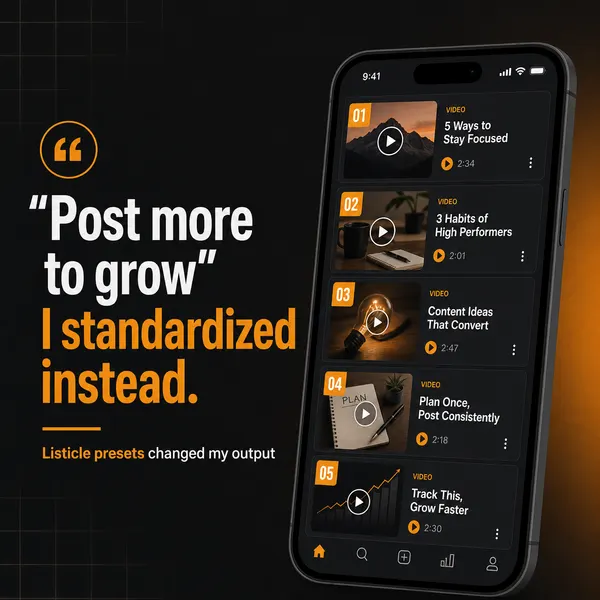
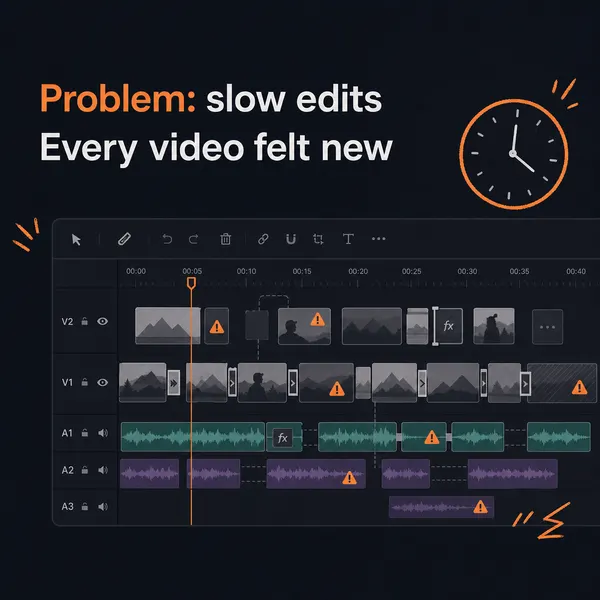
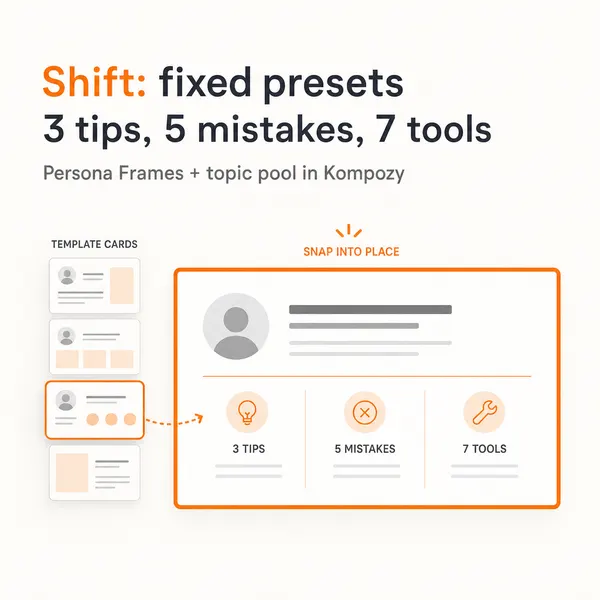
A real five-slide carousel generated in the Kompozy workspace. It shows one of the brand-consistent formats Kompozy produces and schedules alongside video.


Who is this for, and who should skip it?
Best for:
- Brands running a weekly content calendar that has to sound like one voice
- Teams that publish to blog and email as well as social
- Creators who want long videos cut into a scheduled run of shorts
Not ideal for:
- Creators whose main job is ambitious one-off assets like microdramas or comics (Xelta fits)
- People who want to try many models cheaply on $6 credit packs
- Small budgets that only need a few images and videos a month
Frequently asked questions
What is the best Xelta AI alternative?
It depends on the job. If you want a broad creative studio, direct model tools like Kling or Seedance and suites like Adobe Firefly are the closest matches. If your real need is a recurring, brand-consistent content operation published across every platform including blog and email, Kompozy is the stronger fit — it generates the full format range, governs voice with a Persona Brief, and schedules and publishes behind a per-post review.
Is Kompozy a good alternative to Xelta AI?
For content operations, yes. Xelta is optimized for making assets across many models; Kompozy is optimized for turning content into a recurring, on-brand presence — generating Shorts, avatar video, carousels, blogs and newsletters, keeping voice and persona consistent, and publishing across the eight social platforms plus blog and email. Many creators use both: Xelta to create, Kompozy to repurpose and distribute.
Does Xelta AI publish to social media like Kompozy?
Partly. Xelta's SocialVerse module creates reels and autoposts to Instagram, LinkedIn, Facebook, YouTube, WhatsApp and Telegram. Kompozy publishes across the eight social platforms plus blog (WordPress/GHL) and email (Mailchimp) from one queue, with scheduling, autopilot and a per-post review — a fuller distribution surface than Xelta's reel autoposting.
Xelta AI vs Kompozy pricing — which is cheaper?
They price differently. Xelta is credit-based, with plans from $9.99/mo and pay-as-you-go packs from $6, which is cheap for experimentation but scales with volume. Kompozy uses monthly credit plans (Starter around $199/mo, Pro around $499/mo) built for steady, high-volume production plus publishing. For occasional creation Xelta can be cheaper; for an always-on content operation a flat plan is usually more predictable. Confirm current figures on each site.
Can I use Xelta AI and Kompozy together?
Yes, and that is often the best setup. Generate a hero asset — a cinematic clip or a microdrama cut — in Xelta, then bring it into Kompozy to clip and repurpose it into a Short, carousel, quote graphics, text posts, a blog and a newsletter, rewrite each to your brand voice, and schedule and publish across every platform. Xelta handles creation breadth; Kompozy handles brand consistency and distribution.
How do we know this?
We checked every figure and competitor fact on this page against the sources listed below on 2026-10-23, and rewrote or removed claims we could not confirm. Kompozy plan details come from kompozy.io/pricing.
Sources
- Xelta AI — homepage (models, microdramas, AI Comic Flow) (read 2026-10-23)
- Xelta AI — Pricing (read 2026-10-23)
- Xelta AI — SocialVerse (read 2026-10-23)
- Xelta AI — About us (read 2026-10-23)
- Kompozy — Pricing (read 2026-10-23)
- AI Content Repurposing — The complete methodology for turning one source into 25-35 pieces of native-format content across every platform — without producing AI slop.
- Autonomous Content Creation — Most "autonomous" AI content is slop.
- AI Brand Voice & Persona — Without a Persona Brief, every AI output averages to the LLM default voice.