Content repurposing for consultants
Turn client workshops, frameworks and Loom walkthroughs into LinkedIn thought leadership, newsletters and inbound pipeline without breaching confidentiality.
Last verified · 2026-10-23 · by Moe Ameen
Published 2026-05-22 · Updated
Short answer
Content repurposing for consultants means turning frameworks you already built for clients into public LinkedIn posts, carousels, short clips, blog essays and a newsletter, with client names and specifics stripped out. Rebuild each framework as a public version, record one Loom explainer, and cut everything else from it. Kompozy Starter ($199/mo) or Pro ($499/mo) handles the clipping, carousels, captions and scheduling.
Key takeaways
- Your client frameworks are the raw material. Strip names and specifics, then rebuild a public version of each one.
- One 5-10 minute Loom explainer per framework feeds the clips, carousels, LinkedIn posts and blog essay.
- Put LinkedIn and a newsletter first for the first 12 months. The email list is the part you own.
- Anything that could identify a client needs written permission. When in doubt, build stand-alone source content.
Consultants live and die on perceived expertise. The work itself — workshops, diagnostic interviews, internal frameworks, executive presentations — is dense with insight that almost never leaves the engagement. The usual pattern: a senior consultant spends weeks building a framework for one client, presents it once, and never uses that IP for marketing.
Content repurposing for consultants is mostly about reclaiming this leakage. The frameworks you build for paying clients (with names and specifics stripped) are exactly what prospective clients want to see before they take a call. The challenge is doing it without breaching confidentiality or commoditizing what you sell.
This playbook covers what is safe to repurpose, what to anonymize, the workflow that fits consultant economics, and the LinkedIn-heavy distribution model that actually drives inbound in 2026.
Why do consultants repurpose content?
Consultants who do not repurpose end up dependent on referrals and outbound. Both work — but neither scales without proportional time investment. Repurposing turns your IP into a discovery surface. The economics matter: a senior consultant who bills by the hour cannot afford to spend 10 hours a week creating original content, but can afford 2-3 hours converting existing client work into public-facing assets.
LinkedIn is the dominant channel because that is where the buyers are. A consultant who posts 3-4 times a week, anchored on real client work, builds a different reputation than one who posts generic "leadership tips."
What source content do consultants already have?
Source type: Client workshops (anonymized), framework whiteboards, internal Loom explainers, conference talks, podcast appearances
Typical cadence: 1-3 client workshops or frameworks per month + occasional podcast appearances
Effort before tooling: 0 — workshops are client-billable; you are extracting marketing value from work already done
What can consultants produce from that source content?
Video
- Loom walkthroughs of frameworks (re-recorded for public, not the client version)
- Conference talk excerpts cut into 60-90 second clips
- Podcast appearance clips with captions
- Whiteboard explainer videos shot on iPhone with a clip-on mic
Image
- Framework diagrams as LinkedIn carousels
- Before/after diagnostic visualizations
- Quote slides from anonymized client conversations
- Process maps and 2x2 matrices
Text and social
- LinkedIn long-form posts (1,200-1,800 chars) breaking down one framework
- X/Twitter threads on the same frameworks in shorter form
- Substack/Notes essays for deeper takes
- Q&A drops in industry Slack and Discord communities
Blog
- 2,000-3,500 word teardown essays on a recurring client problem
- Diagnostic checklists turned into pillar content
- Case studies (heavily anonymized or with explicit client permission)
- Industry trend pieces with original frameworks
Newsletter
- Bi-weekly executive newsletter — one framework per issue
- Monthly diagnostic roundup of patterns across recent engagements
- Field notes from conferences and client work
- Curated "what I am reading" with consultant commentary
What is the 8-step repurposing workflow for consultants?
- Audit your engagement IP. List every framework, diagnostic, or model you have built for clients in the last 18 months. Bucket each as: shareable as-is (anonymized), shareable with redaction, never shareable. The first two buckets are your raw material.
- Build a "public version" of each framework. For each shareable framework, rebuild it without client-specific data. Use generic examples or stripped composites. This becomes the source asset for all derivatives.
- Record a 5-10 min Loom explainer for each framework. Talk through the public version on camera. This becomes your highest-leverage source content — it powers clips, carousels, posts, and the blog essay.
- Cut LinkedIn-first short clips. Start with video, because a short clip of you walking through the framework shows how you think better than a text post can. Cut 60-90 second clips with captions burned in. Test 2-3 hooks per framework.
- Carousel the framework diagram. Turn the diagram into a 6-10 slide LinkedIn carousel, with one piece of the framework and a short explanation on each slide. A carousel is easy to save and come back to, so a good one keeps working after the post date.
- Long-form post + blog essay. Write a 1,500-char LinkedIn post version and a 2,500-word blog version in the same sitting — same outline, different depth.
- Newsletter and pipeline tracking. Send a bi-weekly newsletter that recaps the framework, links to the blog, and invites a 20-minute diagnostic call. Track inbound to specific posts.
- Re-publish after 90 days. Consultant content has a long half-life. Re-cut the same framework with a new hook every 90 days. Most of your audience missed it the first time.
Which tools do consultants use for content repurposing?
| Role | Options |
|---|---|
| Loom/screen recording | Loom, Tella, Riverside Solo |
| Diagramming | Whimsical, Excalidraw, Figma |
| Transcription | Descript, Otter.ai, Whisper |
| Carousel design | Canva, Figma, AuthoredUp templates |
| LinkedIn scheduling | Kompozy, Taplio, AuthoredUp |
| Newsletter | Beehiiv, Substack, ConvertKit |
| CRM/inbound tracking | HubSpot Free, Attio, Folk |
How much does content repurposing cost consultants per month?
DIY / Low end
$0-$50/mo — Loom free tier, Whimsical free, Canva free, LinkedIn native posting, Substack
Solo operator / Mid range
$250-$400/mo — Kompozy Starter ($199) or Taplio, Loom paid, Canva Pro, Beehiiv, basic CRM
Team / High end
$1,000-$3,000/mo — Kompozy Pro ($499), retained editor or designer, Taplio Pro, retained CRM/sales ops contractor
What mistakes do consultants make when repurposing content?
- Posting generic "leadership tips" instead of real framework work — instantly forgettable
- Sharing client-identifying specifics without consent and burning the relationship
- Writing in stiff consultant-speak instead of the voice you use on client calls
- Treating LinkedIn as a megaphone rather than a two-way conversation — never replying to comments
- Skipping the newsletter — LinkedIn is rented land; the email list is yours
- Trying to be everywhere instead of dominating LinkedIn + newsletter for the first 12 months
What results can consultants realistically expect?
- Qualified inbound tends to build slowly over the first year of steady output, and the pace depends heavily on how specific your niche and offer are
- Speaking and podcast invitations tend to compound as public IP accumulates, though attribution is messy
- Pricing power tends to improve because the work is visible — easier to charge premium when buyers have read your thinking before the first call
- Honest caveat: consultants in saturated generalist niches see slower returns than those in defined micro-niches
Where does Kompozy fit for consultants?
Consultants use Kompozy primarily to keep LinkedIn cadence high without re-living the production cost. The Persona Brief preserves your voice across dozens of derivatives, which matters more for consultants than almost any other ICP — your voice IS the product. Starter at $199/mo or Pro at $499/mo covers most solo and small-team consultants, with Enterprise (Contact Sales) for larger teams.
Kompozy is not a substitute for original strategic thinking. It accelerates distribution; the strategy still has to come from you.
What does this look like in Kompozy?
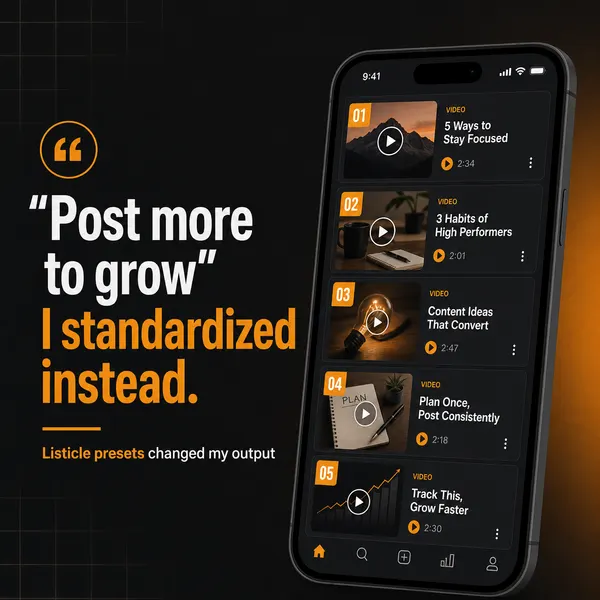
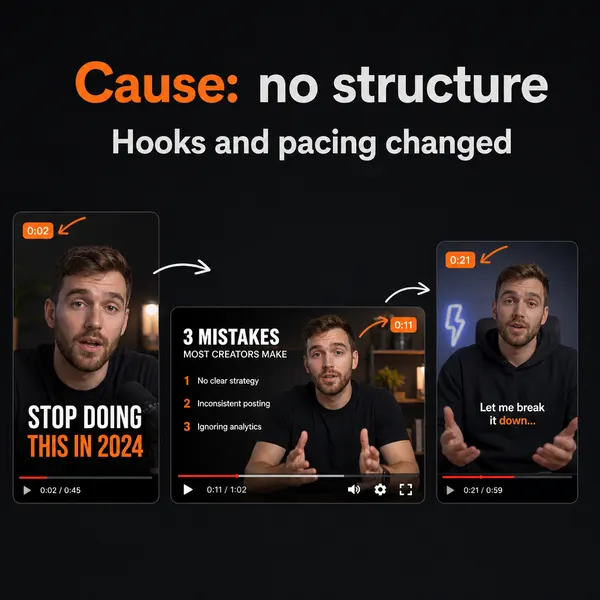
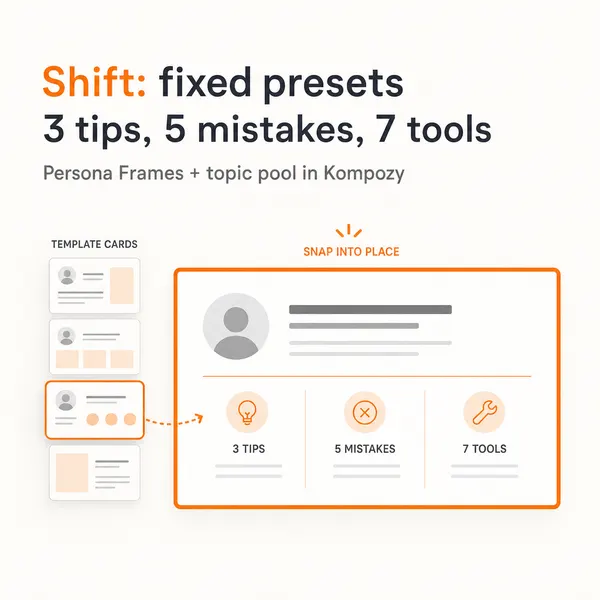
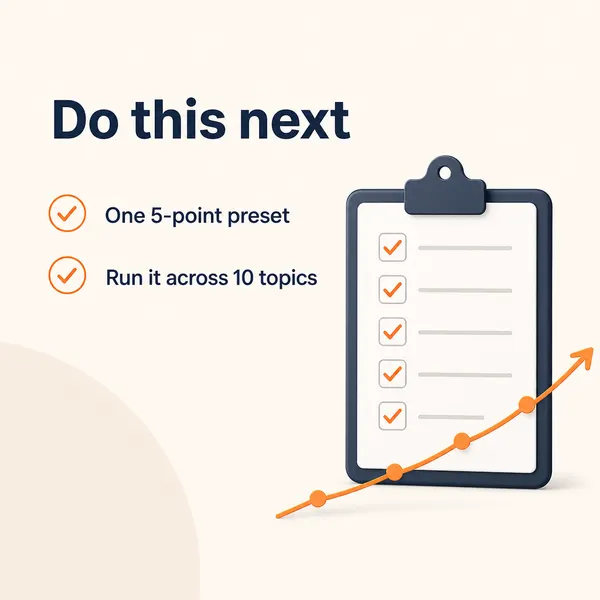
A real five-slide Carousel generated in the Kompozy workspace, shown here as an example of the format this playbook suggests for framework diagrams. It was not made for this page or for a consulting client.

Who is this for, and who should skip it?
Best for:
- Solo and small-team consultants who sell on visible expertise and sell mostly to buyers on LinkedIn
- Consultants with frameworks, diagnostics or workshops they can rebuild without client data
- Anyone who wants a steady LinkedIn cadence but can only spare 2-3 hours a week
Not ideal for:
- Consultants whose engagements are too confidential to describe even in general terms, unless they record separate stand-alone explainers
- People hoping a tool will supply the strategic thinking. Kompozy speeds up distribution; the ideas still have to come from you
- Long-form essays you want fully in your own hand. Keep those manual and use Kompozy for the rest
Frequently asked questions
Can I repurpose client work without explicit permission?
Only fully anonymized framework work. Anything that identifies a client (names, industries, numbers that triangulate to one specific company) requires written permission. Frameworks themselves are usually fine to share if you built them.
Does LinkedIn punish links in posts?
LinkedIn does not publish how it ranks posts that contain links, so nobody outside the company knows for sure. The safe habit is to keep the post body link-free and put the link in the first comment or on your profile.
How often should I post on LinkedIn?
Start with 3-5 posts a week, a pace most solo consultants can fill with real framework material. Go daily only if the quality holds up.
Is a newsletter worth it if my LinkedIn is already working?
Yes. LinkedIn reach can change overnight. A small list of qualified buyers you can email directly is worth more than a much bigger following on a platform you do not control.
Should I niche down or stay generalist?
Niche down. Generalist consultants compete with everyone for reach. A defined micro-niche makes your content magnetic to the exact buyers you want.
What if my engagements are too confidential to repurpose?
Then build "stand-alone" source content — record dedicated framework explainers that draw on patterns across clients without referencing any one.
How does Kompozy handle long-form essays?
Kompozy can draft and reformat long-form content, but consultant essays usually need your hand on the prose. Use it to handle clipping, carousels, captions, and scheduling — keep the long essay manual.
How do we know this?
We checked every figure and vendor fact on this page against the sources listed below on 2026-10-23, and took out outcome numbers we could not trace to a source. Kompozy plan prices come from kompozy.io/pricing. The budget bands are our own planning ranges, not quoted prices. Free-tier claims for Loom, Whimsical, Canva, Substack, beehiiv and HubSpot were read off each vendor page that day.
Sources
- Kompozy: Pricing (read 2026-10-23)
- Loom: Pricing (read 2026-10-23)
- Whimsical: Pricing (read 2026-10-23)
- Canva: Pricing (read 2026-10-23)
- Substack: About (read 2026-10-23)
- beehiiv: Pricing (read 2026-10-23)
- HubSpot: Free CRM software (read 2026-10-23)