Instagram creator collaborations in 2026: the playbook for Collab posts, brand partnerships, and co-created content that compounds
A creator collaboration on Instagram is the highest-leverage reach play still available without a budget, because it borrows a partner's audience instead of buying it and stacks two forms of trust at once: the post shows up in front of people who already follow someone they chose to follow, and it arrives with that person's implicit endorsement. But "collaboration" now covers at least four distinct mechanics that people lump together and shouldn't — the native Collab post (a single shared post that publishes to every collaborator's grid and pools all the engagement), a paid brand deal sourced through Instagram's creator marketplace and disclosed with the Paid Partnership label, co-created content where two creators genuinely make something together, and the lighter formats like guest takeovers and joint giveaways. Each has a different setup, a different disclosure obligation, and a different failure mode. This guide separates them, explains why the Collab post specifically is the mechanical unlock (pooled reach and engagement across up to six profiles from one upload), walks the operating model that turns a single collaboration into a multi-week, multi-platform campaign instead of one launch-day spike, is honest about where collaborations quietly fail, and ends on the part nobody plans for: the real constraint on running collaborations at any cadence is not finding partners, it is producing enough on-brand, co-usable content to keep the deals flowing without it eating the work that should go into your own audience.
Published 2026-09-17 · Updated
Short answer
An Instagram creator collaboration borrows a partner's audience and trust instead of paying for reach. The core tool is the Collab post: one post co-authored by up to five other accounts that appears on every collaborator's grid with likes, comments and views pooled, and no follower minimum. Paid brand deals need Instagram's Paid Partnership label, plus your own clear disclosure under FTC rules. The real constraint is producing enough on-brand content to keep collaborations going.
Key takeaways
- A Collab post publishes to every collaborator's grid and pools engagement. Up to five collaborators can join one post.
- Collab posts work for feed photos, carousels and Reels, not Stories, with no follower minimum.
- Any payment, free product or commission means you must disclose. The FTC says don't rely on a platform tool alone.
- Pick partners for audience overlap and fit, not follower count. A weak Collab post sits on everyone's grid.
- Turn one co-created session into two weeks of clips, carousels and posts instead of a single launch-day upload.
What counts as a creator collaboration on Instagram?
The word "collaboration" gets used for four different things on Instagram, and treating them as one is the most common reason a collaboration underperforms — you set it up as the wrong type. It is worth separating them cleanly before deciding to run one, because each has a different setup, a different disclosure obligation, and a different way it can fail.
The four are: the native Collab post (a single shared post co-owned by multiple accounts), a paid brand partnership (a brand pays a creator to post, disclosed with the Paid Partnership label and often sourced through Instagram's creator marketplace), genuinely co-created content (two creators actually make something together — a joint Reel, an interview, a shared carousel), and the lighter formats (guest takeovers, joint giveaways, shout-out swaps). They stack: a paid brand deal can be co-created and published as a Collab post, which is exactly the combination that reaches the most people. But you should know which mechanic you are pulling, because the Collab post is the only one that changes distribution, and disclosure is only mandatory for the paid ones.
Why are collaborations the best reach play without a budget?
A collaboration does two things paid reach cannot. First, it borrows an audience you would otherwise have to buy or slowly earn — your content appears in front of people who already chose to follow your partner, which is a warmer starting point than any ad impression. Second, and more importantly, it stacks trust: the post arrives with the partner's implicit endorsement, so a new viewer is not meeting you cold but being introduced by someone they already follow. Social proof is the scarcest thing a new-to-you viewer needs, and a collaboration manufactures it structurally rather than asking you to claim it.
The native Collab post turns that borrowed trust into a distribution mechanic instead of a nice gesture. Because the same post publishes to every collaborator's grid and the engagement pools into one unit, a Reel that would have earned, say, a few hundred likes split across two separate posts instead accumulates all of it in one place — and Instagram's ranking reads that concentrated engagement as a stronger signal, which feeds the Reel to more non-followers. The mechanic is quietly compounding: pooled reach produces pooled engagement, which earns more algorithmic distribution, on a single asset both parties promoted.
How do Instagram Collab posts work?
A Collab post is one post co-authored by more than one account: you create it, tag the others as collaborators (in the tag-people step), and once each invitee accepts, the post appears on all their grids simultaneously with every handle shown at the top. Likes, comments, views, and saves are combined into that single post, and all collaborators can see its Insights.
The details that matter in 2026: Instagram supports several collaborators on one post — commonly reported as up to five others, so as many as six profiles including yours — with no follower minimum on any account, which is what makes it viable for creators of every size rather than a big-account feature. It works for feed photos, carousels, and Reels, but not Stories. And Instagram now lets you invite a collaborator after a post is live, through Edit and then Tag people, which means a post that takes off can retroactively add a partner. Treat the exact collaborator cap and after-the-fact rules as things to confirm in Instagram's Help Center before you build a campaign around a specific number — Meta has changed them more than once.
Which type of collaboration should you use?
Match the mechanic to the goal. Picking the wrong type is how a collaboration ends up as a shout-out nobody sees or a paid post that violates disclosure rules.
Native Collab posts — the reach play between peers
When two creators with overlapping-but-not-identical audiences make one strong post together and co-author it, both audiences see it and the engagement compounds. This is the default for creator-to-creator work with no money involved. The move is to make the content genuinely good on its own and mutually flattering, so both parties are proud to have it on their grid — a Collab post lives permanently on every collaborator's profile, so a weak one is a cost, not just a missed upside.
Paid brand partnerships — the monetization path
When a brand pays you (cash, product, or commission) to create content, you are in branded-content territory: the Paid Partnership label is required, and the deal can be sourced and managed through Instagram's creator marketplace, Meta's built-in surface for brands and creators to discover and message each other. Published as a Collab post with the brand, the content appears on both grids and can later be boosted by the brand as a partnership ad from your handle. This is the type with the most rules — get disclosure right, covered below.
Co-created content — the depth play
An interview, a joint tutorial, a "we tried each other's routine" Reel, a shared carousel where each creator contributes slides — content that genuinely could not exist without both people. It is more work than a shout-out and produces the strongest audience crossover, because the two audiences see the creators actually interact, not just tag each other. Co-created content is where a one-off collaboration turns into a recurring relationship, which is worth more than any single post's reach.
Takeovers and giveaways — the lightweight formats
A guest takeover (a partner posts to your Stories or feed for a day) and a joint giveaway (both audiences enter by following both accounts) are lower-effort, faster to run, and good for a quick audience-swap or a launch moment. They convert less deeply than co-created content but cost less to produce, which makes them a sensible entry point with a new partner before committing to something bigger. Note that giveaways carry their own platform and regional promotion rules — check them before running one.
When do you need Instagram's Paid Partnership label?
The single rule to internalize: if there is any exchange of value behind the content, it must be disclosed. Instagram's Paid Partnership label is the built-in tool — the creator tags the brand partner, the brand approves, and a "Paid partnership with [brand]" label appears under the handle. Instagram's branded-content policy considers paid posts, free or loaned product, and affiliate commission all as qualifying value. A genuine creator-to-creator Collab post with no money changing hands does not need the branded-content label (the Collab tag itself credits both accounts), but the moment consideration enters, it does.
This is not just platform housekeeping. In the US, the FTC requires clear disclosure of material connections in endorsements, and it tells creators not to assume a platform's disclosure tool is enough on its own, so pair Instagram's label with your own clear disclosure in the post. Undisclosed paid content risks enforcement from Instagram and exposure under advertising law. When you are unsure whether something counts as a paid partnership, disclose it — the label costs nothing and the downside of skipping it is real. For the parallel play on another network, the reach mechanics are similar in LinkedIn collaborative posts.
How do you turn one collaboration into a multi-week campaign?
The mistake that wastes most collaborations is treating them as a single launch-day post. Two creators spend a week coordinating, publish one Collab Reel, get a spike, and stop — leaving most of the potential reach on the table. The creators who compound treat each collaboration as a source to be broken into a campaign: the co-created Reel is one piece, but the same session also yields short clips of the best moments, standalone carousels recapping the key points, quote graphics of the sharpest lines, text posts, and a behind-the-scenes cut — a couple of weeks of feed content for both parties, not one upload.
The reason to break it up is the same reason four separate clips beat one four-minute highlight reel: a feed is a stream of discrete posts, and spacing distinct angles across two weeks reaches far more of both audiences than a single-day dump. It also lets both creators cross-post the derivatives to their other platforms — a captioned vertical clip is native to Reels, TikTok, and Shorts; the carousels and quote graphics work on LinkedIn and Pinterest; the interview becomes a blog post or a newsletter. One collaboration, adapted lightly per surface, can fill both creators' entire distribution network for the period. The batching mechanics that make this survivable are in how to batch 30 days of Instagram content in one day, and the concrete setup steps are in how to run an Instagram creator collaboration.
What are the limits of Instagram collaborations?
First, a collaboration is only as good as the audience overlap and the content — pairing with a large but irrelevant account produces a reach number and no followers, and a co-authored post that is weak on its own drags both grids down permanently. Fit and quality matter more than the partner's follower count. Second, collaborations are coordination-heavy: two creators, two schedules, two brand looks, and a shared deliverable is more project management than a solo post, and it fails most often not on the idea but on one side going quiet mid-production. Third, the pooled-engagement upside cuts both ways — a post that flops flops on everyone's grid at once, which is why the content bar for a Collab post should be higher than for your regular feed.
None of these argue against collaborations; they argue for treating them as an operated channel with real production behind it, not a favor you trade when someone asks. The creators who get durable value from collaborations are the ones who can reliably show up with finished, on-brand assets and a plan to extend the post into a campaign — which is a production capability, not a networking one.
Why is production the real constraint, and where does Kompozy fit?
Collaborations reward creators who can produce a lot of on-brand content: your half of the co-created assets, the derivatives that turn one post into a campaign, the media kit that lands the paid deal, the cross-posts to every other platform — all of it, at a cadence, without it consuming the time that should go into your own audience. Finding partners is the easy part. Feeding the collaborations is the wall, and it is a different problem than the single-clip editors most creators reach for.
Kompozy is a full AI content generation and multi-platform publishing engine, not a repurposing tool, and it is built for exactly this supply problem. Point it at a collaboration recording and it produces the whole campaign the operating model above depends on: Clipped Shorts that pull the strongest moments into captioned vertical cuts, brand-exact Carousel Posts and Quote Graphics of the sharpest lines, Text Posts drawn from the transcript, plus an interview write-up as a Blog Article and a recap Email Newsletter across the other output buckets — one session becomes two weeks of posts for both partners instead of a single launch-day upload.
The part that matters specifically for collaborations is consistency across two identities. A collaboration lives or dies on both brands looking intentional together, and HyperFrames renders every carousel and quote card pixel-exact to a brand's styling, so a co-created post can carry both looks cleanly rather than clashing. A written Persona Brief holds your voice steady across every derivative, which is what lets you hand a partner a finished set that sounds like you without hovering over it. And because Autopilot schedules the whole campaign across 9 social platforms plus blog and email from one queue behind a per-post review gate, the single Collab post you publish on Instagram is simultaneously seeding every other feed you and your partner distribute to — which is the difference between a collaboration that spikes for a day and one that compounds for a fortnight.
What does this look like in Kompozy?
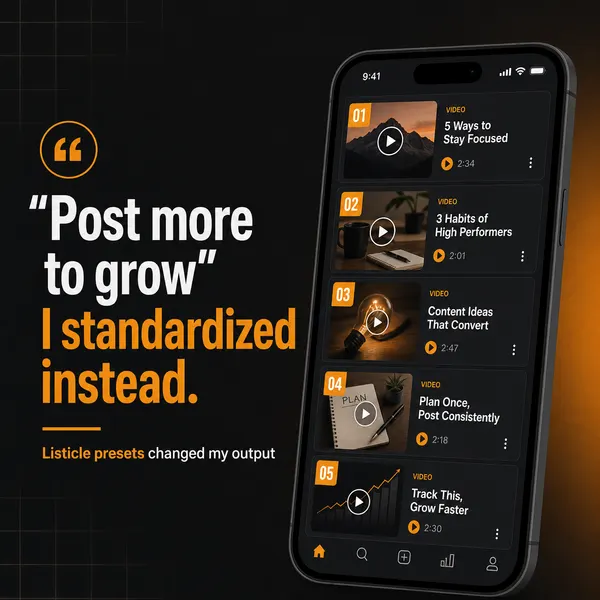
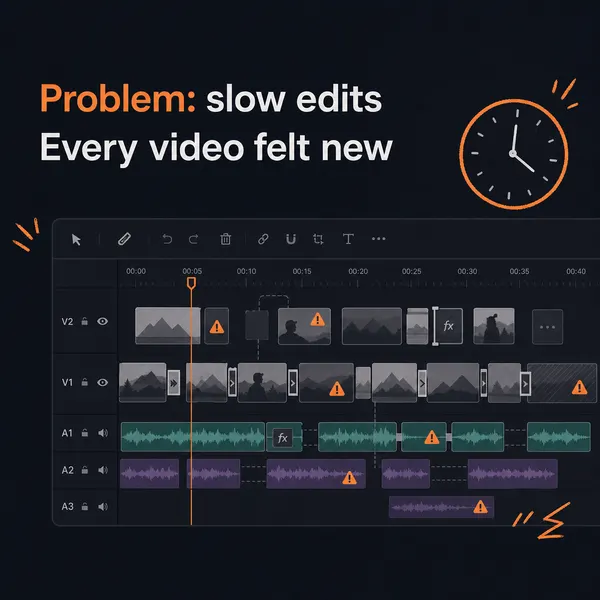
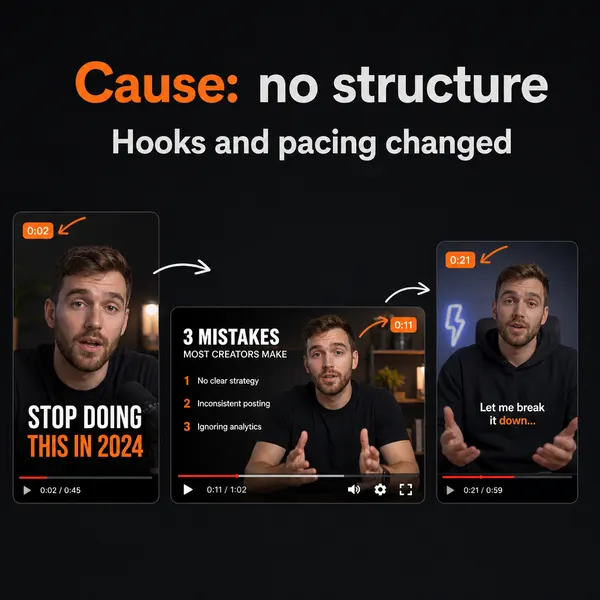
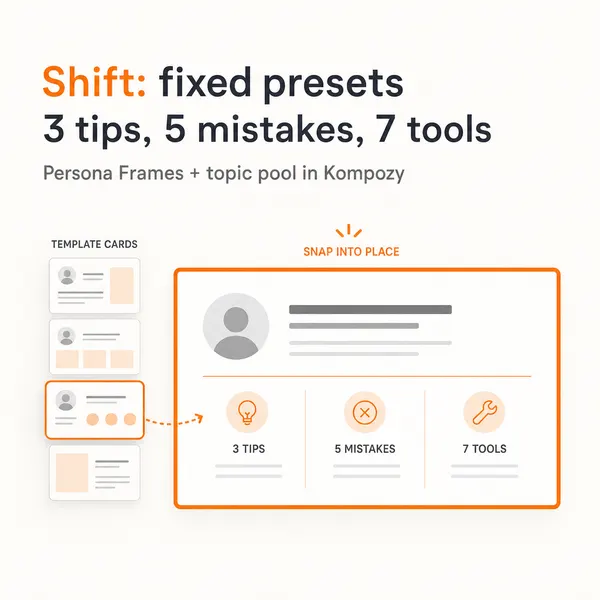
A real five-slide carousel generated in the Kompozy workspace, the kind of recap post one collaboration session can be turned into for both partners' feeds.
Who is this for, and who should skip it?
Best for:
- Small and mid-size creators who want reach without an ad budget
- Brands running creator partnerships that need the disclosure rules straight
- Creators who can produce their half of the content and extend it into a multi-week campaign
Not ideal for:
- Accounts looking for a one-off shout-out; a simple tag is enough for that
- Pairings with large but irrelevant accounts, which bring views but few lasting followers
- Anyone who needs legal advice on disclosures; read the FTC's guidance or ask counsel
Frequently asked questions
What is an Instagram Collab post?
A Collab post is a single piece of content that is co-authored by more than one account. One creator makes the post and invites collaborators; once they accept, the same post publishes to every collaborator's grid at the same time and shows all their handles at the top. Critically, the likes, comments, views, and saves are pooled into one unit rather than split, so the post reaches — and accumulates social proof from — everyone's combined audience. It works for feed photos, carousels, and Reels.
How many collaborators can you add to an Instagram Collab post?
Instagram lets you add several collaborators to a single feed post, carousel, or Reel — commonly reported as up to five, so the post can appear on as many as six profiles at once including yours. There is no follower minimum for any of the accounts involved, which is what makes the feature usable for small creators, not just large ones. Verify the current cap in Instagram's own Help Center before planning around a specific number, since Meta has adjusted it over time.
What is the difference between a Collab post and a brand partnership?
A Collab post is a content-sharing mechanic — two or more accounts co-own one post — and it carries no money by default. A brand partnership is a commercial relationship where a brand pays a creator (in cash, product, or commission) to post. The two overlap: a paid partnership can be published as a Collab post so it appears on both the brand's and creator's grids. But any exchange of value triggers Instagram's Paid Partnership disclosure label, which a plain creator-to-creator Collab post does not need.
Do I need the Paid Partnership label on a collaboration?
You need it whenever there is an exchange of value behind the content — money, free or loaned product, affiliate commission, or any other consideration. A genuine creator-to-creator collaboration with no payment does not require the branded-content label, though the Collab tag still credits both accounts. When in doubt, disclose: use Instagram's label and add your own clear disclosure, because the FTC says a platform's tool may not be enough on its own, and undisclosed paid content risks both platform enforcement and FTC exposure in the US.
How do you find creators to collaborate with on Instagram?
Three routes. For unpaid peer collaborations, approach creators one audience-size tier around yours whose followers overlap with your target but whose content does not directly compete, and pitch a specific, mutual idea rather than a vague "collab?". For paid deals, brands and creators can discover and message each other through Instagram's creator marketplace, Meta's built-in matching and partnership-messaging surface. And your own comment section and existing guests are the warmest list — people who already engage convert into collaborators far more easily than cold outreach.
Is a Collab post better than just tagging the other creator?
For reach, yes, meaningfully. A tag or mention only notifies the other account and appears in their tagged tab; the post still lives on your grid alone and only reaches your followers organically. A Collab post publishes to every collaborator's grid as a first-class post and pools the engagement, so it is distributed to all the combined audiences and compounds social proof in one place. Use a tag for a light shout-out; use a Collab post when both parties are genuinely putting the content in front of their people.
How do we know this?
On 2026-10-23 we checked the Collab post mechanics on this page against Epidemic Sound's and Metricool's guides, and the disclosure rules against the FTC's Disclosures 101 for social media influencers. We corrected two statements that overstated what Instagram's label does for FTC compliance. Kompozy details come from kompozy.io/pricing.
Sources
- Epidemic Sound — What is an Instagram collab post, and how do they work? (read 2026-10-23)
- Metricool — How to create collaborative posts on Instagram (read 2026-10-23)
- Federal Trade Commission — Disclosures 101 for social media influencers (read 2026-10-23)
- Kompozy — Pricing (read 2026-10-23)
Get started → · ← All guides · Compare Kompozy vs other tools