How to break through social media saturation (make your content stand out amid feed overload, 2026)
How to break through social media saturation: diagnose your reach, own a lane, sharpen your hook, use native formats, hit the velocity window, cut the filler.
Last verified · 2026-10-23 · by Moe Ameen
Published 2026-09-17 · Updated
Short answer
To break through social media saturation, stop posting more and post sharper. Metricool's 2026 study found reach per post falling on Instagram, TikTok and LinkedIn as posting rose. Check whether your own reach is dropping, narrow to a lane you can own, take a real position, write the hook first, give each idea the native format of each feed, cut filler, and track saves and shares.
Key takeaways
- Metricool's 2026 study found reach per post down on Instagram, TikTok and LinkedIn while posting rose.
- A narrow lane makes you the obvious answer to a precise question.
- Write the hook first. If it doesn't stop you, nobody sees the rest.
- Give one strong idea the native format of each feed instead of posting more.
- Measure saves, shares and non-follower reach, not follower count.
Social media saturation is the point where more content is published every minute than anyone can possibly watch, and the reflex response to it — post more — is the one thing that reliably makes it worse. Metricool's 2026 study is blunt about this: on Instagram, TikTok, and LinkedIn, posting went up while per-post reach and engagement fell, because every extra post competes for the same pool of human attention. Standing out is no longer a volume game; it is a distinctiveness game.
This is the workflow for winning that game, in order: diagnose whether you actually have a distinctiveness problem, narrow to a lane you can own, commit to a real point of view, build a hook before you build anything else, give each idea the native shape its feed rewards, lock a recognizable identity so people know it's you on sight, post into the engagement-velocity window and work the first hour, distribute one strong idea across every feed instead of adding volume, cut the filler that trains your audience to skip you, and measure saves and shares instead of followers.
For the strategy behind why each lever works — the reach data, content shock, and the economics of attention — see breaking through social media saturation.
How do you break through social media saturation, step by step?
- Diagnose: distinctiveness problem or volume problem. Before changing anything, pull your last few months of analytics and look at per-post reach and engagement over time, not follower count. If reach is falling while you post the same or more, you have a saturation problem, and the fix is sharper content, not more of it. Note which posts already out-perform: they are usually your narrowest, most opinionated, or most native-to-the-feed ones. That signal is your starting evidence — you are going to do more of what already breaks through and stop doing what doesn't.
- Narrow to a lane you can credibly own. The broadest topics have the most competition, so widen your reach by narrowing your subject. Pick the intersection of your real expertise and a specific problem your audience has — 'marketing' becomes 'retention email for DTC brands.' A narrow lane makes you the obvious answer to a precise question, which earns follows, saves, and recommendations that a generalist never gets. Write the lane down in one sentence and treat it as a filter: if a post idea doesn't fit it, it doesn't get made, however tempting the trend.
- Commit to a point of view, not just topics. Saturation is mostly sameness — the same safe consensus takes produced by everyone using the same tools. Decide what you actually believe about your lane that the generic version would never risk saying, and lead with it. This is not manufactured outrage or 'unpopular opinion' bait. It's having a real position and defending it. A point of view is the one thing a reader cannot get from the thousand other accounts in your space, so it is the core of every post that breaks through.
- Build the hook before you build the post. Because saturated feeds decide fast, the first line or first second does most of the work. Write the hook first — the scroll-stopping opener — and only build the rest once it earns the stop. Test it cold: if the first frame or sentence doesn't make you want the next one, the polished post underneath will never get seen. A strong hook on a real point of view beats a beautiful production with a weak opening every time, because no one reaches the production if they don't stop.
- Give the idea the native shape each feed rewards. One idea rarely has one right form. The same insight can be a carousel that walks a framework, a talking-head clip that delivers it, a quote graphic that isolates the memorable line, or a text post that argues it — and each feed rewards a different one. Cross-posting a single identical asset everywhere underperforms on most platforms. Decide, per feed, which native shape fits, and make that version deliberately rather than reformatting one export five times. This is where standing out becomes a production question, covered in the Kompozy section below.
- Lock a recognizable identity signature. In a fast feed, recognition happens before reading. Fix the elements that make a post unmistakably yours from the thumbnail alone: a consistent color and layout, the same face or framing, a steady tone of voice. Keep them identical across every post so each one compounds the last — followers should know it's you before the handle registers. Inconsistency resets that recognition every time and wastes the brand equity you're trying to build. Write down your visual and voice rules once, then hold them everywhere.
- Post into the velocity window and work the first hour. Early engagement matters: the replies and shares a post earns soon after it goes up help decide whether it gets shown to a wider audience. Publish when your specific audience is awake and reactive (from your own analytics, not a generic chart), then be present for the first hour — reply to every early comment, because that interaction is itself a distribution signal. A post that opens flat rarely recovers, so treat the launch window as part of the work.
- Distribute one strong idea across feeds — do not add volume. The highest-leverage move out of saturation is to stop counting posts and start counting ideas distributed. Take the one genuinely strong thing you made this week and give it a correctly-shaped life on every platform you run, plus a blog post and a newsletter if they fit. That reaches far more attention than grinding out seven mediocre posts on one feed — and it doesn't add to the noise. This is repurposing in its real sense: not spamming one clip everywhere, but one idea in many native forms.
- Cut the filler that trains people to skip you. Audit your calendar and kill the posts that exist only to hit a cadence number. Filler drags your average engagement (which the algorithm reads) and teaches your audience to scroll past your handle on reflex — the opposite of breaking through. Redirect that reclaimed time into making the few posts you keep unmistakably good. 'Publish less, but make each one earn its place' is the faster strategy in 2026, not the slower one, because it's the only one aligned with how the feeds now distribute reach.
- Measure saves, shares, and non-follower reach — then iterate. Change what you watch. Track per-post reach (holding or falling as you sharpen?), saves and shares (the strongest signal a post was worth scarce attention and worth passing on), and non-follower reach (is the algorithm testing you on new audiences — the payoff of engagement velocity?). If saves and shares climb while you post less, the distinctiveness levers are working. If they flatten, you've probably widened your lane or drifted back to consensus; narrow and sharpen, and run the loop again.
What makes saturation worse?
- Answering falling reach by posting more. Volume and outcome have decoupled — flooding a saturated feed with average content dilutes your odds and trains the audience to skip you.
- Chasing trends late. By the time a trend is obvious in your feed, it's saturated; a real point of view in your own lane outlasts a trend you joined a week after everyone else.
- Manufacturing hot takes or rage-bait. It draws the 'not interested' tap as fast as generic filler does. Stand out on substance, not provocation.
- Cross-posting one identical asset everywhere. Each feed rewards a different native shape; the same export dropped on all of them underperforms on most.
- Widening your lane after one flop. The instinct to broaden when a post misses is backwards — narrowing is what earns reach. Diagnose the specific post, don't abandon the strategy.
- Optimizing to a generic best-time chart. The velocity window is your audience's, not the internet's average; read your own analytics for when your specific followers are reactive.
- Letting your look drift post to post. Recognition happens before reading; an inconsistent identity resets that recognition every time and wastes your compounding brand equity.
- Judging success by follower count. A hundred thousand followers who scroll past are worth less than a thousand who save and share — measure the signals that reflect distinctiveness.
Where does Kompozy fit when feeds are saturated?
Look at where this workflow actually breaks for one person: steps 5, 7, and 8. The strategy steps — diagnosing your reach, narrowing your lane, choosing your point of view, writing the hook (steps 1 through 4) — are judgment, and they stay yours; no tool should make those calls.
But steps 5, 7, and 8 are pure production and logistics: render one idea into the native shape for every feed, hold a recognizable identity across all of them, and get each version into its velocity window on the right platform.
Do that by hand and the ceiling is low, which is the real reason most people fall back to posting more of the same thing — sameness is the only thing that scales manually.
Kompozy removes that specific ceiling. It's a full AI content generation and multi-platform publishing engine, not a repurposing tool, so step 5 stops being five manual rebuilds: from one idea it generates the actual native formats each feed wants — Carousel Posts and Quote Graphics for the scroll, Persona Shorts and Clipped Shorts for the video feeds, Photo Posts, plus Blog Articles and Email Newsletters — each made deliberately for its platform rather than one export reformatted.
Step 6 is handled by the same pass: a written Persona Brief keeps your voice identical, a face-locked avatar keeps the face consistent, and HyperFrames renders every card pixel-exact to your styling, so the identity signature holds across dozens of posts without you policing it.
Step 8 is where it compounds — Autopilot schedules the whole set across the 9 platforms Kompozy supports from one queue behind a per-post review gate, and lets you target each platform's velocity window instead of a random slot, so the single idea you committed to on Monday is live in the right native shape, at the right time, on every feed you run.
Be exact about the boundary: Kompozy produces and distributes; it does not decide your lane, invent your point of view, or write your hook, and it won't reply to your first-hour comments for you — steps 1 through 4 and the human work of step 7 are yours. It removes the production tax so you can afford to publish less but sharper (step 9) and actually track what breaks through (step 10). Starter ($199/mo, 5,500 credits) fits a solo creator sharpening one or two feeds; Pro ($499/mo, 18,000 credits) sustains a creator or small team distributing one strong idea across every platform natively; Enterprise is available through Contact Sales for agencies running this across many brands.
What does this look like in Kompozy?
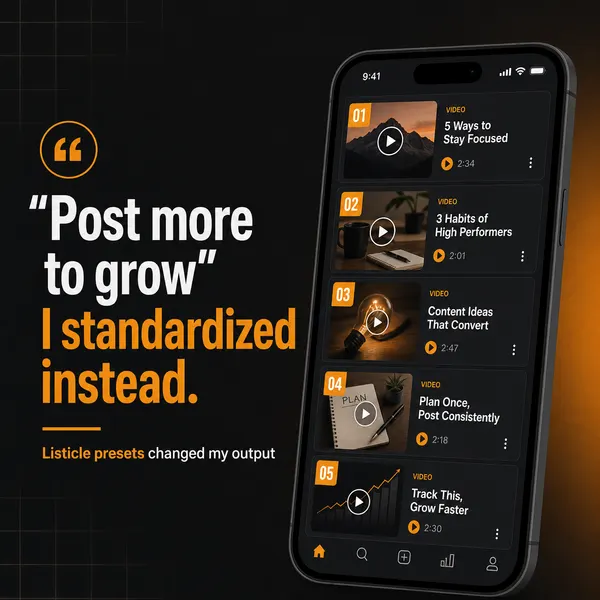
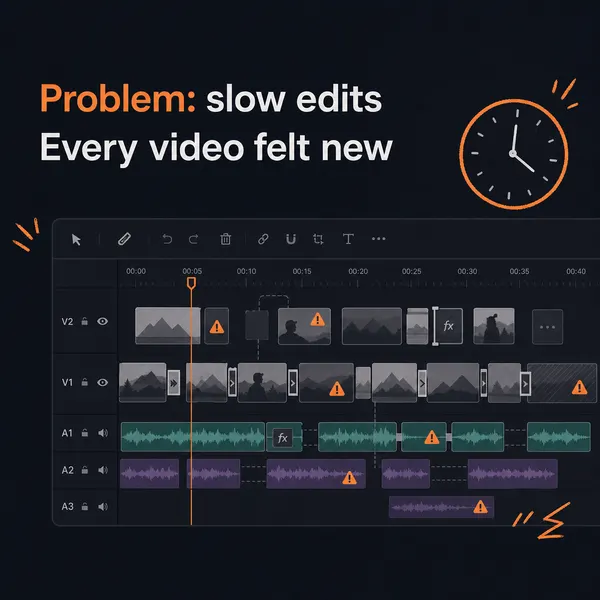
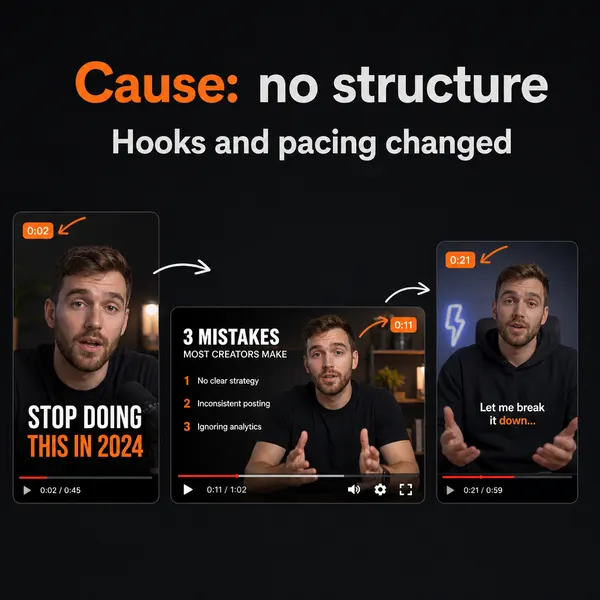
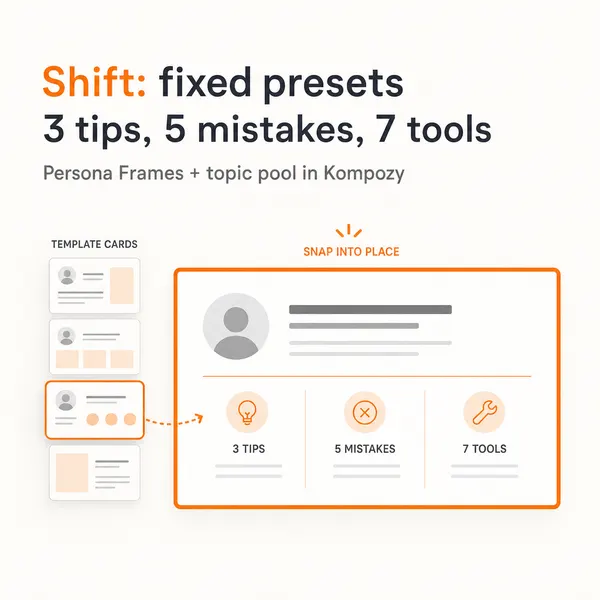
A real carousel from the Kompozy workspace, one of the native formats an idea can take. It's a format example and wasn't made for this guide.
Who is this for, and who should skip it?
Best for:
- Creators and brands whose reach per post is falling even though they post consistently.
- Experts with a real point of view who can own a narrow lane.
- Teams that want one idea in several native formats without rebuilding each by hand.
Not ideal for:
- Anyone looking for a tool to decide their lane or opinions. That stays your job.
- Accounts that win on volume, like news feeds, where cutting output can cost more than it saves.
Frequently asked questions
Why is my social media reach dropping even though I post consistently?
Because the feeds are saturated. The volume of content published now outruns the fixed attention available to consume it, so per-post reach falls. Metricool's 2026 study found reach down on Instagram, TikTok, and LinkedIn even as posting rose. It usually isn't that you're doing something wrong; it's that consistency alone no longer buys reach. The fix is distinctiveness — a narrow lane, a real point of view, native formats, and early engagement velocity — not simply posting more.
Does posting more often help me stand out?
Generally no. In Metricool's 2026 data, posting rose on Instagram, TikTok, and LinkedIn while per-post reach fell, so volume and outcome have come apart. Flooding a saturated feed with more average content dilutes your odds and trains your audience to scroll past you. Breaking through comes from making fewer, sharper posts — a lane you own, a point of view, the right native format — and distributing each one well, not from raw output.
What is engagement velocity and why does it matter now?
Engagement velocity is how much interaction a post earns soon after it goes up. Those early signals help decide whether a post gets tested on a wider audience. That's why the hook and the posting window are strategic: publish when your audience is awake and reactive, and work the first hour by replying to early comments, because a post that opens flat rarely recovers.
How do I make AI-generated content stand out instead of adding to the noise?
Make the AI express your lane, point of view, and identity rather than producing the average of its training data. Generic AI output is exactly the sameness audiences and platforms are learning to filter, so the differentiator is the substance and the brand signature you put through it — a defined voice, a consistent look, a real position. Used that way, AI lets you ship distinctive content faster; used generically, it just speeds up the flood.
How many platforms should I be on to break through saturation?
Be on the platforms where your audience actually is, and cover them by distributing one strong idea in each feed's native shape rather than being thin everywhere. One genuinely good idea given a correctly-shaped life on several feeds plus a blog and newsletter reaches far more attention than spreading mediocre posts across a dozen accounts. The number of platforms matters less than whether each post is native to its feed and distinctive enough to earn the stop.
How do we know this?
We checked the reach data and platform claims on this page against the sources listed below on 2026-10-23, and rewrote or removed any figure we couldn't confirm there. Kompozy plan details come from kompozy.io/pricing.
Sources
- Metricool — 2026 Social Media Study (press release) (read 2026-10-23)
- Net Influencer — Social media saturation reaches tipping point (Metricool 2026 study) (read 2026-10-23)
- Kompozy — Pricing (read 2026-10-23)
Related tutorials
- How to stand out on LinkedIn during the AI slop backlash (2026)
- How to create AI content without AI slop (2026)
- How to curate content for social media (find, frame, credit, and schedule third-party content, 2026)
- How to differentiate your AI videos from YouTube 'slop' (2026)
- How to find your social media target audience (2026)
- How to cross-post on social media (adapt, don't mirror, 2026)