How to use LLMs to learn complex topics (2026 study workflow)
Learn any complex topic with ChatGPT, Claude, or Gemini: calibrate the depth, ground it in real sources, teach it back, quiz yourself, and verify the facts.
Last verified · 2026-10-23 · by Moe Ameen
Published 2026-08-09 · Updated
Short answer
To learn a complex topic with an LLM like ChatGPT, Claude or Gemini, tell the model what you already know, ask for the idea at rising levels of depth, and paste in a real source so it answers from that text. Then explain the idea back for critique, have it quiz you from memory, and check any fact you will rely on against the original source.
Key takeaways
- Tell the model your starting level and your goal before you ask anything.
- Paste the real paper, chapter or docs and have it answer only from that text.
- Teaching the idea back for critique is the step that makes it stick.
- Models tend to agree with you even when you are wrong, so ask them to challenge you.
- Verify numbers, dates and citations against the primary source. Models invent citations.
A large language model is the closest thing to an on-demand tutor that never runs out of patience — it will re-explain the same idea as many ways as you need, at any level, until it clicks. Used well, ChatGPT, Claude, or Gemini can collapse the time it takes to get a working grasp of a dense subject: a research paper, a new codebase, tax law, quantum mechanics, a discipline outside your training.
Used badly, it produces a warm feeling of understanding that evaporates the moment you have to reproduce the idea yourself — and it will state wrong things with total confidence.
The difference is method. The learning science that works with a human tutor — explaining an idea in plain language (the Feynman technique), retrieving it from memory instead of rereading (active recall), spacing your review, and probing the edge of what you know — works even better with a model, because you can run those loops as fast as you can type. This guide is the practical workflow: pick and set up the model, calibrate the explanation to your level, anchor it to a real source so it can't drift, teach the idea back, quiz yourself, and verify anything you'll rely on.
How do you use an LLM to learn a complex topic?
- Pick a model and set the ground rules up front. Any frontier chat model works — ChatGPT, Claude, and Gemini are all strong tutors. Start the session by telling it what you already know and what you want to reach: "I have a stats background but no measure theory; explain the Lebesgue integral so I could re-derive it." Ask it to flag uncertainty and to stop and check your understanding rather than lecturing. That framing shapes every answer that follows.
- Calibrate the explanation to your level with a depth ladder. Don't accept the first explanation. Ask for the same concept at escalating depth: a one-sentence intuition, then a plain-language analogy, then the mechanism, then the formal or edge-case version. Each pass exposes a layer the last one hid, and you can stop at the rung that matches where you are. When an analogy breaks down, ask where — the failure point is usually the real insight.
- Ground the session in a real source instead of the model's memory. A model reasoning from its own training is where hallucination lives. Paste in the actual paper, chapter, docs, or dataset and tell it to explain and answer only from that text, quoting the passage it's drawing on. Grounding the conversation in a source you can check turns a plausible-sounding guesser into a reading partner, and makes every claim traceable back to a line you can verify.
- Teach it back — the reverse Feynman loop. Explain the concept in your own words and ask the model to critique it as a strict examiner: what's wrong, what's vague, what you left out. This is the single highest-yield move, because it forces you to produce the idea rather than recognize it, and the model catches the exact gaps you couldn't see. Rewrite your explanation until it survives the critique with no holes.
- Force active recall with generated questions. Reading an answer feels like learning; retrieving it is learning. Have the model quiz you one question at a time — starting easy and pushing to the edge of your understanding — and answer from memory before it responds. Ask it to turn the material into flashcard-style Q&A pairs you can review later, and space that review over days rather than cramming it into one sitting.
- Use Socratic questioning to find what you don't know. Tell the model to stop explaining and instead ask you probing questions that surface your misconceptions — "why does that hold?", "what would break it?", "how does this connect to X?". The point where you can't answer is the true edge of your knowledge, and it's far more useful to find it this way than to discover it in an exam or a meeting.
- Verify anything load-bearing against a primary source. Before you rely on a fact, formula, date, or citation, confirm it against the original — the textbook, the paper, the official docs. Models are confidently wrong most often on niche, recent, or numeric details, and on citations they sometimes invent outright. Treat the model as a fast first draft of understanding, not the final authority, and the whole workflow stays trustworthy.
Where does learning with an LLM go wrong?
- Fluency is not understanding. A clear explanation you nodded along to is worthless until you can reproduce it from memory — if you skip the teach-back and recall steps, you learned nothing durable.
- Models hallucinate most on exactly the things you can least check: obscure sub-topics, post-training events, specific numbers, and citations. Never trust an unfamiliar fact or a quoted source without confirming it.
- Math and multi-step reasoning still slip. A model can lay out a correct method and botch the arithmetic inside it — check the working, not just the final answer.
- Sycophancy is real. If you state a wrong summary, the model often agrees and builds on it. Ask it to challenge you, and phrase questions neutrally rather than leading it to the answer you want.
- Long chats drift. Over a very long session the model loses track of earlier context and starts contradicting itself — restart with a clean summary of what you've established rather than pushing one thread forever.
- Skipping the "explain from this source" step is how a study session quietly turns into a session studying the model's guesses instead of the material.
If you're a student, using an LLM to understand material is fine, but passing off AI-written explanations, essays, or answers as your own work usually violates academic-integrity policies. Use it to learn the concept, then produce the graded work yourself.
How do you turn what you learned into content with Kompozy?
The under-used payoff of learning a hard subject well is that you can now teach it — and a clear explainer is some of the most durable content on any platform. Kompozy is where the understanding you just built becomes an educational content engine. The artifacts the study loop produces — the plain-language analogies, the four-level depth ladder, the Q&A pairs, the "here's the one thing everyone gets wrong" teardown — are already the raw material for content; you've done the hard part. Drop that explainer into Kompozy as a source and it generates net-new formats around it, not just reshuffles of one post: a Blog Article that lays out the concept properly, a Carousel Post that walks the idea slide by slide (rendered brand-exact via HyperFrames), a Persona Short or Persona HeyGen where your AI-influencer avatar teaches it to camera, Quote Graphics for the key insight, a Text Post per network, and an Email Newsletter for the deep dive — all held to one voice by the Persona Brief and its banned-word filters so a technical topic still sounds like you and not like a model. From there autopilot schedules and fans the series across the eight social platforms plus blog and email behind a per-post review pipeline, so learning one topic seeds weeks of teaching content instead of a single tweet. Starter ($199/mo, 5,500 credits) covers a steady explainer cadence off what you're learning; Pro ($499/mo, 18,000 credits) suits an educator or B2B brand shipping several teaching posts a week across every channel; Enterprise is available through Contact Sales for training and course-led programs. Learn it once with the model; let Kompozy turn that understanding into everything your audience sees.
What does this look like in Kompozy?
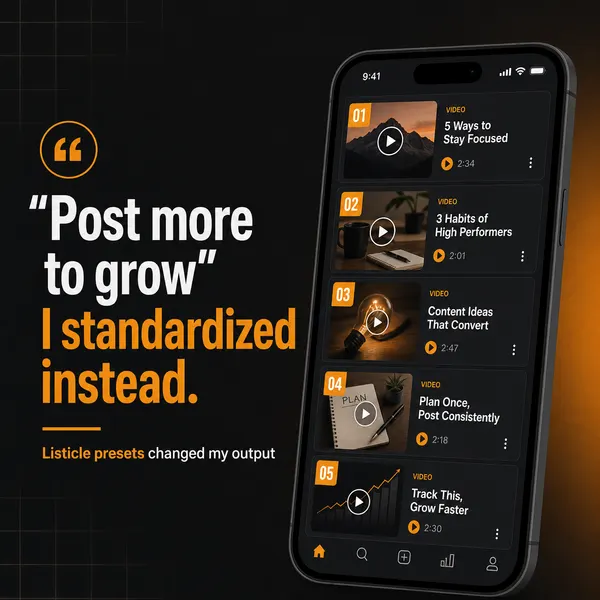
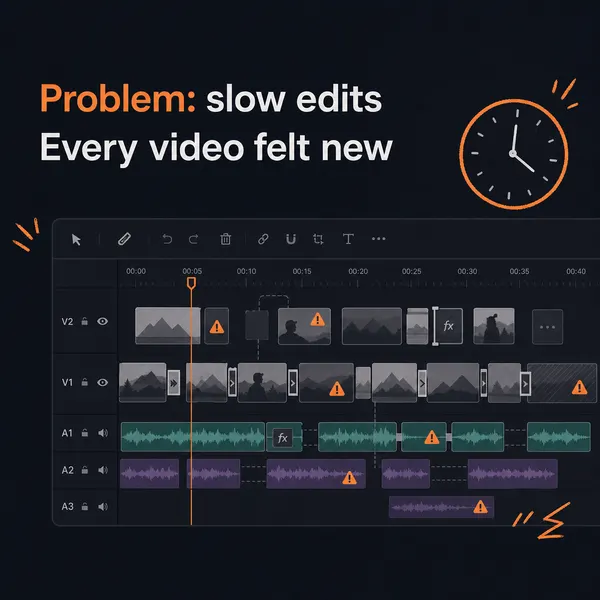
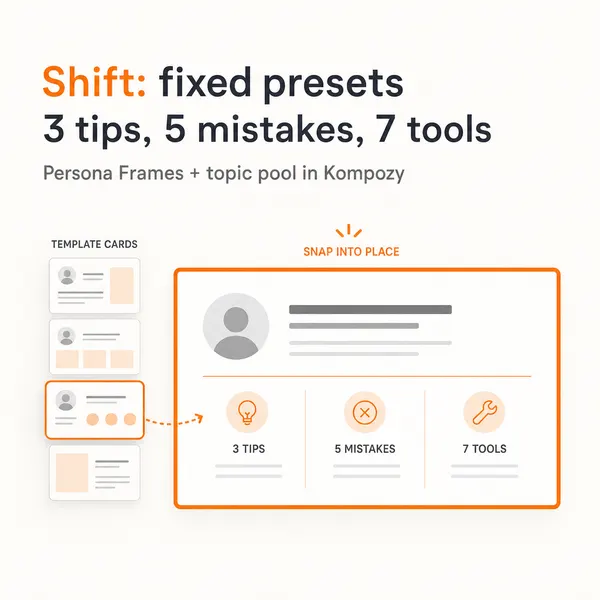
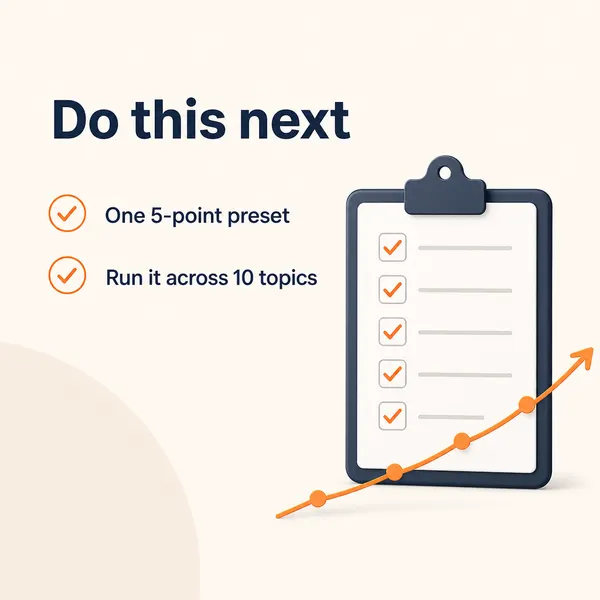
A real carousel made in the Kompozy workspace, shown as an example of the format. It was not made for this guide or for any customer.

Who is this for, and who should skip it?
Best for:
- Self-learners working through papers, docs, codebases or a new field.
- People who already have a trusted source and want a patient explainer next to it.
- Creators and educators who want to teach a topic once they understand it.
Not ideal for:
- Graded work you plan to hand in as your own. Most academic-integrity policies forbid that.
- Exact arithmetic or citations you will not check. The model can be confidently wrong.
- Anyone looking for Kompozy to teach them the topic. It turns what you already understand into content.
Frequently asked questions
Which LLM is best for learning complex topics?
All three frontier chat models — ChatGPT, Claude, and Gemini — are excellent tutors, and the method matters more than the model. Claude and ChatGPT are both strong at patient, layered explanation and at critiquing your teach-backs; Gemini is convenient if you're already grounding sessions in Google Docs or Workspace files. Pick one and run the full loop rather than switching between them.
Can an LLM replace a textbook or a course?
Not for the authoritative content — a textbook or course is a vetted, structured source, and an LLM is a reasoning and explanation layer on top of sources. The strongest workflow pairs them: use the book or course as the ground-truth material, and use the model to unstick you, re-explain, quiz you, and probe your understanding faster than any static resource can.
How do I stop the model from hallucinating while I study?
Ground it. Paste the actual source text and tell it to answer only from that material and to quote the passage it's using; ask it to say "I'm not sure" instead of guessing; and verify any fact, number, or citation you'll rely on against the original. Grounding plus verification removes most of the risk — the rest is not trusting an unfamiliar claim on faith.
Is an LLM good for learning math and technical subjects?
For concepts, intuition, and worked-example walkthroughs, yes — it excels at re-explaining a proof or method until it clicks. For the arithmetic and multi-step calculation inside those methods it's less reliable and can confidently make errors, so check the computation yourself or have it use a code/calculation tool rather than trusting a number it wrote out longhand.
How is this different from just asking ChatGPT to explain something?
A one-off explanation gives you recognition, not retention — you feel you understood it and forget it by tomorrow. The workflow here adds the parts that make learning stick: calibrating depth, grounding in a real source, teaching the idea back for critique, active recall through self-quizzing, and verification. Same tool, dramatically different results.
How do we know this?
On 2026-10-23 we checked the sycophancy claim against Anthropic researchers' paper on arXiv and removed an unsourced claim about AI-detection use in schools. The study techniques are standard learning advice, stated without numbers. Kompozy plan details come from kompozy.io/pricing.
Sources
- arXiv: Towards Understanding Sycophancy in Language Models (Sharma et al.) (read 2026-10-23)
- Kompozy: Pricing (read 2026-10-23)