OpenAI Tests "Sponsored Agents," a New ChatGPT Ad Format You Can Have a Conversation With
Announced September 16, 2026, Sponsored Agents let a shopper tap a relevant ad and open a clearly labeled chat with a business-sponsored AI agent — a US test alongside new AI ad-creation tools and HubSpot and Shopify integrations.
2026-09-17 · by Moe Ameen
Published 2026-09-17 · Updated
Short answer
Sponsored Agents are a ChatGPT ad format OpenAI started testing on September 16, 2026. After seeing a relevant ad, a user can open a clearly labeled chat with a business's AI agent, ask follow-up questions and click through to its site. The test is limited to select U.S. advertisers. OpenAI also added AI ad tools and named HubSpot and Shopify as partners.
Key takeaways
- OpenAI began testing Sponsored Agents on September 16, 2026, with select U.S. advertisers.
- The agent chat is labeled and kept separate from ChatGPT's answers and the user's original conversation.
- New tools include AI-suggested ad copy and imagery from your landing page and opt-in text customization with translation.
- HubSpot is OpenAI's first CRM partner; Shopify is its first ecommerce partner, with an app for U.S. merchants.
What are ChatGPT Sponsored Agents?
On September 16, 2026, OpenAI announced a set of AI-powered advertising features for ChatGPT, headlined by a test of "Sponsored Agents" — a format where a user who taps a relevant ad can open a clearly labeled conversation with a business-sponsored AI agent. OpenAI describes the feature as being tested with a small group of select advertisers in the United States.
The agent conversation is deliberately walled off: OpenAI says it is distinct from ChatGPT's own independent answers and separate from the user's original ChatGPT conversation. Inside it, a person can spell out what matters to them, ask follow-up questions, and click through to the business's website when they're ready to act. OpenAI's illustrative example is a shopper asking a furniture brand's agent about a dining table's dimensions, how many people it seats, and how to care for it.
OpenAI shipped the format alongside broader ad tooling. Advertisers can now manage campaigns with natural-language prompts in ChatGPT through the Ads Manager plugin, get AI-suggested copy and imagery drawn from their landing pages, and opt into AI-powered text customization that adapts existing headlines and descriptions to a conversation's context and translates ad copy into a user's preferred language. It also named its first CRM partner, HubSpot, and its first ecommerce partner, Shopify, whose ChatGPT Ads app is now available to US-based merchants in the Shopify App Store. Two weeks earlier, on August 31, 2026, OpenAI said ChatGPT Ads had reached a $1 billion annualized revenue run rate.
Two things to keep straight. This is an early test, not a general launch — availability is limited to select US advertisers and may change. And a Sponsored Agent is not the ad itself: it is the labeled conversation a user can choose to open after seeing a relevant ChatGPT ad. Confirm current formats, markets, and terms on OpenAI's own advertising pages before planning around any single detail.
Why do Sponsored Agents matter for creators and brands?
- The assistant is turning into a place where a buyer can have a full, back-and-forth sales conversation — not just glance at an ad card. That is mid-funnel intent captured inside the answer, where a recommendation used to be the whole game.
- A sponsored agent only answers as well as the product knowledge behind it. Brands with deep, structured, current content — specs, FAQs, comparisons, care instructions — will field good agent conversations; brands with thin content will field vague ones.
- AI text customization and automatic translation mean your existing copy gets reshaped and localized on the fly, so the quality and clarity of your source content matters more, not less — the model is remixing what you already published.
- It is a US-only test with select advertisers, so most creators and small brands cannot run one yet. Treat it as a strong signal of where high-intent discovery is heading rather than a channel to buy this week.
- The unpaid version still exists and still matters: being the brand ChatGPT names when a user asks for a recommendation is the organic counterpart to a sponsored agent, and it is earned with a consistent, on-brand content footprint across the web.
How can Kompozy build the content a ChatGPT agent answers from?
You can't buy a Sponsored Agent yet unless you're in OpenAI's US test — but you can act on what it signals today, which is that ChatGPT is becoming a conversational storefront that answers from whatever content a brand has published about itself. The move that pays off in both the paid and organic version of that world is the same: put a broad, current, on-brand body of content everywhere the model reads. That is what Kompozy is built to produce. Point it at one source — a product, a launch, a set of customer questions — and under a single Persona Brief that locks your voice and banned words, it generates the corroborating set: Blog Articles structured as direct answers to the questions a shopper actually asks, brand-exact Carousel Posts and Infographic Photos that lay out specs and comparisons, Quote Graphics, Text Posts, avatar-narrated Persona Shorts, and an Email Newsletter — so the facts a future agent (or ChatGPT's own answer) would draw on exist in a dozen legible, consistent places.
Then Autopilot schedules and fans that set across the eight social platforms plus blog and email behind a per-post review gate, so the footprint stays current instead of crawlable-but-stale — and the review gate rejects invented numbers before they ship, which is what keeps a citation trustworthy. Kompozy won't bid in OpenAI's Ads Manager or wire up your Shopify catalog; that stays yours. What it removes is the reason most brands would field a weak agent conversation and lose the organic mention next to it: not enough specific, on-brand, up-to-date content for the model to answer from. For the paid side once you can buy in, see ChatGPT Ads; for the strategy, ChatGPT ads and GEO content.
What are the key facts about Sponsored Agents?
- OpenAI announced a test of ChatGPT Sponsored Agents on September 16, 2026 — a labeled conversation with a business-sponsored AI agent that a user opens by tapping a relevant ad.
- The agent chat is separate from ChatGPT's own answers and from the user's original conversation; people can ask follow-ups and click through to the business's site.
- It shipped with new AI ad-creation tools (natural-language campaign management, AI-suggested creative, opt-in text customization and translation) and integrations with HubSpot (first CRM partner) and Shopify (first ecommerce partner).
- It is an early test with select advertisers in the US and is a different unit from ChatGPT's existing sponsored ad card.
- The durable creator takeaway: an agent answers from your published content, and being cited organically is earned the same way — so a broad, current, on-brand footprint is the asset. A content engine like Kompozy produces and publishes that footprint across the eight social platforms plus blog and email.
What does this look like in Kompozy?
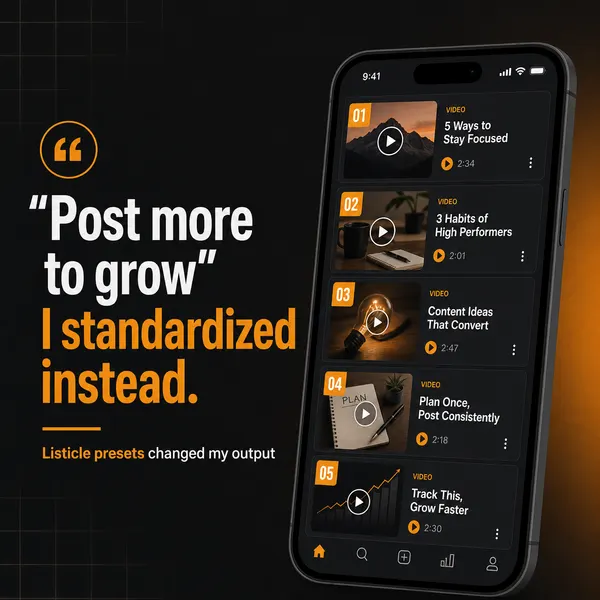
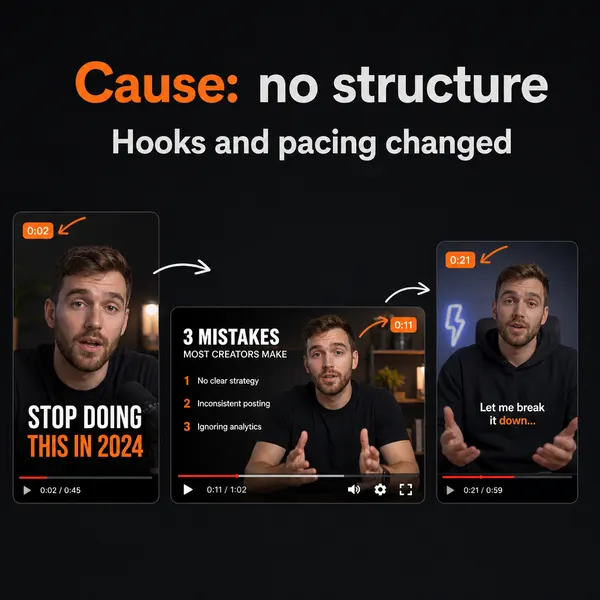
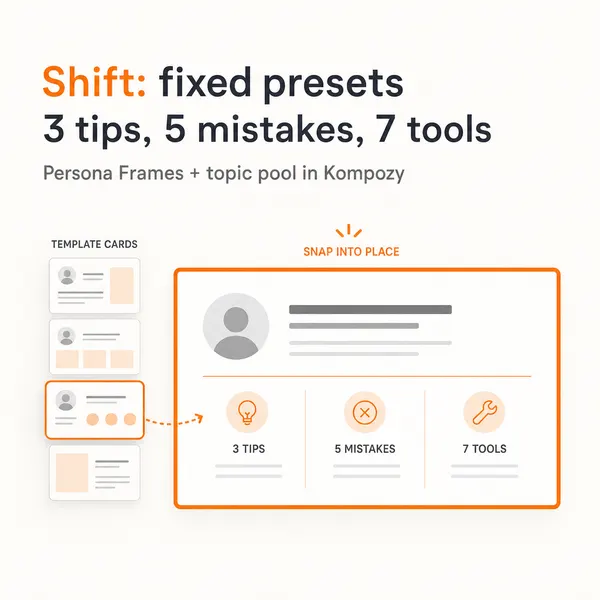
This carousel came out of the Kompozy workspace. It lays specs and answers out slide by slide, the sort of content an agent can draw on. It was not made for a Sponsored Agent.
Who is this for, and who should skip it?
Best for:
- U.S. brands in OpenAI's test, or planning for it, with deep product content an agent can draw on.
- Shopify and HubSpot users who want to run ChatGPT ads from tools they already use.
Not ideal for:
- Advertisers outside the U.S. or outside the test. Most cannot buy it yet.
- Brands with thin product content. An agent can only answer from what you have published.
Frequently asked questions
What are ChatGPT Sponsored Agents?
They are a new ChatGPT ad format OpenAI began testing on September 16, 2026. A user who taps a relevant ad can open a clearly labeled conversation with a business-sponsored AI agent, ask follow-up questions, and click through to the business's website. The conversation is kept separate from ChatGPT's own independent answers and from the user's original chat.
Are Sponsored Agents available to every advertiser?
Not yet. As of the September 16, 2026 announcement, OpenAI described Sponsored Agents as being tested with a small group of select advertisers in the United States. Availability may expand, so confirm current access and markets on OpenAI's advertising pages.
How are Sponsored Agents different from regular ChatGPT ads?
A regular ChatGPT ad is clearly labeled and kept separate from ChatGPT's answers. A Sponsored Agent is what a user can open after seeing one: a back-and-forth chat with a business's AI agent, also labeled and kept apart from both ChatGPT's answers and the user's original conversation.
What did OpenAI announce alongside Sponsored Agents?
New AI ad-creation tools — natural-language campaign management through the Ads Manager plugin in ChatGPT, AI-suggested copy and imagery from your landing pages, and opt-in text customization that adapts headlines and descriptions to a conversation and translates ad copy — plus HubSpot as its first CRM partner and Shopify as its first ecommerce partner, with a ChatGPT Ads app for US-based Shopify merchants.
How do we know this?
We checked every figure, date and quote on this page against the sources listed below on 2026-10-23, and removed or rewrote claims we could not confirm. Kompozy plan and format details come from kompozy.io/pricing.
Sources
- OpenAI — Reimagining advertising with AI (read 2026-10-23)
- OpenAI — A milestone in expanding access to AI (read 2026-10-23)
- Kompozy — Pricing (read 2026-10-23)
Related news
- Six Months Into ChatGPT Ads, Advertisers Still Don't Know What 'Good' Looks Like
- OpenAI Brings Ads to ChatGPT's Free and Go Plans in India
- ChatGPT Ads Appeared in 47% of Video Gaming Chats in June — Up From 3% in March, Comscore Data Shows
- The EU Just Made ChatGPT a "Very Large Online Search Engine" — the First AI Chatbot Regulated Like Google Search