New Research Says Google AI Mode and AI Overviews Are Cutting Clicks to Publishers — Here Is What the 2026 Data Actually Shows
A growing stack of research — SparkToro's 2026 clickstream analysis, a randomized 2026 field experiment, Ahrefs' ongoing tracking, and Pew Research's 2025 behavioral study — all point the same way: when Google answers on the results page, far fewer readers click through to the sites behind the answer.
2026-09-21 · by Moe Ameen
Published 2026-09-21 · Updated
Short answer
Yes. Google's AI answers are cutting clicks to publishers. SparkToro found 68.01% of U.S. Google searches ended without a click in January to April 2026, up from 60.45% in 2024. A randomized study by Agarwal and Sen found AI Overviews cut outbound organic clicks by 39.8%. Ahrefs measured 58% lower CTR for top pages, and Pew found 8% versus 15% click rates. Google says total clicks are stable.
Key takeaways
- SparkToro: 68.01% of U.S. Google searches ended without a click in January to April 2026, up from 60.45% in 2024.
- AI Mode was about 0.34% of searches in that window, but Google says its queries more than double each quarter.
- Agarwal and Sen's randomized experiment: AI Overviews cut outbound organic clicks 39.8% and raised zero-click searches 34.5%.
- Ahrefs found 58% lower CTR for the top page when an AI Overview shows; Pew saw 8% vs 15% click rates.
- Google says total organic clicks are "relatively stable"; a DCN survey found a median 10% referral drop.
What does the 2026 research say about AI Mode and publisher clicks?
Several independent studies — most from 2026, one from 2025 — have now measured the same thing from different angles: when Google renders an answer on its own results page — through AI Overviews and the conversational AI Mode — it sends fewer clicks to the publishers and websites that content came from. SparkToro's Rand Fishkin, analyzing Similarweb clickstream data, found that 68.01% of U.S. Google searches ended without a click in the first four months of 2026, up from 60.45% in 2024. In that framing, less than a third of Google searches still send a visitor to the open web.
The AI Mode picture has an important nuance. In the same clickstream data, AI Mode itself accounted for only about 0.34% of searches during the January–April 2026 window — it is still a small slice of total volume. But its trajectory is steep: Google said at I/O 2026 that AI Mode queries were more than doubling every quarter, and AI Mode conversations are designed to resolve a question in place rather than hand the reader off to a link, so the click rate inside that surface is very low.
The larger near-term driver of zero-click behavior is AI Overviews, which appear on roughly 20%-plus of searches; Ahrefs research cited in the same analysis found they cut click-through rate by close to 60% when present.
Other researchers reached compatible numbers by other methods. A randomized field experiment by Saharsh Agarwal (Indian School of Business) and Ananya Sen (Carnegie Mellon's Heinz College), published in early April 2026, found that showing an AI Overview cut outbound organic clicks by 39.8% and raised zero-click searches by 34.5%, while clicks on sponsored results held roughly flat.
An Ahrefs analysis reported a 58% CTR reduction for top-ranking pages when an AI Overview is present, and estimated Google referral traffic to tracked sites fell about 22% between mid-2025 and mid-2026. Pew Research Center, studying browsing behavior in a 2025 study that tracked actual user sessions, found users clicked a traditional result in just 8% of searches that carried an AI summary, versus 15% without one — an earlier data point, but one the more recent 2026 studies have echoed rather than reversed.
Google disputes the framing, arguing that AI features expand total search activity and send "higher-quality" clicks, and that aggregate click volume to the web is stable. Publishers report otherwise: a Digital Content Next survey of 19 member publishers found a median 10% year-over-year drop in Google search referrals in May and June 2025, and 14% for non-news publishers. Treat the exact percentages as method-dependent snapshots — they vary by study, query type, and time window — but the direction across every independent measurement is consistent.
Why does falling search click-through matter for creators?
- The click, not the impression, is what fed most content businesses. If your model assumed a ranking equals a visit, that assumption is breaking — an answer rendered on Google's page can satisfy the reader without ever loading yours.
- AI Mode is small today but structurally click-averse. It is only a fraction of searches now, but it is doubling quarterly and is built to end the query in the conversation, so planning as if it stays niche is a bet against Google's own roadmap.
- Informational and top-of-funnel content is hit hardest. The queries most likely to trigger an AI answer are the "what is / how do I / best way to" searches many creators built their traffic on; transactional and branded queries hold up better.
- The winners are sites people seek out on purpose. When generic discovery clicks dry up, the traffic that survives comes from an audience that already knows your name — followers, subscribers, and readers who type you in directly.
- Distribution has to move to where attention actually is. If the open-web click is shrinking, the reach that replaces it lives inside the feeds — video, carousels, posts — and in owned channels like email that no results-page summary can intercept.
How do you replace lost search clicks with Kompozy?
The uncomfortable read of this research is that ranking a page and getting a visit are decoupling, and no amount of on-page SEO reverses a summary that answers the question before the click. The practical response is to stop treating the Google results page as your main distribution and start putting each idea directly in front of people on the surfaces where they now spend attention — the social feeds — while still producing the kind of deep, citable writing the AI answers pull from. Kompozy is built to do both from a single input, so you are not trading search reach for a second full-time content job.
Feed it one source — a post that landed, a transcript, a product update — and Kompozy generates the platform-native formats that live inside the feed rather than behind a link: captioned Persona Shorts and Clipped Shorts, brand-exact Carousel Posts, Photo Posts, and Quote Graphics, all governed by one Persona Brief so voice and face stay consistent across every platform. From the same source it also drafts a Blog Article and an Email Newsletter — the long-form, owned channels that both build direct audience and give the AI answer engines something substantive to cite. Autopilot then schedules and publishes across the eight social platforms plus blog and email, with a per-post review gate before anything ships. For Google's own attempt to soften the blow, see the publisher controls it launched to fight AI traffic loss; for the broader signal, see Reddit's warning that AI Overviews made search referrals "choppy".
What are the quick takeaways on AI search and publisher clicks?
- SparkToro (Rand Fishkin, Similarweb clickstream) found 68.01% of U.S. Google searches ended without a click in early 2026, up from 60.45% in 2024 — less than a third still send a visit to the open web.
- AI Mode was only ~0.34% of searches in the January–April 2026 window but is doubling quarterly per Google; its conversational design resolves questions in place, so click rates inside it are very low.
- A randomized field experiment (Agarwal & Sen, April 2026) found AI Overviews cut outbound organic clicks 39.8%; Ahrefs measured a 58% CTR drop for top pages; Pew found 8% vs 15% click rates with and without an AI summary.
- Google says AI features grow search and send higher-quality clicks; a Digital Content Next survey found a median 10% drop in Google search referrals among 19 member publishers in mid-2025.
- The durable response is owned and in-feed distribution — video, carousels, posts, and email that a results-page answer cannot intercept — which is what a generation-and-publishing engine like Kompozy produces from one source.
What does this look like in Kompozy?
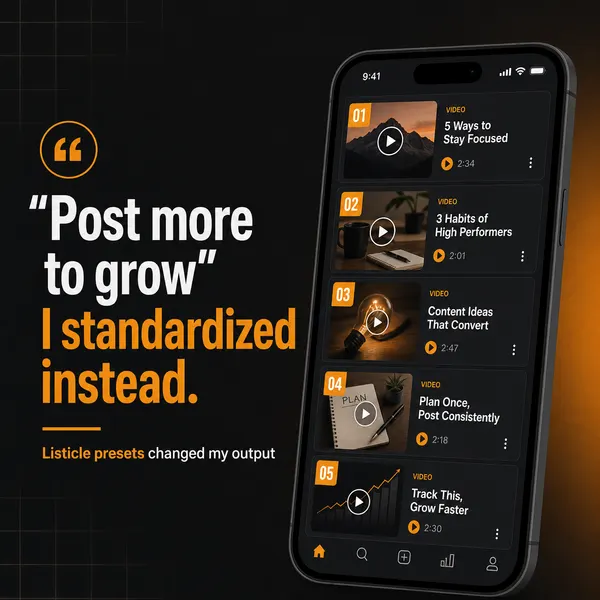
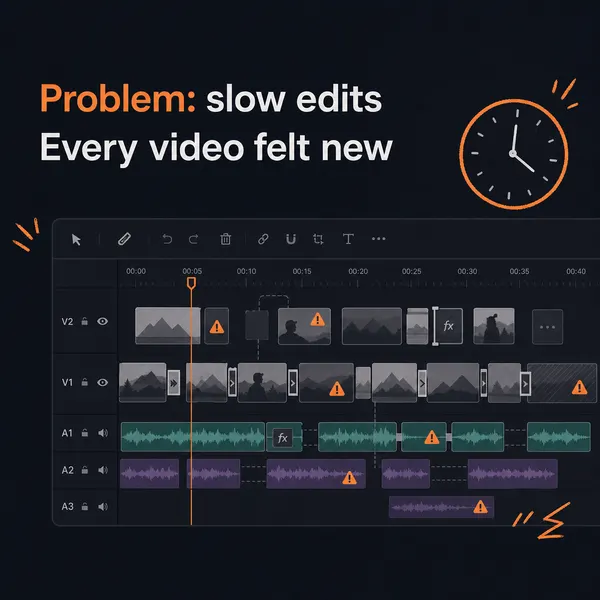
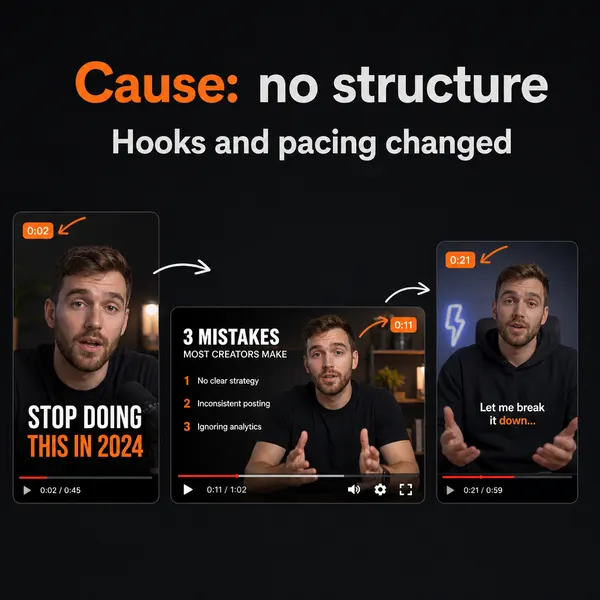
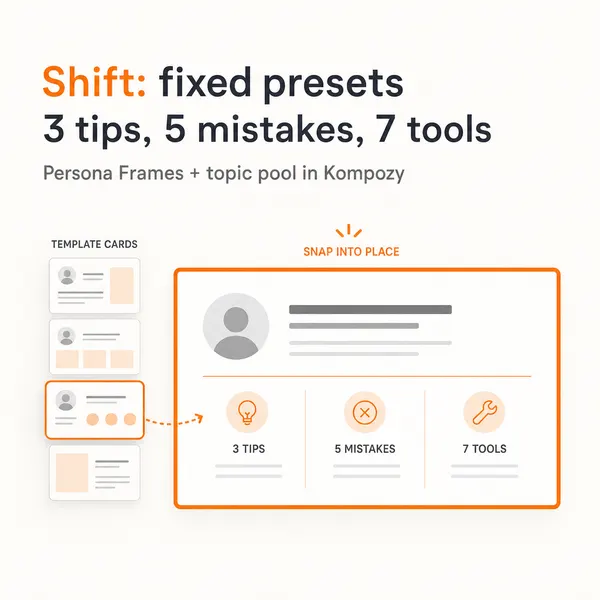
This five-slide carousel came straight out of the Kompozy workspace. It is here to show the format, not this news item.
Who is this for, and who should skip it?
Best for:
- Publishers and creators who depend on informational Google traffic and need to plan for fewer clicks
- Teams deciding how much effort to move into social feeds, email and other owned channels
Not ideal for:
- Sites whose traffic is mostly branded or transactional searches, which the research says hold up better
- Anyone looking for one exact figure; every study measures a different thing
Frequently asked questions
Does Google AI Mode actually reduce clicks to websites?
Research points that way. AI Mode is designed to answer a question inside the conversation instead of sending you to a link, so click rates within it are very low. It is still a small share of total searches (about 0.34% in early 2026 per SparkToro), but Google says AI Mode queries are more than doubling each quarter, and the closely related AI Overviews already appear on 20%-plus of searches and sharply cut click-through when present.
How much have publisher clicks dropped because of AI search?
It depends on the study and query type. SparkToro found 68.01% of U.S. Google searches ended without a click in early 2026. A randomized experiment by Agarwal and Sen measured a 39.8% drop in outbound organic clicks when an AI Overview appeared; Ahrefs reported a 58% CTR reduction for top pages; Pew found users clicked a traditional result in 8% of AI-summary searches versus 15% without. A Digital Content Next survey found a median 10% year-over-year drop in Google search referrals among 19 member publishers in May and June 2025.
What does Google say about the traffic-loss research?
Google disputes the framing. It argues that AI features expand overall search activity, that total click volume to the web is broadly stable, and that clicks coming from AI experiences are "higher quality." Independent researchers and publisher groups generally disagree, and the specific numbers vary by methodology, but multiple independent studies point the same direction.
How should creators respond to AI Mode cutting search traffic?
Diversify off the search click. Publish native content directly in the social feeds — short video, carousels, posts — where discovery has moved, and build owned channels like email and a blog audience that a results-page answer cannot intercept. A tool like Kompozy turns one source into on-brand shorts, carousels, images, a blog, and a newsletter, then schedules and publishes them across the eight social platforms plus blog and email.
How do we know this?
We checked every date, figure and product claim on this page against the sources listed below on 2026-10-23, and rewrote or removed anything they did not support. We read each figure in the study or report listed and swapped a Digital Content Next range we could not find for the survey median it published. Kompozy plan and format details come from kompozy.io/pricing.
Sources
- SparkToro, In 2026, less than one third of Google searches still send a click (read 2026-10-23)
- PPC Land, AI Overviews cut publisher clicks 39.8% in first randomized study (read 2026-10-23)
- Ahrefs, Update: AI Overviews reduce clicks by 58% (read 2026-10-23)
- Pew Research Center, Google users are less likely to click on links when an AI summary appears (read 2026-10-23)
- Press Gazette, UK and US publishers say Google AI is harming website traffic (read 2026-10-23)
- Google, AI in Search is driving more queries and higher quality clicks (read 2026-10-23)
- Kompozy, Pricing (read 2026-10-23)
Related news
- Google Gives Publishers New Controls to Fight AI-Driven Traffic Losses, Led by an Embeddable "Preferred Sources" Button
- Reddit's Stock Falls After a Record Quarter as Its CEO Warns Google's AI Overviews Made Search Referrals 'Choppy'
- Google AI Mode Queries Keep Getting Longer — and 2026 Data Shows the Behavior Bleeding Into Regular Search