Google Pushes Gemini From Chatbot to Agent: What "Gemini Agent" Actually Does — and Doesn't
Google has spent 2026 reframing Gemini as an AI agent that acts on your behalf rather than only answering questions. Gemini Agent can browse, research, and prepare bookings — but it stops before spending money or sending a message, and it publishes no content of its own.
2026-09-03 · by Moe Ameen
Published 2026-09-03 · Updated
Short answer
Gemini Agent is Google's experimental feature for running multi-step tasks inside the Gemini app. It launched with Gemini 3 on November 18, 2025 for Google AI Ultra subscribers in the U.S. It uses Deep Research, Canvas, Gmail, Calendar and live web browsing to research and prepare things like a car rental, then asks before buying or sending a message. It does not create or publish content.
Key takeaways
- Gemini Agent launched with Gemini 3 on November 18, 2025, on the web for Google AI Ultra subscribers in the U.S.
- It chains Deep Research, Canvas, Gmail, Calendar and web browsing to work through a goal step by step.
- Gemini asks for confirmation before purchases or sending messages, and you can take over at any time.
- Project Mariner shut down on May 4, 2026; its notice points users to Gemini Agent.
- None of these agents make or publish posts, so that work still needs its own tool.
What is Gemini Agent and what does it do?
Google has spent 2026 restating what Gemini is for. The pitch through the year is a shift from a chatbot that answers questions to an agent that carries out tasks: a system you hand an objective, not just a prompt. The most concrete piece of that is Gemini Agent, an experimental feature that handles multi-step tasks directly inside the Gemini app. Google introduced it alongside its Gemini 3 model on November 18, 2025, launching it on the web for Google AI Ultra subscribers in the United States and describing it as rolling out to Ultra members first.
Gemini Agent works by chaining Google's existing tools rather than being a single new one. To finish a request it pulls on Deep Research, Canvas, connected Google Workspace apps like Gmail and Calendar, and live web browsing, breaking a goal into steps and working through them. Google's own example is a travel task: "Research and help me book a mid-size SUV for my trip next week under $80/day using details from my email," where the agent finds the flight details, compares rentals within budget, and prepares the booking.
The stated guardrail is that you stay in control — Gemini is designed to seek confirmation before critical actions such as making a purchase or sending a message, and you can take over at any point. In practice that means it does the gathering and the setup, then hands the final, consequential click back to you.
The broader push predates the app feature. Gemini Agent is built partly on Project Mariner, Google DeepMind's research prototype for browser-automating agents that first appeared on December 11, 2024. Google discontinued Mariner as a standalone project on May 4, 2026, and its shutdown notice points users to Gemini Agent; coverage of the shutdown also names Search's AI Mode as a home for its technology. At I/O on May 19, 2026, Google introduced Gemini Spark, a 24/7 personal AI agent that runs tasks in the background.
Treat exact availability, gating, and feature scope as a moving target. Agentic features have been rolling out region by region and tier by tier, several are labelled experimental, and real-world reliability on open-ended web tasks is still uneven across the whole industry, not just at Google. The direction is clear and consistent; the specifics are still settling, so confirm any single capability or rollout detail against Google's own pages before relying on it.
Why does Gemini's shift to agents matter for creators?
- The framing changed, the boundary didn't. An "agent" that books a rental car or triages your inbox is still a personal-assistant tool — it does errands and research, not content production or publishing.
- It is gated and early. Gemini Agent launched for Google AI Ultra subscribers in the US and is experimental; if you are outside that tier or region, it may not be available to you yet.
- The human stays in the loop by design. Gemini seeks confirmation before purchases or sending messages, so it is not a fully hands-off automation — you approve the consequential steps.
- The research-and-gathering half is the real creator value. Deep Research, web browsing, and pulling from Gmail and Calendar are genuinely useful for assembling source material and briefs.
- It generates and publishes no content. Gemini Agent will not make a caption, a Short, a carousel, or a scheduled post, and it posts to no social platform — the making and distribution remain a separate job.
How do you use Gemini Agent research with Kompozy?
There are two ways to act on this story. The fast one is to ride it: "chatbot to agent" is a shift your audience is already arguing about, and a clear explainer of what Gemini Agent actually does — and where it stops — is exactly the kind of timely take that earns reach. Drop your angle into Kompozy and it becomes a week of content from one idea: a native Text Post for X and LinkedIn, a Carousel breaking down "what an agent does vs what it won't," Quote Graphics pulling the sharpest line, a captioned Persona Short explaining it to camera, a Blog Article for the long-tail search, and a newsletter — every piece held to your voice by one Persona Brief and published across the eight social platforms plus blog and email on Autopilot.
The slower, more useful read is the boundary itself. Gemini Agent proves that "agentic" now means "does your errands and research," not "runs your content operation." An agent that books your travel still records no video, designs no carousel, writes nothing in your brand voice, and publishes to nothing. That gap is where Kompozy lives: it is the agent for your content specifically — point it at a source and it generates the finished formats a task assistant can't, then schedules and ships them everywhere. Use Gemini Agent to gather and research; use Kompozy to turn what you gathered into published posts. For the related move where Gemini becomes a clicking web agent, see our coverage of computer use built into Gemini 3.5 Flash and the desktop-focused Gemini Spark.
What are the quick takeaways on Gemini Agent?
- Google spent 2026 reframing Gemini from a chatbot into an agent that acts on your behalf.
- Gemini Agent, introduced with Gemini 3 on November 18, 2025, runs multi-step tasks using Deep Research, Canvas, Gmail, Calendar, and live web browsing, starting on the web for Google AI Ultra subscribers in the US.
- It seeks confirmation before critical actions like purchases or sending messages, and you can take over anytime — so it prepares actions rather than finishing them unattended.
- Project Mariner, the browser-agent prototype from December 2024, was discontinued on May 4, 2026; its shutdown notice points users to Gemini Agent.
- None of these agents generate or publish content. Kompozy is the layer that turns research and ideas into finished, scheduled posts across platforms.
What does this look like in Kompozy?
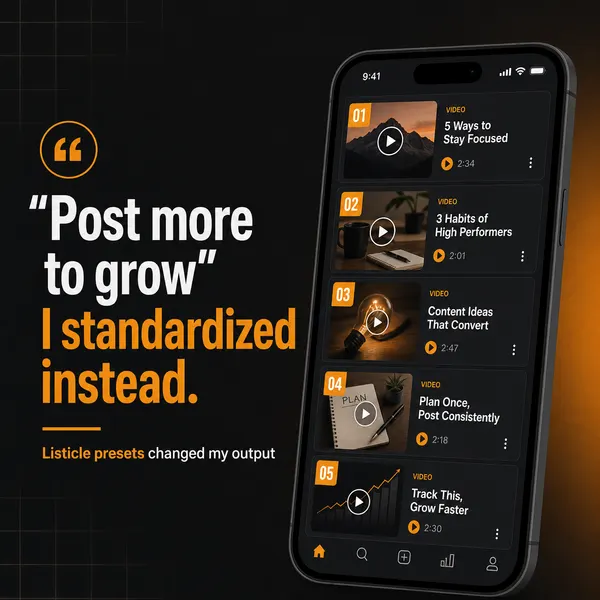
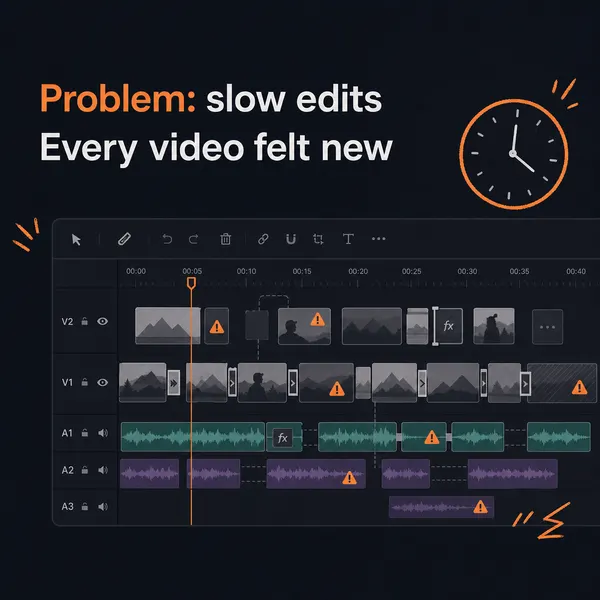
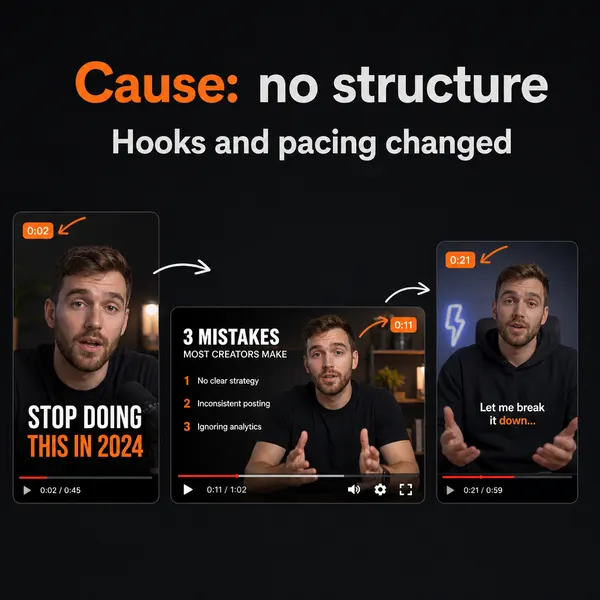
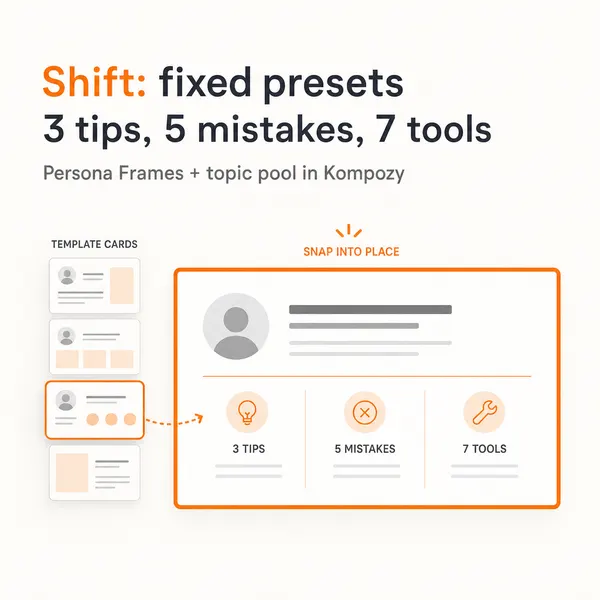
Real Kompozy output: a five-slide carousel from the workspace, shown as an example of the format rather than a post about this topic.
Who is this for, and who should skip it?
Best for:
- Google AI Ultra subscribers who want help with research and errands across Gmail, Calendar and the web
- Creators gathering source material and briefs before they write
Not ideal for:
- Anyone outside the tier and region where Gemini Agent is offered
- People who want an agent that finishes purchases or sends messages unattended
Frequently asked questions
What is Gemini Agent?
Gemini Agent is an experimental feature inside the Gemini app that handles multi-step tasks on your behalf. Introduced with Gemini 3 on November 18, 2025 for Google AI Ultra subscribers in the US, it uses Deep Research, Canvas, connected Google Workspace apps like Gmail and Calendar, and live web browsing to break a goal into steps and work through them — for example, researching and preparing a car-rental booking from details in your email.
Does Gemini act completely on its own?
No. Google designed Gemini Agent to seek confirmation before critical actions such as making a purchase or sending a message, and you can take over at any time. It does the research and setup, then hands the final consequential step back to you, so it is an assisted agent rather than a fully hands-off one.
Can Gemini agents create and publish social media content?
No. Gemini Agent and Gemini Spark are personal task and research agents — they browse, gather, book, and organize. They do not generate captions, video, images, carousels, blogs, or newsletters, and they publish to no social platform. Turning research or an idea into finished, scheduled content across platforms is a separate job handled by a content engine like Kompozy.
What happened to Project Mariner?
Project Mariner was Google DeepMind's browser-automation research prototype, first shown on December 11, 2024. Google discontinued it as a standalone project on May 4, 2026. Its shutdown notice points users to Gemini Agent, which Google says was built on insights from Mariner, so the technology lives on inside Gemini rather than as its own tool.
How do we know this?
We checked every date, figure and product claim on this page against the sources listed below on 2026-10-23, and rewrote or removed anything they did not support. Gemini Agent details come from Google's Gemini 3 post; Project Mariner and Gemini Spark dates come from the coverage listed. We removed claims about Agent Mode, Chrome and Vertex AI that we could not confirm. Kompozy plan and format details come from kompozy.io/pricing.
Sources
- Google, Gemini 3 in the Gemini app (read 2026-10-23)
- Wikipedia, Project Mariner (read 2026-10-23)
- TechSpot, Project Mariner is dead, but Google's browser-controlling AI lives on (read 2026-10-23)
- GIGAZINE, Google announces Gemini Spark (read 2026-10-23)
- Kompozy, Pricing (read 2026-10-23)