Google Says There's Nothing Special to Do for AI Search: Publishers Can Keep Prioritizing SEO Over GEO
Asked on Bluesky whether some sites can skip generative engine optimization and just focus on SEO, Google's John Mueller said there is "nothing really special you need to do for generative AI responses in search" — restating Google's position that GEO is still SEO.
2026-08-24 · by Moe Ameen
Published 2026-08-24 · Updated
Short answer
Google says publishers don't need a separate GEO program for its AI search features. Asked on Bluesky, John Mueller said there's "nothing really special you need to do for generative AI responses in search." Google's AI Overviews and AI Mode draw on the same index as regular results, and its developer guide calls optimizing for them "still SEO." That guidance covers Google only, not ChatGPT or Perplexity.
Key takeaways
- John Mueller said on Bluesky there is "nothing really special" to do for generative AI responses in search.
- AI Overviews and AI Mode pull from top results plus fan-out queries in the same index.
- Google's guide says you don't need to chunk content or create AI text files, markup or Markdown.
- Google points to non-commodity, first-hand content as what matters.
- The advice is about Google Search only.
What did Google say about SEO versus GEO?
Google has again told publishers they do not need a separate discipline for AI search. Asked on Bluesky whether there are industries where generative engine optimization (GEO) "simply doesn't matter yet" — the questioner named sectors like adult and gambling, where Google still drives most discovery — Google Search Advocate John Mueller answered: "I'm not quite sure what you're asking; from our POV there's nothing really special you need to do for generative AI responses in search." In other words, there is no site or vertical that needs to choose between SEO and GEO, because from Google's side they are the same work.
Mueller's reasoning is mechanical, not philosophical. Google's AI answers in Search — AI Overviews and AI Mode — are generated from the same crawled index that powers ordinary results. The system picks from the top results for a query, plus results for a fan-out of related queries, and summarizes those. So the page that ranks well is the page that gets pulled into the AI answer; there is no separate "AI index" to optimize for and no GEO-specific lever that a strong search page is missing.
That restates the position Google set out in its own developer guidance, "Optimizing your website for generative AI features on Google Search," which states plainly that "optimizing for generative AI search is optimizing for the search experience, and thus still SEO." The same guide pushes back on several popular GEO tactics: it says there is no need to break content into tiny chunks for AI to understand it, and that you don't need to create new machine-readable files, AI text files, markup, or Markdown — an implicit nod at proposals like llms.txt — to appear in Google Search.
What it emphasizes instead is unique, non-commodity content: expert or first-hand takes that go beyond common knowledge, contrasting a generic "7 Tips for First-Time Homebuyers" with something only you could write.
The date on Mueller's exact remark is hard to pin to a primary source, so treat the wording as the quote and the timing as recent-2026 rather than a fixed announcement. What is settled is the substance, because Google has now said it more than one way and in more than one venue: for Google Search specifically, there is no GEO checklist separate from doing SEO well. Note the scope — this is Google's guidance for its own generative features, not a claim about ChatGPT, Perplexity, or other answer engines, which crawl and rank differently.
Why does "GEO is still SEO" matter for publishers?
- For Google specifically, "GEO vs SEO" is a false choice. If AI Overviews and AI Mode are built from the crawled index, the page that earns a normal ranking is the page that gets cited — so a publisher can keep pointing its effort at SEO fundamentals without a parallel GEO program.
- It undercuts the GEO-hack economy. Google is directly telling you that chunking content into fragments, publishing llms.txt-style AI files, or chasing special markup does nothing for visibility in its AI answers — spend saved on those tactics is spend freed for content.
- Non-commodity content is the actual lever. Google keeps naming unique, first-hand expertise as what wins. Recycled "listicle of tips" content is exactly what an AI answer flattens into one sentence; a take only you could write is what gets quoted with attribution.
- The scope caveat matters. This is guidance for Google's features, not the whole answer-engine landscape. Being cited by ChatGPT or Perplexity still rewards broad presence and consistency, so "it's all just SEO" is true for Google and only partly true elsewhere.
- Presence and passage-level clarity beat tricks. Because Google fans a query out into related sub-questions, the win is being the clean, self-contained answer to each of them across the surfaces AI pulls from — the same thing good SEO already asks for.
How do you act on Google's guidance without GEO hacks?
Take Google at its word and the to-do list shrinks in a useful way: there is no GEO tactic to buy, so the leverage moves back to two things you control — publishing genuinely non-commodity content, and being present across every surface an answer engine samples. That is the exact job Kompozy is built for, and it is a different pitch from the "add structured data and an llms.txt" advice Google just waved off. Kompozy doesn't sell GEO tricks; it makes you consistently, credibly present.
Here is how that turns into work. Start from one source — a long video, a blog draft, a founder's raw take — and Kompozy generates across its 20 formats, held to one voice by a Persona Brief: a blog article, carousels rendered brand-exact through HyperFrames, quote graphics, photo posts, captioned Persona Shorts, and a newsletter. The Persona Brief is what keeps output on the "expert, first-hand" side of Google's commodity line instead of generic filler, because your point of view rides every piece. Then Autopilot schedules and publishes the set across the eight social platforms plus blog and email, each passing a per-post review gate first — so the same idea is present as a ranked page, a video, and a social post, which is what generative engine optimization actually rewards once you drop the hacks. If you want the strategy behind this beyond a single tool, see the GEO content strategy for AI Overviews and the fact that Google's llms.txt-style AI files aren't a ranking factor it honors.
What are the key facts about Google's GEO guidance?
- Asked on Bluesky whether some sites can skip GEO and just do SEO, Google's John Mueller said there is "nothing really special you need to do for generative AI responses in search."
- Google's AI Overviews and AI Mode are built from the same crawled index as normal results, so the page that ranks is the page that gets summarized — there is no separate AI index to optimize.
- Google's developer guide says optimizing for generative AI search is "still SEO," and that chunking content or publishing special AI text files and markup does not help visibility in Search.
- The lever Google keeps naming is unique, non-commodity content — first-hand expertise over recycled tips. The guidance covers Google's features, not other answer engines like ChatGPT or Perplexity.
What does this look like in Kompozy?
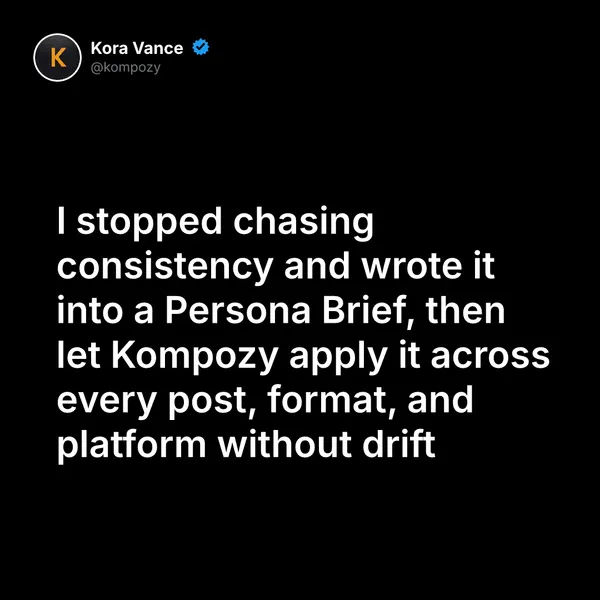
A real quote graphic generated in the Kompozy workspace, shown as an example of the format. It wasn't made about this story. A single strong line from a first-hand take is the kind of thing it carries.
Who is this for, and who should skip it?
Best for:
- Publishers deciding whether to pay for GEO services aimed at Google
- Teams with SEO basics in place who want to know what else to do
- Experts who can write first-hand, non-commodity content
Not ideal for:
- Anyone optimizing mainly for ChatGPT or Perplexity, which this does not cover
- Sites hoping an llms.txt file will help them in Google
- Publishers whose content is mostly generic tips
Frequently asked questions
Did Google say publishers can prioritize SEO over GEO?
In effect, yes — for Google Search. John Mueller responded to a question about whether some sites can ignore generative engine optimization by saying there is "nothing really special you need to do for generative AI responses in search." Google's position is that optimizing for its AI features is the same work as SEO, so there is no separate GEO program a publisher must run to appear in AI Overviews or AI Mode.
Why does Google say GEO is still SEO?
Because Google's AI answers are generated from its existing crawled index. AI Overviews and AI Mode pick from the top-ranking results for a query, plus results for a fan-out of related queries, and summarize them. The page that earns a normal ranking is the page that gets pulled into the AI answer, so there is no AI-only lever separate from ranking well in search.
Do I need llms.txt, content chunking, or special markup for Google AI search?
No, according to Google. Its guidance says you don't need to create new machine-readable files, AI text files, markup, or Markdown to appear in Google Search, and that there is no requirement to break content into tiny pieces for AI to understand it. Google's systems can read a normal, multi-topic page and surface the relevant part. It emphasizes unique, non-commodity content instead.
Does this mean GEO does not matter anywhere?
No — the guidance is specific to Google's own generative features. Other answer engines like ChatGPT and Perplexity crawl, rank, and cite differently, so being recommended by them still rewards broad presence and consistency across many surfaces. The safe read is that for Google it is all SEO, and everywhere else the win is being genuinely present wherever answer engines look.
How do we know this?
We checked every date, figure and quote on this page against the sources listed below on 2026-10-23, including Google's own developer guide, which we quote directly, and rewrote or removed anything they didn't support. Kompozy plan and feature details come from kompozy.io/pricing.
Sources
- Search Engine Journal — Google answers if some sites can ignore GEO and just focus on SEO (read 2026-10-23)
- Google Search Central — Optimizing your website for generative AI features on Google Search (read 2026-10-23)
- Kompozy — Pricing (read 2026-10-23)
Related news
- Google Begins Rolling Out the August 2026 Spam Update — Global, All Languages, No New Policies
- Google Gives Publishers New Controls to Fight AI-Driven Traffic Losses, Led by an Embeddable "Preferred Sources" Button
- llms.txt Gets a V2: Jeremy Howard Adds Formal Markdown Linking So AI Agents Can Find Your Pages
- A New Analysis Says ChatGPT Names the Brands It Will Recommend Before It Searches the Web