Qwen3.8-2.4T-A95B Review (2026): Honest Verdict on Alibaba's Open-Weight Flagship
Qwen3.8-2.4T-A95B review 2026. Honest scoring on the open weights, custom license, 95B-active MoE, long context, and the content gap — and who it fits.
Published 2026-08-12 · Updated
Short answer
Qwen3.8-2.4T-A95B is the open-weight release of Alibaba's Qwen3.8-Max flagship: a mixture-of-experts model with 2.4 trillion total parameters and 95 billion active per token. It is text-only, always reasons before answering, and ships under a custom Qwen3.8-Max license rather than Apache 2.0. It needs data-center hardware and generates no media, so it is infrastructure for serious operators, not a content tool.
Key takeaways
- It has 2.4T total parameters, 95B active per token, and 512 experts with 11 active.
- Context is 262,144 tokens natively and extends to about 1 million.
- The downloadable checkpoint is text-only and thinking mode cannot be turned off.
- Model-as-a-service providers above $50M in yearly revenue need a separate license.
- It makes no media and publishes nothing, so a content engine has to sit on top.
Qwen3.8-2.4T-A95B is one of the most capable open-weight models of 2026. It is the downloadable release of Alibaba's Qwen3.8-Max flagship, a ~2.4T-parameter mixture-of-experts model with ~95B active per token, a very long context, and configurable reasoning depth. Two caveats: the released checkpoint is text-only, and the weights ship under a custom Qwen3.8-Max license with extra terms for very large products and model-as-a-service providers, not Apache 2.0. It generates no media and publishes nothing.
Most coverage of Qwen3.8-2.4T-A95B is a benchmark table with an "open weights beat the closed models" headline stapled on top. This review is not that. We build a content engine and read model cards for a living, so the goal is to tell you what this release is genuinely good at, where its scope honestly stops, and — because people arrive at this sideways — whether a frontier open model you self-host does anything for a content operation.
Short version up top: Qwen3.8-2.4T-A95B is the downloadable, open-weight release of Qwen3.8-Max, Alibaba's flagship, published on Hugging Face in August 2026. It is a sparse mixture-of-experts model — roughly 2.4 trillion total parameters but only about 95 billion active per token — built on the Qwen3.5 architecture, with linear-attention "Gated DeltaNet" layers interleaved with standard attention, a 262K-token native context extensible toward one million, and configurable reasoning tiers. On Alibaba's own reporting it posts strong research and reasoning scores and is framed as competitive with leading frontier models.
Two caveats deserve to be up front rather than buried, because both change how you should score it. First, per the official model card the released checkpoint is text-only and runs in thinking mode — Alibaba's hosted Qwen3.8-Max tier adds vision input, but the artifact you download here is text in, text out.
Second, this is not an Apache 2.0 release: the weights carry a custom "qwen3.8-max" license, Research and small-scale commercial use are allowed. Products above 100 million monthly users or $20 million in monthly revenue must credit the model, and model-as-a-service providers above $50 million in yearly revenue need a separate license from Qwen. "Open" here is real but narrower than the smaller Qwen models.
This review covers what Qwen3.8-2.4T-A95B actually is, how its capability, efficiency, and openness hold up, where it is strong, where it is honestly the wrong tool, and who should use it versus who should keep looking.
What is Qwen3.8-2.4T-A95B?
Qwen3.8-2.4T-A95B is an open-weight large language model from Alibaba's Qwen team — the downloadable release of the Qwen3.8-Max flagship, published on Hugging Face in August 2026. It is a mixture-of-experts model: roughly 2.4 trillion total parameters, but only about 95 billion active per token, routed through a large expert pool (a shared expert plus a small set of routed experts active per token). Its architecture is hybrid — linear-attention "Gated DeltaNet" layers interleaved with standard gated-attention layers, the same lineage as Qwen3.5 — which helps it handle a 262K-token native context extensible toward roughly one million, with output up to about 128K tokens. It exposes configurable reasoning depth so you can trade compute for answer quality per request. Per the official model card, the released checkpoint is text-only and requires thinking mode. What it does is generate and reason over text, economically relative to its nominal size because only ~95B parameters are active per token. What it does not do is anything beyond text: no image, video, or audio generation, no captioning or design, no brand-voice layer, and no publishing. It is reached by downloading the weights and serving them yourself — a data-center-class job for a 2.4T model, eased by serving stacks like SGLang, vLLM, and TokenSpeed — or through Alibaba's hosted Qwen API at per-token pricing.
Who is Qwen3.8-2.4T-A95B for?
The clearest fit is a team that wants a frontier-grade model it controls: enterprises and labs running private reasoning or drafting for cost, governance, or data-residency reasons, and builders who want a strong open model to fine-tune and embed — provided their use stays within the custom license's terms. Its long context and configurable reasoning make it a good tool for mining transcripts, documents, and large research sets privately. It is a poor fit for an individual creator or small team without serving infrastructure: a 2.4-trillion-parameter model is not a run-it-on-a-laptop download, and the hosted API is the more realistic path there. And it is the wrong tool for anyone whose actual output is published content — video, images, carousels, social posts — because producing and distributing that content is entirely outside what the model does.
How does Qwen3.8-2.4T-A95B score in our review?
| Dimension | Score | Why |
|---|---|---|
| General capability / reasoning | 4.5 / 5 | Frontier-class on Alibaba's reported research and reasoning suites; strong general reasoning and drafting, pending independent evaluation. |
| Efficiency (MoE, active params) | 4.6 / 5 | ~2.4T total but only ~95B active per token, so serving cost tracks the active count — the design's headline win at this scale. |
| Long context | 4.5 / 5 | 262K-token native context extensible toward ~1M, with output up to ~128K — excellent for reasoning over long material. |
| Reasoning-depth control | 4.2 / 5 | Three reasoning-effort levels (low, medium, xhigh) let you trade latency for quality; the trade-off is that thinking mode is required. |
| Openness & license | 3.5 / 5 | Weights are downloadable, but under a custom "qwen3.8-max" license with extra terms for very large products and model-as-a-service providers — not Apache 2.0. |
| Practical self-hosting | 3.0 / 5 | A 2.4T model is a data-center workload; serving stacks like vLLM and SGLang help, but it is out of reach for casual local use. |
| Content / social media production | 1.0 / 5 | Not the product. No image, video, audio, captions, design, or brand-voice output. |
| Multi-platform publishing | 1.0 / 5 | It produces text; it does not post. No scheduler, no platform integration. |
What are the pros and cons of Qwen3.8-2.4T-A95B?
Pros
- One of the most capable open-weight models of 2026, and the first Qwen-Max-class flagship released as downloadable weights.
- Mixture-of-experts efficiency — ~2.4T total but only ~95B active per token, so serving cost tracks the active count.
- Very long context (262K native, extensible toward ~1M) with output up to ~128K — strong for reasoning over large documents and transcripts.
- Configurable reasoning depth lets you tune compute-for-quality per request.
- Self-hostable for cost, control, and data privacy, with SGLang, vLLM, and TokenSpeed serving paths.
- Strong Alibaba-reported research and reasoning benchmarks, plus the Qwen line's multilingual pedigree.
Cons
- Released checkpoint is text-only — no image, video, audio, captioning, or design generation of any kind.
- Not Apache 2.0: a custom license with extra terms for very large products and API providers, so "open" is narrower than it looks.
- A 2.4T-parameter model needs data-center-class hardware; "free weights" is not a free outcome.
- No brand-voice or persona governance, so consistent voice across a campaign is on you.
- No publishing, scheduling, or platform integration — it is a model, not a content tool.
- Benchmark leadership figures are Alibaba's own, not independent.
What does it cost to run Qwen3.8-2.4T-A95B?
Qwen3.8-2.4T-A95B has no per-seat price, but "open weight" does not mean "free outcome." The weights are downloadable, so the first cost question is what it takes to serve a 2.4-trillion-parameter model. Because it is a mixture-of-experts design with only ~95B active parameters, it runs far lighter than a 2.4T dense model would — but it is still a frontier-scale set of weights, and realistic self-hosting is a data-center job. Serving stacks like SGLang and vLLM lower the barrier, but this is not hardware a solo creator keeps under a desk.
The second cost question is the license. Unlike Alibaba's smaller Apache 2.0 Qwen releases, these weights ship under a custom "qwen3.8-max" license, products above 100 million monthly users or $20 million in monthly revenue must credit the model, and model-as-a-service providers above $50 million in yearly revenue need a separate license from Qwen.
Small-scale and research use is far less encumbered, but a business planning to build a product on it should read the terms carefully, because the effective cost may include a separate license on top of infrastructure. If you would rather avoid all of that, Alibaba's hosted Qwen API prices it per token.
The honest framing on value is that this is priced and licensed like efficient, frontier-scale language-model infrastructure for serious operators — not like a content tool. No amount of serving budget adds media rendering, brand governance, or publishing. If your spend is meant to produce and distribute content, you are comparing the wrong line item.
Which use cases does Qwen3.8-2.4T-A95B fit?
| Use case | Fit | Why |
|---|---|---|
| Private, self-hosted reasoning and drafting for an enterprise | Strong | A frontier open model you control keeps prompts on your own infrastructure — the main reason teams choose open weights. |
| Long-context work over transcripts, docs, and research | Strong | A 262K native context extensible toward ~1M makes mining large material practical in one pass. |
| Fine-tuning or embedding a frontier model in a product | OK | Downloadable weights are a capable foundation, but the custom license terms need checking before commercial deployment. |
| Local use on a single machine | Weak | A 2.4T model is a data-center workload; individual local hosting is impractical even quantized. Use the hosted API instead. |
| Writing on-brand copy, captions, or scripts | OK | It can draft text, but has no brand-voice layer and is a general model, not one tuned for marketing voice. |
| Producing video, images, or carousels for social | Weak | No media generation of any kind — the released checkpoint is text-only. Entirely outside the model's scope. |
| Scheduling and publishing across platforms | Weak | No publishing layer and no scheduler. It produces text, not posts. |
| A hosted, non-technical content workflow | Weak | Running or even calling this model is model work; it is not a log-in-and-go content product. |
What are the best alternatives to Qwen3.8-2.4T-A95B?
- Qwen3.8-27B and other, smaller Qwen open models — far lighter to self-host, and Apache 2.0, if you do not need the flagship's scale.
- Other open-weight LLMs (DeepSeek, Kimi, Llama) — comparable open options at different sizes, licenses, and hardware footprints.
- Closed APIs (Claude, GPT, Gemini) — higher convenience and managed hosting, at the cost of self-hosting and control.
- Kompozy — a different category: a content generation and publishing engine for video, images, text, blogs, and newsletters across nine platforms.
How does Kompozy compare to Qwen3.8-2.4T-A95B?
If you arrived at this review wondering whether Qwen3.8-2.4T-A95B can run your content operation, the honest answer is no — and that is a category point, not a criticism. It is a language model: powerful, now self-hostable, and efficient for its scale. It has no renderer, no design system, no brand-voice layer, and no scheduler, because it was never meant to be a content tool. Scoring it as a content engine would be unfair to a model that is genuinely strong at its actual job.
Kompozy sits at the layer above, and the two are complementary rather than rival. Where Qwen stops at text, Kompozy turns an idea — or the conclusion of an analysis — into 20 content formats: persona and avatar video, carousels, quote cards, infographics, blogs, newsletters, and platform-native posts, held to one brand voice through a Persona Brief and scheduled across eight social platforms plus blog and email.
It runs generation on managed Claude and OpenAI models, so there is nothing to operate. It does not call your self-hosted Qwen endpoint; you bring Qwen's drafts in as source text. A practical pairing: self-host Qwen to reason over your data or draft privately, then let Kompozy produce and ship the finished, on-brand content. Use Qwen for the model work it is built for, and a content engine for the content.
What does this look like in Kompozy?
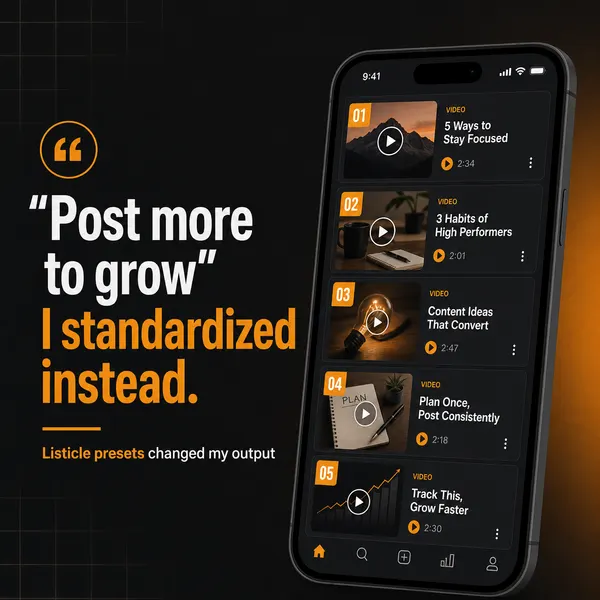
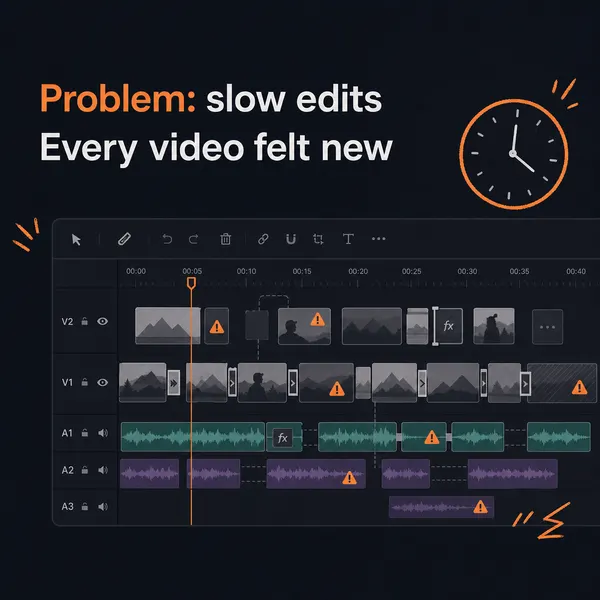
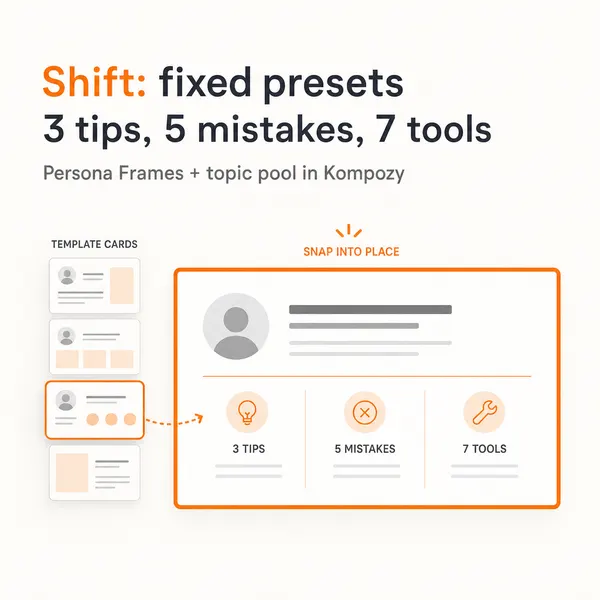
A five-slide carousel generated in the Kompozy workspace. A text model can write the points; Kompozy designs and publishes slides like these.


Who is this for, and who should skip it?
Best for:
- Enterprises and labs that want a frontier-scale model on their own infrastructure
- Teams reasoning over long transcripts and documents privately
- Builders who have read the license and fit within its terms
Not ideal for:
- Individuals who want to run a model on one machine
- Anyone who needs image or video input or output
- Creators who want finished, published posts
Frequently asked questions
What is Qwen3.8-2.4T-A95B?
It is the open-weight release of Alibaba's Qwen3.8-Max flagship, published on Hugging Face in August 2026. It is a mixture-of-experts model with roughly 2.4 trillion total parameters and about 95 billion active per token, a 262K-token native context extensible toward ~1M, and configurable reasoning depth. Per the official model card, the released checkpoint is text-only and runs in thinking mode.
Is Qwen3.8-2.4T-A95B worth it in 2026?
For a frontier-grade open model you can self-host — yes, it is one of the most capable open-weight releases of the year and efficient thanks to its MoE design. The caveats are real: it needs data-center-class hardware, ships under a custom license with extra terms for very large commercial users, and is text-only. It is not worth adopting for content production, because it generates no media, enforces no brand voice, and publishes nothing.
Is the open-weight release Apache 2.0?
No. Unlike smaller Qwen models, these weights ship under a custom "qwen3.8-max" license, Research and small-scale commercial use are allowed; very large products must credit the model, and model-as-a-service providers above $50 million in yearly revenue need a separate license. Read the license on the official model card before commercial use.
Can I run Qwen3.8-2.4T-A95B locally?
Not on a typical machine. A 2.4-trillion-parameter model is a data-center workload; because only ~95B parameters are active per token, serving cost tracks the active count, and serving stacks such as SGLang, vLLM, or TokenSpeed ease deployment — but realistic self-hosting means serious GPU infrastructure. For most people the hosted Qwen API is the practical path.
Is Qwen3.8-2.4T-A95B multimodal?
The released open-weight checkpoint is text-only, per the official model card. Alibaba's hosted Qwen3.8-Max tier adds vision input, but the downloadable artifact reviewed here does not accept images or video. Verify on the model card for your specific build.
Can Qwen3.8-2.4T-A95B create or publish social content?
No. It generates and reasons over text, but produces no video, images, or designs, holds no brand voice, and publishes to no platform. To turn its drafts into finished, on-brand posts across platforms you pair it with a content engine like Kompozy and bring its drafts in as source text.
Qwen3.8-2.4T-A95B or Kompozy for content?
Kompozy, without question. Qwen produces text; Kompozy generates video, images, carousels, blogs, and newsletters and publishes them across platforms. Use Qwen as a self-hosted model layer — even to analyze or draft — and Kompozy to produce and ship the finished content.
How do we know this?
We checked every price, date, benchmark and feature claim on this page against the Qwen3.8-2.4T-A95B model card and its LICENSE file on Hugging Face on 2026-10-23, and rewrote or removed any we could not confirm. Kompozy plan details come from kompozy.io/pricing.
Sources
- Hugging Face — Qwen/Qwen3.8-2.4T-A95B model card (read 2026-10-23)
- Hugging Face — Qwen3.8-2.4T-A95B LICENSE (read 2026-10-23)
- Hugging Face — Qwen/Qwen3.8-27B-FP8 model card (read 2026-10-23)
- Kompozy — Pricing (read 2026-10-23)
- AI Content Repurposing — The complete methodology for turning one source into 25-35 pieces of native-format content across every platform — without producing AI slop.
- Autonomous Content Creation — Most "autonomous" AI content is slop.
- AI Brand Voice & Persona — Without a Persona Brief, every AI output averages to the LLM default voice.
See Qwen3.8-2.4T-A95B vs Kompozy comparison → · Get Started →