Claude Docs & Claude Slides
Anthropic's in-conversation tools that build editable documents and presentations, exportable to Word, Google Docs, PowerPoint, and PDF.
Last verified · 2026-10-23 · by Moe Ameen
Published 2026-09-16 · Updated
Short answer
Claude Docs and Claude Slides are two Anthropic tools that launched in beta on September 16, 2026 inside the Claude app. Claude Docs drafts documents you can edit with colleagues and comment on, then export to Word or Google Docs. Claude Slides builds decks you edit slide by slide, present from Claude, or download as PowerPoint or PDF. Neither one posts to social media.
Key takeaways
- Docs and Slides launched in beta on September 16, 2026, as Anthropic folded Cowork into the main Claude app.
- Docs exports to Word or Google Docs; Slides downloads as PowerPoint or PDF.
- The rollout reached Pro and Max first, then Team and Free.
- A deck is a good content brief, but the files don't publish themselves.
What are Claude Docs and Claude Slides?
Claude Docs and Claude Slides are two tools Anthropic launched in beta on September 16, 2026 inside the unified Claude app. They let you build finished, editable files from a conversation: ask for a document or a deck and Claude produces it, then you keep working on it in place.
Claude Docs supports collaborative editing and in-document comments — Claude drafts sections, asks clarifying questions, and revises while colleagues edit the same file — and exports to Microsoft Word or Google Docs. Claude Slides builds presentations you can edit slide by slide, present directly from Claude, or download as a PowerPoint or a PDF.
They arrived as part of a bigger change: Anthropic is folding Claude Cowork into the main Claude app. In the merged experience there is no chat-versus-Cowork mode to choose — you describe what you need and Claude decides how much work the request calls for. Existing chats, projects, artifacts, connectors, and skills carry over. Anthropic also folded Claude Design into the conversation.
It rolls out in beta, reaching Pro and Max first on web, desktop, and mobile, then Team and Free, with enterprise notice.
For a creator, the clean framing is this: Claude Docs and Slides are excellent at making a deliverable — a report, a pitch deck, a lead-magnet PDF. They make nothing for a feed. There is no caption engine, no per-platform reframing, no brand-voice governance across formats, and no scheduler or publisher. The knowledge you put into a Claude deck is valuable; the file it lives in is invisible to your audience until you do something else with it.
What can you make with Claude Docs and Claude Slides?
- A drafted, editable document — report, brief, client one-pager, lead-magnet PDF — with Claude commenting and revising as you go
- A presentation deck you can edit slide by slide, present from Claude, or export to PowerPoint or PDF
- A collaborative doc multiple people edit at once, exported to Word or Google Docs
- A deck you present straight from Claude without exporting it
- A research synthesis or outline you turn into the source material for a content series
- A webinar or pitch deck whose individual points each become a separate social post downstream
What is the most useful part of a Claude Slides deck for social content?
The most valuable thing in a Claude Slides deck isn't the file — it's the ten sharp points inside it, one per slide. And a slide is already the right shape for a post: one idea, one hook, one payoff. That is the handoff Kompozy is built to exploit. Rather than treating the deck as a finished artifact, treat it as a content brief you happened to make in Claude, and let Kompozy turn each idea into a distinct, platform-native piece — so a single webinar deck becomes a week of posts instead of a PDF nobody opens.
Concretely: export the deck or the Claude Docs report and drop it into Kompozy's Quick Ingest. Each slide's point fans into a brand-exact Carousel Posts panel and a Quote Graphic; the doc's argument becomes a Blog Article and an Email Newsletter plus native Text Posts; and the whole thing can be delivered on camera as captioned Persona Shorts reading the same script. Every output is governed by one Persona Brief, so ten posts spun from one deck still sound like one voice with your banned words enforced. Then Kompozy schedules and fans the set across the eight social platforms plus blog and email with Autopilot, behind a per-post review gate. Claude builds the deck; Kompozy turns the deck into the campaign.
- In Claude, build the deck in Claude Slides or the report in Claude Docs, then export it (PowerPoint/PDF, or Word/Google Docs).
- Drop the export into Kompozy Quick Ingest as the source for a new content unit.
- Set your Persona Brief once so voice, tone, and banned words are locked across every output.
- Fan the source into formats — each slide or section becomes a carousel panel, quote graphic, text post, or clip; the whole doc becomes a blog and a newsletter; add captioned Persona Shorts for the on-camera version.
- Review each piece behind the per-post gate, then schedule and publish across the eight social platforms plus blog and email with Autopilot.
What does this look like in Kompozy?
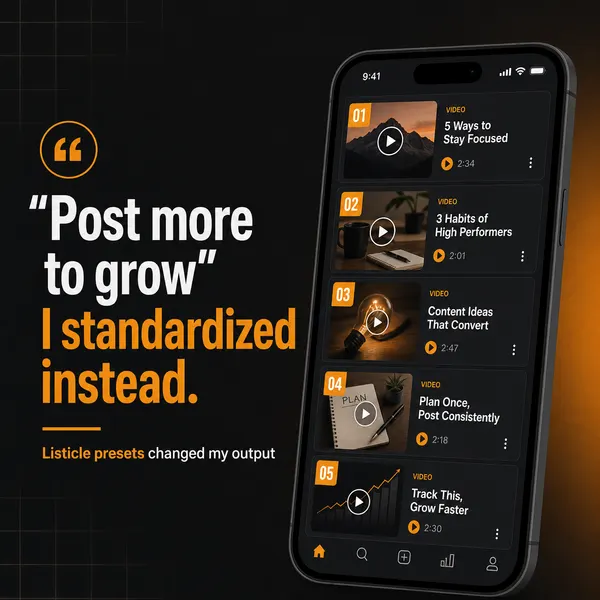
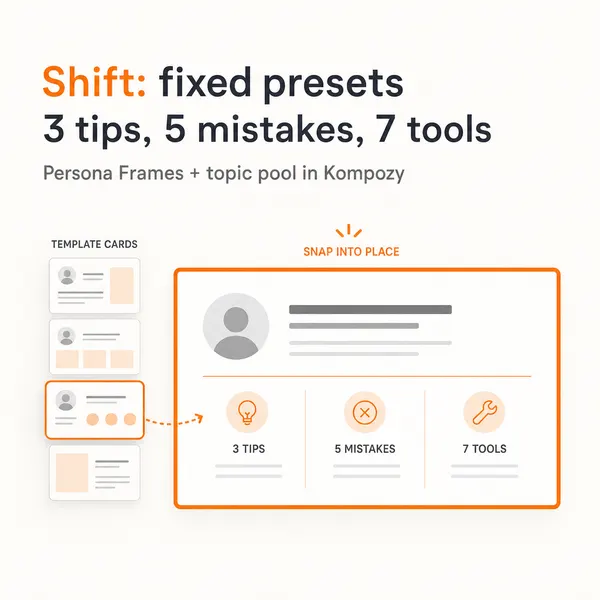
A real five-slide carousel made in the Kompozy workspace. It shows the swipeable format each point in a deck can turn into.


Who is this for, and who should skip it?
Best for:
- People who build reports, briefs, and pitch decks inside Claude already
- Teams that want to co-edit a document with Claude commenting
- Creators who want a webinar deck they can later break into posts
Not ideal for:
- Anyone who needs social posts, captions, or scheduling
- Teams locked into features of a full office suite that Claude's beta tools don't cover yet
- Enterprise users waiting on access. Enterprise rollout comes with separate notice
Frequently asked questions
What are Claude Docs and Claude Slides?
They are two tools Anthropic launched in beta on September 16, 2026 inside the unified Claude app. Claude Docs generates and collaboratively edits documents (export to Word or Google Docs); Claude Slides generates presentations you can edit slide by slide, present from Claude, and download as PowerPoint or PDF. They launched as Anthropic merged Claude Cowork into the main app.
What can Claude Slides export to?
Claude Slides lets you present directly from Claude or download a deck as a PowerPoint or a PDF. Claude Docs exports to Microsoft Word or Google Docs, with more export destinations planned.
Can Claude Docs or Slides post my content to social media?
No. They produce documents and decks — files that live on a drive or a shareable link. There is no caption engine, per-platform reframing, or scheduler. To turn a Claude-made deck or doc into captioned posts, carousels, a blog, and a newsletter published across platforms, you route it through a content engine like Kompozy.
How do I turn a Claude deck into social posts?
Export the deck (PowerPoint or PDF) and drop it into Kompozy Quick Ingest. Kompozy fans each slide's point into a carousel panel, a quote graphic, a text post, or a clip, turns the full deck into a blog and a newsletter, and can deliver it on camera as captioned Persona Shorts — all in one brand voice via the Persona Brief — then schedules and publishes across the eight social platforms plus blog and email.
How do we know this?
We checked every figure, date, and price on this page against the sources listed below on 2026-10-23, using VentureBeat's report on the September 16, 2026 launch. We removed claims about spreadsheets that we couldn't confirm there. Kompozy plan, format, and platform details come from kompozy.io and kompozy.io/pricing.
Sources
- VentureBeat — Anthropic is killing off Cowork and folding it into Claude, launching Claude Docs and Claude Slides (read 2026-10-23)
- Kompozy — Home (platforms, formats, Persona Brief, autopilot) (read 2026-10-23)
Related tools
- Cowork — Anthropic's Claude-powered desktop agent that reads, edits, and creates files on your computer to finish whole tasks.
- Claude Tag — Anthropic's always-on Claude teammate that lives in Slack, learns from your channels, and works tasks in-thread.
- Claude Science — Anthropic's AI research workbench that runs computational science end to end — analysis, visualization, and reproducible outputs in one place.
- Claude Sonnet 5 — Anthropic's cheaper, more agentic mid-tier Claude model — close to Opus 4.8 performance at a fraction of the price.
- Claude Opus 5.5 — Anthropic's September 2026 frontier Claude model — about 20% cheaper per token than Opus 5, more than 30% faster, with a #1 debut on the Artificial Analysis Intelligence Index and a new class of safeguards. A text-output model, not an image, audio, or video generator.
- AI Creative Director with Claude — A workflow that configures Claude as a creative director — it takes a rough idea through brief, concept, and finished per-platform drafts.