Cowork
Anthropic's Claude-powered desktop agent that reads, edits, and creates files on your computer to finish whole tasks.
Last verified · 2026-10-23 · by Moe Ameen
Published 2026-06-22 · Updated
Short answer
Claude Cowork is Anthropic's agent for knowledge work. You give it a goal and it carries out multi-step tasks across your files and connected tools, then hands back a finished deliverable. It is included in the Claude Pro, Max, Team, and Enterprise plans and runs on web, mobile, and desktop, with the desktop app reaching local folders and apps. It handles documents and data, not video or social publishing.
Key takeaways
- Cowork runs multi-step research, analysis, and document tasks instead of chatting about them.
- It comes with Claude Pro, Max, Team, and Enterprise.
- You choose which folders and tools it can touch, and it can wait for approval before acting.
- It renders no video or images and publishes nothing to social platforms.
What is Claude Cowork?
Cowork (Claude Cowork) is an agentic feature inside Anthropic's Claude desktop app. Instead of answering in a chat window, you point it at a folder on your computer, give it a goal, and it works — reading, editing, and creating files in the folders you grant it, and operating across the local apps you use — to hand back a finished deliverable rather than instructions for how to do it.
You hand off the multi-step work and keep the judgment calls.
Anthropic draws the line plainly: Claude Code is built for software engineering, and Cowork is built for non-coding knowledge work such as research, analysis, document creation, and other multi-step tasks. It pitches Cowork at marketing ops, sales, legal, and finance teams who handle recurring reports and document workflows.
Cowork is included in the Claude Pro, Max, Team, and Enterprise plans. It runs on web, mobile, and desktop, and the desktop app is what lets it reach the folders and applications on your own computer. You choose the folders and tools it can use, and with permission settings on, Claude shows its plan and waits for your approval before anything significant. Plans and limits change, so check Anthropic for current details.
One thing to keep straight: Cowork is a reasoning-and-files agent, not a media generator. It organizes documents, synthesizes research, extracts structured data, and drafts and edits text. It does not render video, generate social images, synthesize voices, or publish to social platforms. If you've seen it framed as a "content creation" tool, that means documents and data on your desktop — not captioned vertical video posted to TikTok.
What can you make with Cowork?
- Organized, renamed, and deduplicated local file libraries in folders you specify
- Research briefs and reports synthesized across multiple source documents
- Structured data extracted from unstructured files — contracts, PDFs, reports — into tables or spreadsheets
- First-draft documents assembled from your own source materials and templates
- Cleaned-up transcripts, outlines, and written drafts ready for the next step in your workflow
How does Kompozy turn Cowork's documents into published content?
Cowork is brilliant at the desk work: it synthesizes a research brief, cleans up a messy transcript, or drafts a document straight from the files on your laptop. What it hands back is a document — an input, not a published post. That handoff is exactly where Kompozy takes over. Drop a Cowork-prepared brief or transcript into Kompozy and one source asset fans out across all five output buckets: a short-form video, an image carousel, a blog draft, a newsletter, and platform-native text posts, each written in your own voice through your Persona Brief. Kompozy then does the parts no file agent can touch — rendering persona or avatar video, building quote cards and carousel slides, and burning in branded captions.
From there Kompozy reframes each clip for its destination's aspect ratio and schedules and publishes the whole set across TikTok, Reels, YouTube Shorts, X, LinkedIn, and the rest of the nine supported platforms from one queue. So the division of labor is clean: Cowork assembles the raw material on your computer; Kompozy turns that material into rendered, on-brand content and ships it everywhere. The brief that Cowork wrote becomes a week of cross-platform posts instead of a file sitting in a folder.
- Use Cowork to assemble the source on your desktop — synthesize research, clean a transcript, or draft a brief from your local files.
- Bring that document or transcript into Kompozy and pick the formats you want — short video, carousel, blog, newsletter, text posts.
- Let Kompozy generate each format in your voice via your Persona Brief, including persona or avatar video and branded captions.
- Reframe and caption the video for each platform automatically.
- Schedule and publish the whole set across TikTok, Reels, Shorts, X, LinkedIn, and more from one queue.
What does this look like in Kompozy?
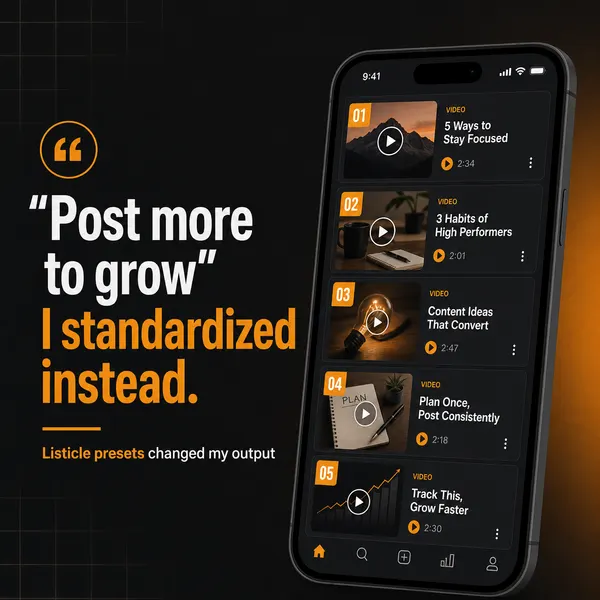
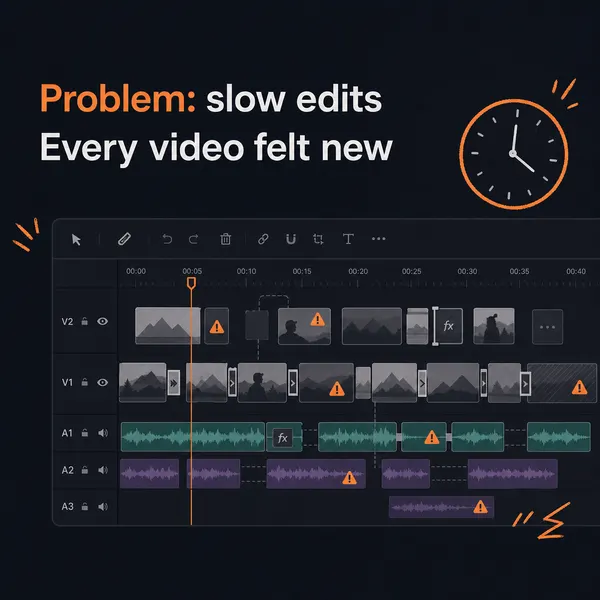
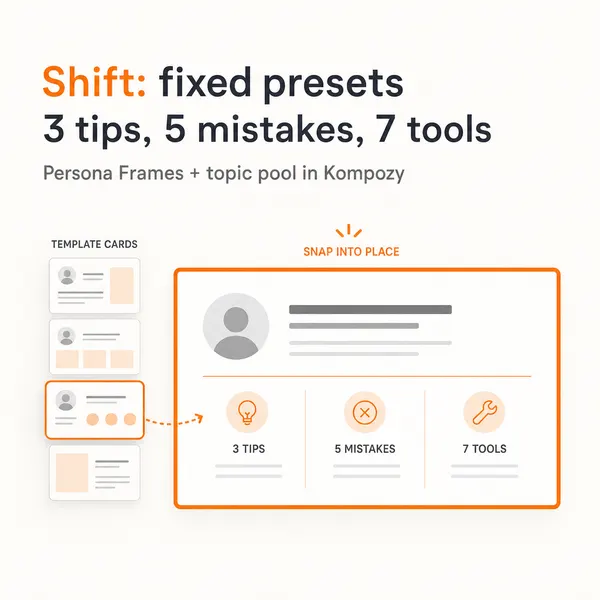
A real five-slide Carousel generated in the Kompozy workspace. It shows a format a written brief can become; it was not made from a Cowork document.


Who is this for, and who should skip it?
Best for:
- Analysts, ops, legal, and finance teams with recurring reports and document work
- Creators who want research briefs or cleaned-up transcripts assembled from their own files
- Existing paid Claude subscribers
Not ideal for:
- Software engineering work, which Anthropic points to Claude Code for
- Anyone who needs rendered video, graphics, or scheduled posts
Frequently asked questions
What is Claude Cowork?
Cowork is an agentic feature in Anthropic's Claude desktop app. You point it at a folder, give it a goal, and it reads, edits, and creates files on your computer — and works across local apps — to return a finished deliverable instead of just describing the steps.
How is Cowork different from regular Claude chat or Claude Code?
Regular Claude chat answers in a window; Cowork acts on your actual files and applications to complete a task end to end. Anthropic built Claude Code for software engineering and Cowork for non-coding knowledge work like research, analysis, and document creation.
What plans include Cowork?
Cowork is included in the Claude Pro, Max, Team, and Enterprise plans. It runs on web, mobile, and desktop, and you need the desktop app for access to your local folders and apps. Usage limits change, so check Anthropic for current details.
Can Cowork create or post social media videos and images?
No. Cowork is a reasoning-and-files agent — it organizes documents, synthesizes research, extracts data, and drafts text. It does not render video, generate social images, or publish to platforms. To turn its output into captioned video, carousels, and scheduled posts, pair it with a content engine like Kompozy.
Is it safe to let Cowork into my files?
Cowork is built around human oversight. You explicitly grant access to specific folders and connectors, it shows you its plan before acting, and consequential decisions stay with you rather than running unattended.
How do we know this?
We checked every figure on this page against the sources listed below on 2026-10-23 and removed or corrected any claim we could not confirm. Plan inclusion, platforms, and oversight features were read off Anthropic's Cowork product page on 2026-10-23. Kompozy plan and format details come from kompozy.io and kompozy.io/pricing.
Sources
- Claude — Cowork product page (read 2026-10-23)
- Kompozy — Pricing (read 2026-10-23)
- Kompozy — Home (formats and platforms) (read 2026-10-23)
Related tools
- Fable 5 — Anthropic's most powerful publicly available Claude model — a Mythos-class model made safe for general use.
- Mythos — Anthropic's frontier Claude language model — restricted at launch, reaching the public through Claude Fable 5.
- Claude Docs & Claude Slides — Anthropic's in-conversation tools that build editable documents and presentations, exportable to Word, Google Docs, PowerPoint, and PDF.
- AI Creative Director with Claude — A workflow that configures Claude as a creative director — it takes a rough idea through brief, concept, and finished per-platform drafts.
- Claude Opus 5.5 — Anthropic's September 2026 frontier Claude model — about 20% cheaper per token than Opus 5, more than 30% faster, with a #1 debut on the Artificial Analysis Intelligence Index and a new class of safeguards. A text-output model, not an image, audio, or video generator.
- Kimi Work — Moonshot AI's local desktop AI agent for knowledge work — it reads your files, drives your browser, schedules jobs, and runs a swarm of up to ~300 sub-agents on macOS and Windows.