How to grow on Instagram without Reels (2026 carousel-first playbook)
Grow on Instagram without Reels in 2026: lead with carousels, write caption keywords over hashtags, engineer DM sends and comments, then post on a real cadence.
Last verified · 2026-10-23 · by Moe Ameen
Published 2026-07-30 · Updated
Short answer
To grow on Instagram without Reels, make portrait carousels your main format, since Instagram's head Adam Mosseri has said carousels tend to get more reach than single photos. Mix in single images, infographics and quote graphics, and put searchable keywords in captions and your bio, because hashtags can no longer be followed. Design posts people will share and comment on, make your profile convert visitors, and post on a steady schedule.
Key takeaways
- Carousels can get a second chance: Instagram may show them again with a different slide to people who did not swipe.
- Hashtag following ended in December 2024. Put plain keywords in your caption and bio.
- Shares and comments are among the signals Instagram uses to recommend posts. Likes alone mislead.
- A weak first slide wastes the carousel, because nobody swipes to the rest.
- Treat your profile as a landing page: a clear bio, pinned carousels and one link.
You do not need Reels to grow on Instagram, but you do need to replace the reach Reels would have carried — and in 2026 the format that does that is the carousel. Instagram's head, Adam Mosseri, has said carousels tend to get more reach than single photos, partly because more pieces of media mean more interactions.
They also earn extra distribution structurally: if someone sees a carousel and does not swipe, Instagram can show it to them again with a different slide, so one post gets more than one chance at the same person.
The rest of the without-Reels playbook is the discovery and engagement mechanics Instagram now rewards regardless of format. Keywords in your captions and profile drive search and recommendations more than hashtags do (Instagram removed hashtag following back in December 2024). And shares count: Instagram lists sharing alongside likes, comments and saves among the signals it uses to recommend posts, and a send into someone's inbox is a strong vote that a post is worth seeing.
This guide is the practical build: pick the static formats that carry weight, structure a carousel that gets swiped and shared, write for keywords, engineer sends and comments, and run it all on a cadence you can actually sustain.
What format should replace Reels on Instagram?
- Make the carousel your primary format. Treat multi-slide carousels as the workhorse that replaces Reels reach. Build portrait slides so each fills more of the feed, with a scroll-stopping first slide and a clear ask on the last. Because Instagram can show a carousel again with a different slide to people who did not swipe, a carousel that people swipe deep into keeps earning impressions long after a single image would have died.
- Structure every carousel as hook, value, then one ask. Plan the narrative before you design: write for one specific reader, open with a hook that names their problem, deliver genuinely useful (but not exhaustive) value across the middle slides, and close with a single call to action. A face on the first slide and big, high-contrast text on clean white space consistently stop the scroll better than a busy graphic. Keep it "useful but incomplete" so the value lands without giving away everything.
- Use static formats beyond the carousel too. A no-Reels feed still needs variety: single images and infographic-style posts for one sharp idea, quote graphics for saveable one-liners, and text-led posts that read like a point of view. Camera-roll photos — behind-the-scenes shots, candids, a mirror selfie — often land better than polished stock or brand photography because they read as real. Rotate formats so the profile does not become nine identical carousel covers.
- Write captions for keywords, not hashtags. Instagram surfaces posts in search and recommendations based on the words in your caption and profile, and you can no longer follow a hashtag, so keyword clarity beats hashtag stuffing. Put the plain phrase your audience would search — the topic, the problem, the niche — into the first line of the caption and your bio. Keep a few relevant hashtags if you like, but make the caption itself readable and specific.
- Engineer for sends and comments. Shares and comments are among the signals Instagram uses to recommend posts, so design each post to be shared and discussed. Make posts worth forwarding to a friend (a checklist, a hot take, a "tag someone who" moment), and end with a question that invites a real reply rather than a like. A keyword-comment prompt paired with a DM-automation tool is a legitimate way to convert that reach, but the share is the growth engine.
- Optimize the profile as a landing page. When a carousel earns a non-follower a visit, the profile has to convert. Write a bio that states who you help and how in searchable plain language, pin your strongest carousels to the top of the grid, and keep one clear link. Growth without Reels leans harder on this step because more of your reach lands people on the profile cold rather than mid-scroll.
- Commit to a sustainable cadence and measure it. Consistency compounds more than any single post. Pick a rhythm you can defend for months — a few carousels a week plus lighter static posts — and post into the windows when your audience is active. Watch reach from non-followers, sends, saves, and profile visits in Insights; double down on the hooks and topics that get shared, and cut the ones that only get likes.
What mistakes hold back Instagram growth without Reels?
- Chasing likes is optimizing for the wrong metric. Sends and comments drive distribution to new people; a post with modest likes but a busy comment thread and shares outperforms a heavily-liked post nobody forwarded.
- A weak first slide wastes the whole carousel. If the cover does not stop the scroll, the algorithm never sees the swipe-through and re-serve behavior that makes carousels win.
- Hashtag stuffing does little now — you cannot follow hashtags, and keywords in the caption and bio do the discovery work. A wall of tags reads as spam without helping reach.
- Over-polished stock photography can underperform authentic camera-roll images. Instagram audiences reward content that looks real over content that looks like an ad.
- Square carousels leave feed space on the table. Portrait slides occupy more screen than square ones.
- Posting in bursts then going quiet resets momentum. A carousel-first strategy still depends on steady frequency, not a monthly batch dump.
Why do static formats matter for a no-Reels strategy, and where does Kompozy fit?
A no-Reels strategy lives or dies on static formats, and static is where Kompozy generates the most polished, brand-exact output — it is not a video tool that happens to do images. Point it at one source (a blog post, a webinar, a transcript, a set of notes) and it generates the exact carousel-first stack this playbook calls for: brand-exact Carousel Posts rendered through HyperFrames so every slide holds your fonts, colors, and layout instead of a Canva template you rebuild each week, plus Photo Posts, Infographic Photos, Quote Graphics, and keyword-written Text Posts for feed variety.
The copy is governed by your Persona Brief, so the caption leads with the searchable keywords Instagram now ranks on, not hashtag filler.
Instagram is one of its nine social platforms, so approved posts publish natively on a schedule, with autopilot keeping the forward queue full and a per-post review pipeline letting you tune the hook and the call to action before anything ships.
Honest limit: Kompozy fills the feed, but the sends and the comment replies that actually spread a carousel are human work it deliberately leaves to you — it produces the shareable asset and the ask; you work the DMs and the thread. Starter ($199/mo, 5,500 credits, 4 platforms) covers a few carousels plus lighter static posts a week; Pro ($499/mo, 18,000 credits, 9 platforms) suits a daily static cadence fanned across platforms with autopilot; Enterprise is available through Contact Sales for multi-brand programs.
What does this look like in Kompozy?
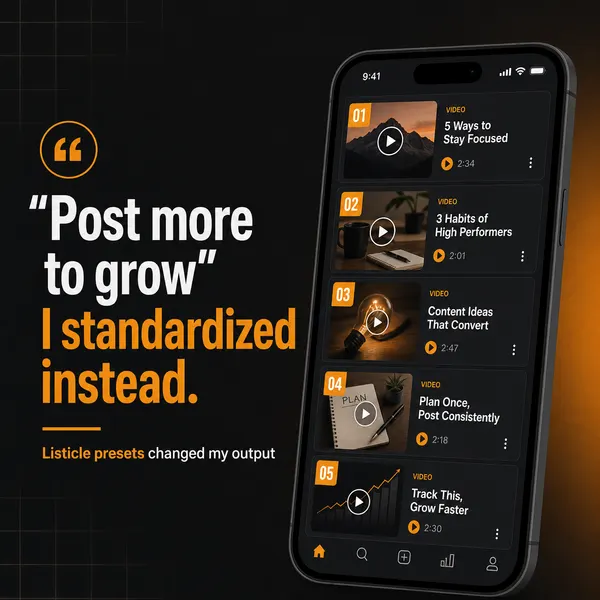
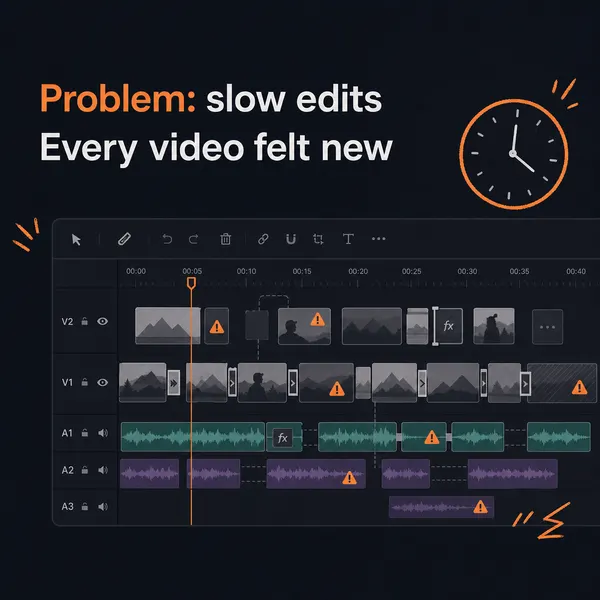
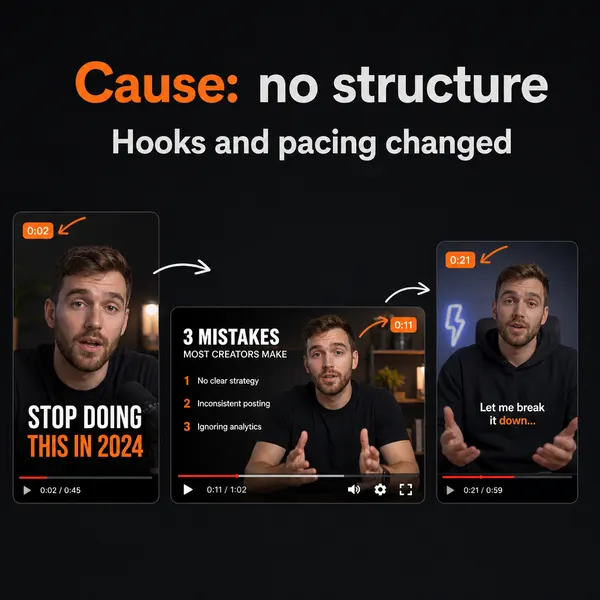
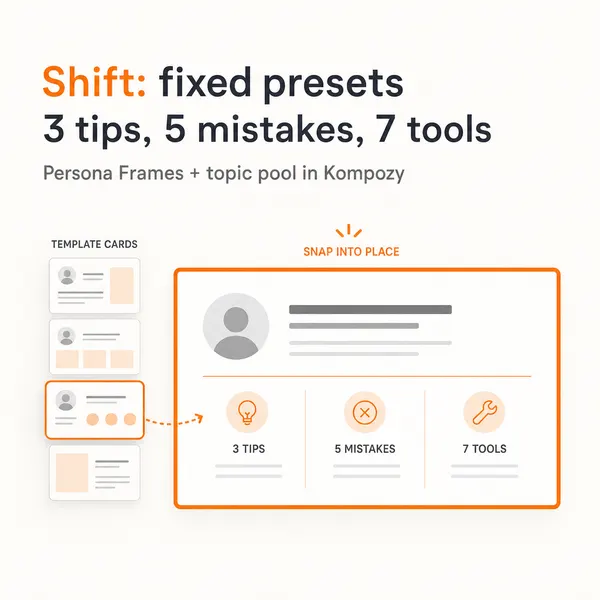
A real carousel made in the Kompozy workspace, shown as an example of the format. It was not made for this guide.
Who is this for, and who should skip it?
Best for:
- Creators and brands who would rather not film short-form video.
- Teaching or advice accounts that can turn ideas into multi-slide carousels.
- Teams that want carousels and static posts in their brand template every week.
Not ideal for:
- Accounts whose audience mostly watches Reels. Skipping video costs you that reach.
- Anyone hoping Kompozy will answer DMs and comments. That work stays human.
- Brands that only post in bursts. This approach depends on a steady cadence.
Frequently asked questions
Can you really grow on Instagram without posting Reels?
Yes. Instagram's head, Adam Mosseri, has said carousels tend to get more reach than single photos, so a carousel-first feed can carry much of the reach Reels would. You still need the discovery and engagement mechanics — caption keywords, sends, and comments — that Instagram rewards regardless of format.
Why do carousels get more reach than single images?
Two reasons: they hold attention longer as people swipe, and Instagram can show the post again with a different slide to someone who did not swipe, giving one post more than one chance. They also invite saves and shares, which Instagram counts among its ranking signals.
Do hashtags still matter on Instagram in 2026?
Far less than they used to. Instagram removed the ability to follow hashtags in December 2024, and keywords in your caption and profile now drive search and recommendations more effectively. Use a few relevant hashtags if you want, but write the caption for the plain words your audience searches.
What is the single most important engagement metric for reach?
Shares are a strong one. Instagram lists sharing with likes, comments and saves among the signals it uses to recommend posts, and a post someone forwards to a friend has cleared a high bar. Design posts to be forwarded and to earn a real reply.
How do we know this?
On 2026-10-23 we checked the carousel, hashtag and ranking-signal statements against the sources listed below. Kompozy plan details come from kompozy.io/pricing.
Sources
- RouteNote: Instagram carousels perform better than single photos, according to the head of Instagram (read 2026-10-23)
- Content Marketing Institute: What does Instagram’s hashtag move mean for marketers? (read 2026-10-23)
- Instagram: Instagram ranking explained (read 2026-10-23)
- Kompozy: Pricing (read 2026-10-23)
Related tutorials
- How to maximize Instagram marketing in 2026
- Best time to post on Instagram (2026 data + finding your own window)
- How to add a different caption to each Instagram carousel slide (2026)
- How to build a social media calendar (2026 planning workflow)
- How to build an Instagram caption strategy that scales (2026)
- How to disclose AI-generated content on Instagram (label posts, Reels, and Stories, 2026)