AI-Generated Staging Drew Boos at Bayreuth's 150th-Anniversary Wagner 'Ring'
On August 1, 2026, the Bayreuth Festival closed its 150th-anniversary Ring cycle with an AI-generated 'Götterdämmerung' — stage projections assembled by an AI system. The audience applauded the singers and booed the creative team.
2026-08-04 · by Moe Ameen
Published 2026-08-04 · Updated
Short answer
The Bayreuth Festival, marking 150 years in 2026, staged Wagner's "Götterdämmerung" on Saturday, August 1, with AI-assisted projections built from images curator Marcus Lobbes and his team pre-selected. Organizers said beforehand it was the first time AI took part on stage there. The audience booed and whistled Lobbes's team at the curtain call and warmly applauded conductor Christian Thielemann and the singers.
Key takeaways
- Bayreuth's August 1, 2026 "Götterdämmerung" used AI-assisted projections, a first for the festival's stage.
- The images came from material Marcus Lobbes's team pre-selected, including scenes from earlier Ring productions.
- The creative team got boos and whistles; Thielemann, the singers and the musicians got warm applause.
- The AI was announced in advance, so the backlash was about the result, a puzzling collage.
What happened at Bayreuth's AI-assisted "Götterdämmerung"?
On Saturday, August 1, 2026, the Bayreuth Festival — the Wagner shrine in Germany founded by the composer in 1876 and marking its 150th anniversary this year — staged "Götterdämmerung," the final opera of the four-part "Ring" cycle, in a production built around AI-generated stage projections.
Organizers had announced in advance that this was the first time AI would take part on stage at the festival, framing it "not as a character, but as an image-generating force," with the singers meant to be a fixed point inside a constantly shifting cosmos of projected light and imagery. When the creative team came out for the curtain call, the audience answered with boos and whistles — while reserving warm applause for the cast and conductor Christian Thielemann.
The production was curated by Marcus Lobbes, who directs the Academy for Theater and Digitality in Dortmund, and his team. The system built its projections from images the team pre-selected, including scenes from earlier Bayreuth "Ring" productions and historical material, and the festival said every performance would be unique "because the images and associations never stand still."
The projected collage juxtaposed images including former German Chancellor Helmut Kohl, the towers of the World Trade Center after the September 11 attacks, and a postage stamp marking German reunification in 1990 — associations many in the hall found genuinely puzzling.
The AI use was announced before the performance, so the reaction was not a surprise-reveal backlash of the kind that has hit AI films and images elsewhere. It was aimed at the result. The collage puzzled much of the audience: a stream of associations that never resolved into a clear meaning, on a stage where meaning is the point. The music landed very differently. Thielemann, the singers and the musicians drew warm applause.
Why does the Bayreuth backlash matter for creators who use AI?
- Disclosure didn't defuse it — again. Bayreuth flagged the AI in advance and the audience booed anyway. Being upfront is necessary but not sufficient; audiences react to the AI output itself, not just to hidden use.
- The failure was coherence, not capability. The projections were visually rich but didn't cohere into narrative. That's exactly what raw prompt-to-image generation produces when nothing supplies editorial control — a lesson that scales straight down to a creator's feed.
- Prestige and craft contexts punish unguided AI hardest. On a 150-year-old stage where the point is human artistry, machine-assembled visuals read as cheapening. The higher the craft expectation, the more brand control and a human pass matter before anything ships.
- "Every performance is unique" means nobody's in control. Non-deterministic, ever-shifting output is a feature in an art installation and a liability anywhere a consistent message or brand has to land the same way twice.
- Human direction is still the differentiator. The music won the night; the AI lost it. The takeaway for creators isn't "avoid AI" — it's that AI is a tool under human curation, and the value is in the governance layer around it, not the raw generation.
How can creators use AI without the incoherence Bayreuth was booed for?
This is a live, high-engagement culture story with a clean hook — the world's most tradition-bound opera festival booed its own AI — and there's a short window to have a smart take on it while people are searching. If you cover theater, the arts, or the AI debate, the move today is to turn one opinion into a full spread rather than a single tweet that scrolls past. Point Kompozy at your angle on Bayreuth and it generates the native versions across formats in one pass: a Persona Shorts talking-head reaction for the video feeds, a Carousel that walks through the collage and why scenography is a human craft, platform-shaped text posts, a Blog Article for the searchers, and an Email Newsletter for your list — 20 output formats across the eight social platforms plus blog and email, then Autopilot schedules and publishes the batch while the story is still hot. That's the difference between reacting once and owning the conversation everywhere it's happening.
The deeper reason to reach for a real engine here is that Bayreuth failed at the exact thing raw generation always fails at, and that Kompozy is built to fix: coherence and human curation. The boos weren't for "AI images" — they were for images that never resolved into a message. A prompt box hands you an ever-shifting stream and walks away; Kompozy wraps generation in the layer that was missing on that stage. The Persona Brief governs voice and message so every asset says the same thing on-brand, HyperFrames renders your carousels and graphics pixel-exact instead of leaving text and framing to a model's whim, and a per-post review pipeline keeps a human in the loop before anything publishes. You get AI's speed and breadth — persona video, carousels, blogs, newsletters the tool alone can't make — without shipping the incoherent, uncontrolled output that got the loudest theater in the world whistled at.
What are the key facts about the Bayreuth AI staging?
- August 1, 2026: the Bayreuth Festival closed its 150th-anniversary Ring cycle with an AI-generated 'Götterdämmerung' staged with AI-assisted projections.
- Organizers billed AI as an "image-generating force" working from images pre-selected by curator Marcus Lobbes and his team, including scenes from earlier Ring productions.
- The audience booed and whistled the creative team at the curtain call, but gave warm applause to the singers and conductor Christian Thielemann.
- AI use was disclosed in advance; the backlash was about the result — a puzzling collage (Helmut Kohl, the WTC after 9/11, a reunification stamp) that never cohered into meaning.
What does this look like in Kompozy?
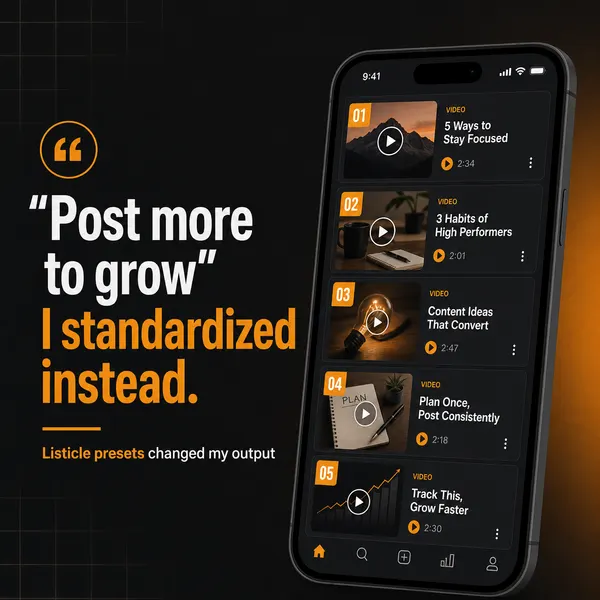
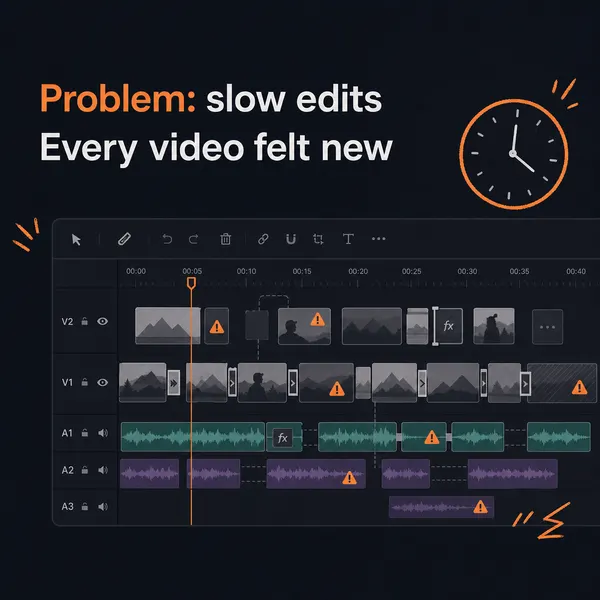
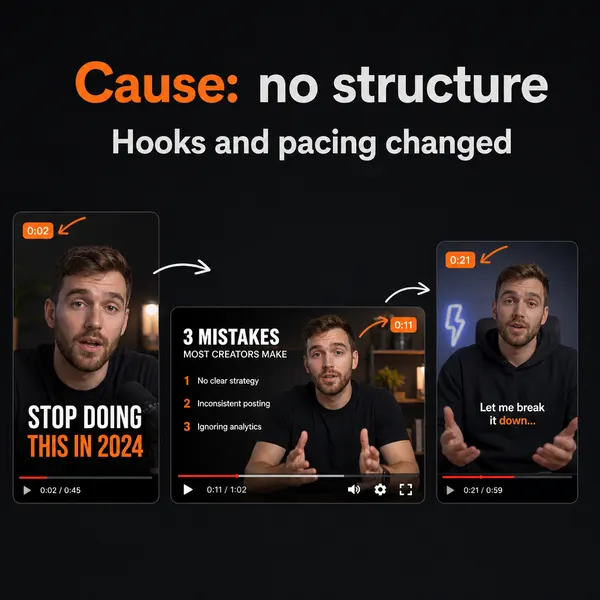
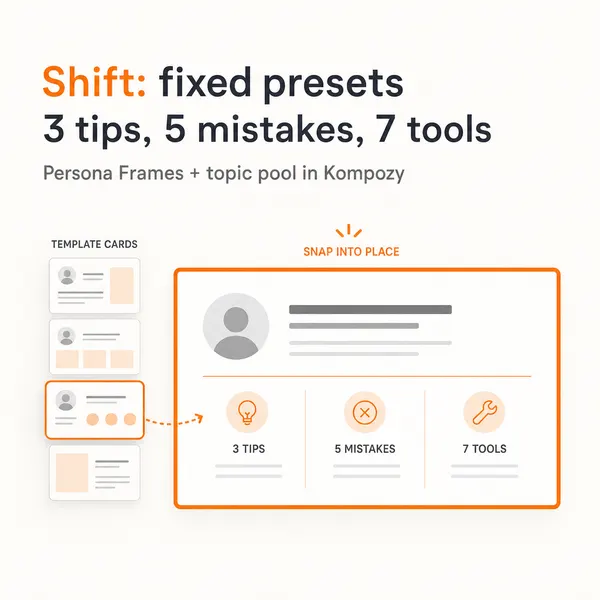
Here is a five-slide carousel from the Kompozy workspace. Text and images sit in a fixed brand frame and a person reviews it before it ships, which is the structure the Bayreuth collage lacked.
Who is this for, and who should skip it?
Best for:
- Creators covering arts, culture or the AI debate who want a timely, well-sourced angle.
- Brands deciding how much human review AI visuals need before they go public.
Not ideal for:
- Readers looking for a full opera review. This page covers the AI staging, not the music.
- Anyone expecting proof that AI visuals always fail. One production does not show that.
Frequently asked questions
What happened at the Bayreuth Festival with AI?
On August 1, 2026, the Bayreuth Festival — celebrating its 150th anniversary — staged Wagner's "Götterdämmerung," the final opera of the Ring cycle, built around AI-generated stage projections. The festival called it the first time AI took part on stage "not as a character, but as an image-generating force." At the curtain call, the audience booed the creative team while warmly applauding the cast and conductor Christian Thielemann.
Did AI replace the set designer at Bayreuth?
Not entirely. The production was built around projections assembled by an AI system curated by director Marcus Lobbes and his team. It drew on images the team pre-selected, including scenes from earlier Ring productions and historical material, and generated shifting projections around the singers rather than a fixed, hand-designed stage picture.
Why did the audience boo if the AI was disclosed in advance?
Because the objection was to the output, not to the surprise. The festival announced the AI ahead of time, so this wasn't a hidden-use scandal. The audience booed the result: a puzzling collage — Helmut Kohl, the World Trade Center after 9/11, a German reunification stamp — left many unsure what it meant. The music, by contrast, drew warm applause.
How can a creator use AI without the incoherence Bayreuth got booed for?
The failure was missing human curation and brand control, not the AI itself. The fix is generation wrapped in governance: a defined brand/voice brief so every asset stays on-message, brand-exact rendering for anything with text, and a human review pass before publishing. An engine like Kompozy adds all three around AI generation — and then distributes the finished piece as persona video, carousels, blogs, and newsletters across platforms — so output ships coherent and on-brand instead of as an uncontrolled stream of associations.
How do we know this?
We checked every figure, date and quote on this page against the sources listed below on 2026-10-23, and removed or rewrote claims we could not confirm. Kompozy plan and format details come from kompozy.io/pricing.
Sources
- Michael West Media (dpa) — AI-assisted staging draws boos at Wagner festival (read 2026-10-23)
- The Star — AI-assisted staging draws boos at the Richard Wagner festival in Germany (read 2026-10-23)
- MIZ — 150 Jahre Bayreuther Festspiele (read 2026-10-23)
- Kompozy — Pricing (read 2026-10-23)
Related news
- An AI-Generated Poster Won the Ohio State Fair's Contest and Its $1,000 Prize — Then the Fair Moved to Ban AI
- Adobe Faces a Photoshop Backlash as Its AI Push and Firefly Credits Fuel a Creator Exodus
- Midjourney Wants Disney, Universal, and Warner Bros. to Reveal How They Use AI
- YouTube Clarifies Its AI "Slop" Rules: Three Kinds of Content That Can't Be Monetized