Google Is Testing "AI Contribution," a Search Console Pilot That Pays Publishers When Their Content Feeds AI Answers
The early-stage pilot pays sites when their content contributes significantly to generating AI Overviews, AI Mode, and Gemini answers — usage-based and reported through a new Search Console panel.
2026-09-15 · by Moe Ameen
Published 2026-09-15 · Updated
Short answer
AI Contribution is a Google Search Console pilot that pays some publishers when their content contributes significantly to answers in Gemini, AI Overviews and AI Mode. Digiday reported it on September 14, 2026, and Google confirmed it as an early-stage learning pilot. Content that only confirms a fact or is linked after an answer is generated does not count, and the payout method is undisclosed.
Key takeaways
- Google is piloting AI Contribution payments in Search Console for a limited group of publishers.
- Only content that contributes significantly while an answer is generated earns anything.
- A Search Console panel shows monthly earnings; actual payments can differ because of taxes or thresholds.
- At least dozens of publishers were approached, mostly small and mid-sized, and well beyond news.
What is Google's AI Contribution pilot?
Google is running an early-stage pilot, called "AI Contribution," that pays publishers when their content helps generate AI answers across Gemini, AI Overviews, and AI Mode. The program surfaced publicly on September 14, 2026, in a Digiday report; the underlying Search Console feature was first spotted around April 2026, but its purpose as a compensation program wasn't clear until this reporting. Google confirmed the pilot's existence and described it as "an early-stage learning pilot to test how best to reward high-quality content, on top of the traffic and tools it already provides."
The mechanism is usage-based. A publisher accumulates earnings when its content "contributes significantly" to an AI-generated response while that answer is being created. Google's own framing draws a hard line here: content that merely confirms a fact, or gets linked to after a response has already been generated, does not qualify. Only content that materially shapes the answer as it's produced earns anything.
Reporting runs through Search Console. After a publisher agrees to the program's terms, a dedicated AI-contribution panel appears showing monthly earnings and some historical data, and publishers can opt out at any time through Search Console settings. The catch is transparency: Google has not disclosed how individual payouts are calculated — one executive who saw the panel described the methodology as "quite black box" — and actual payments may differ from the figure shown because of taxes or payment thresholds.
Scope is still small and unconfirmed. At least dozens of publishers have reportedly been approached, though the total could not be confirmed, and the outreach reaches beyond news publishers, with reporting suggesting it appeals more to small and mid-sized sites than to the largest ones. Treat the whole thing as a limited test: Google has not committed to specific rates, a payout formula, a wider rollout, or a timeline. Confirm current terms in Google's own documentation before making decisions around it.
Why does Google paying for AI contributions matter for creators?
- This is Google paying for content inside its own walls, on terms you can't see. A "black box" payout with no disclosed formula, no query data, and no per-answer attribution is not a channel you can optimize — it's a check that arrives, or doesn't.
- It rewards fresh, first-hand, factual content — the kind that shapes an answer as it's generated. Recycled or thin content that only gets cited after the fact earns nothing, which raises the bar on originality.
- Payment does not equal traffic. Even a paying AI contribution keeps the reader inside Google's answer; you get a usage credit, not a visitor, a subscriber, or a follower you can reach again.
- The economics are opaque and untested. With no published rate and payouts that can differ from the displayed number after taxes and thresholds, no creator can yet plan a business around what this pays.
- The durable takeaway is the same as every AI-search shift: the content worth producing is original enough to be worth paying for — so produce more of it, and distribute it where you own the audience, not only where a platform meters it.
How should creators respond to AI Contribution with Kompozy?
Read the fine print and the strategy writes itself: Google will only pay for content that contributes significantly — fresh, factual, first-hand material that actually shapes an answer — and it pays nothing for the thin, after-the-fact stuff. So the winning move isn't to chase an opaque payout; it's to make more of the original content that qualifies, and to make sure each piece also earns you an audience Google's panel can't. Kompozy is built for exactly that multiplier. Take one genuine insight — a client call, a teardown, a data point you actually know — and Kompozy turns it into a Blog Article and an Email Newsletter that carry the depth grounding systems favor, plus captioned Persona Shorts, brand-exact Carousel Posts, Photo Posts, and Quote Graphics, all written to one voice by the Persona Brief.
The point is where those outputs go. Google's pilot credits you inside its answer and keeps the reader there; Kompozy's Autopilot schedules and fans your set across the eight social platforms plus blog and email, behind a per-post review gate, so the same original idea builds a following, a list, and a blog audience you can reach directly — reach a black-box payout can never give you. If Google's usage credit shows up, treat it as a bonus on content you were already publishing everywhere. Don't let a metered payment inside one platform become the reason you produce; own the distribution first, and let the contribution check ride on top.
What are the key facts about Google's AI Contribution pilot?
- Google is piloting "AI Contribution," a Search Console program that pays publishers when their content contributes significantly to generating Gemini, AI Overviews, and AI Mode answers. It surfaced publicly September 14, 2026.
- It's usage-based: earnings build up only when content shapes an answer. Content that only confirms facts or is linked after an answer is generated does not qualify.
- A Search Console panel shows monthly earnings and some history after a publisher accepts the terms; opting out is available in settings. The payout methodology is undisclosed — described by one executive as "quite black box."
- At least dozens of publishers have reportedly been approached (unconfirmed total), beyond just news, with more appeal to small and mid-sized sites. Google has committed to no rate, formula, timeline, or wider rollout.
- Even a paying contribution keeps the reader inside Google's answer — it's a credit, not a visitor. The durable response is to produce more original content and distribute it across channels you own.
What does this look like in Kompozy?
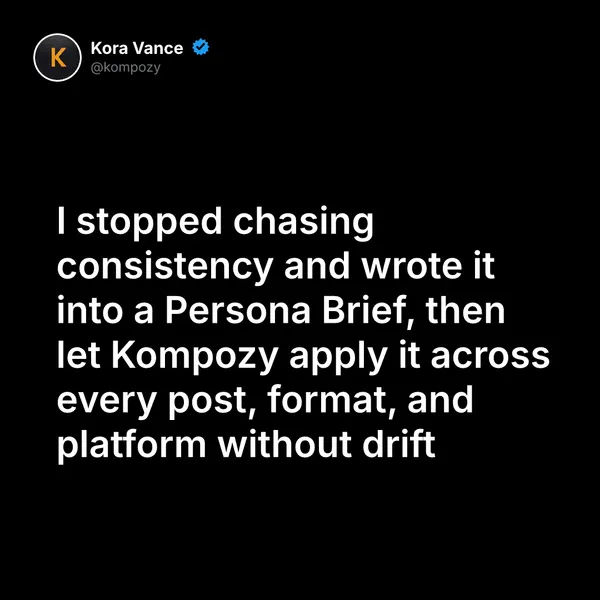
A quote graphic made in Kompozy. One original insight can become a post like this on channels you own. It is not about Google's pilot.
Who is this for, and who should skip it?
Best for:
- Small and mid-sized publishers with original, factual content who get invited.
- Site owners tracking how Google values content used in AI answers.
Not ideal for:
- Anyone planning a business on the payouts. Google has not published rates or a formula.
- Creators who need readers or subscribers. A contribution credit keeps the reader inside Google.
Frequently asked questions
What is Google's AI Contribution pilot?
It is an early-stage Google program, reported publicly on September 14, 2026, that pays publishers when their content contributes significantly to generating AI answers in Gemini, AI Overviews, and AI Mode. It works through a dedicated Search Console panel that shows accumulated monthly earnings, and Google has described it as a learning pilot to test how best to reward high-quality content on top of the traffic and tools it already provides.
How does Google decide what content gets paid?
Payment accrues only when your content "contributes significantly" to an AI-generated response while that answer is being created. Google says content that merely confirms a fact, or is linked to after a response has already been generated, does not qualify. The exact payout methodology is not disclosed — one executive who saw the panel called it "quite black box" — and Google has not published a rate or formula.
How are AI Contribution earnings shown and paid out?
After a publisher accepts the terms, a panel in Search Console shows monthly earnings and some history. Tracking earnings and sending payments are separate steps, and the amount actually paid can differ from the reported earnings because of tax deductions or local payment thresholds.
Should a creator change strategy because of this?
Not around the payout itself, which is small-scale, opaque, and uncommitted for now. The useful signal is that Google pays for original, fresh, first-hand content — so make more of it. But a contribution credit keeps the reader inside Google's answer; it is not a visitor or a subscriber. The durable move is to publish that original content across channels you own. A tool like Kompozy turns one insight into a blog, newsletter, shorts, carousels, and images, then schedules and publishes them across the eight social platforms plus blog and email.
How do we know this?
We checked every figure, date and quote on this page against the sources listed below on 2026-10-23, and removed or rewrote claims we could not confirm. Kompozy plan and format details come from kompozy.io/pricing.
Sources
- Search Engine Land — Google tests paying publishers for using its content in AI Mode, AI Overviews and Gemini (read 2026-10-23)
- Search Engine Journal — Google tests paying publishers for AI answers via Search Console (read 2026-10-23)
- Kompozy — Pricing (read 2026-10-23)
Related news
- Google Gives Publishers New Controls to Fight AI-Driven Traffic Losses, Led by an Embeddable "Preferred Sources" Button
- Google Admits Its Search Console AI Search Reporting Is Inadequate — No Clicks, No Real Position, No Queries
- Google Search Console's AI Performance Report Rolls Out Worldwide — You Can Finally See Your AI Overviews and AI Mode Impressions