Xiaomi Releases the MiMo-V2.6 Series — Three Omni-Modal Reasoning Models Built for Professional Workflows
Xiaomi rolled out MiMo-V2.6 in September 2026 as a three-model lineup — a trillion-parameter flagship (Pro), a low-cost workhorse (Flash), and a latency-tuned UltraSpeed variant — all omni-modal and available through its API and third-party providers.
2026-09-22 · by Moe Ameen
Published 2026-09-21 · Updated
Short answer
Xiaomi released the MiMo-V2.6 series on September 22, 2026. It has three omni-modal reasoning models: Pro, a trillion-parameter flagship; Flash, a low-cost model for high-volume calls; and Pro-UltraSpeed, which Xiaomi says runs at Pro level up to 20x faster. Pro and Flash are open weights on Hugging Face under an MIT license with a 1M-token context window. For creators, MiMo helps with reading and drafting, not publishing.
Key takeaways
- Xiaomi released MiMo-V2.6 on September 22, 2026 as three models: Pro, Flash and Pro-UltraSpeed.
- Pro is the trillion-parameter flagship. Xiaomi says UltraSpeed gives Pro-level output up to 20x faster.
- Pro and Flash ship as MIT-licensed open weights on Hugging Face and take text, images, audio and video.
- Both list a 1M-token context window, enough for a full webinar transcript in one prompt.
- MiMo reads and drafts. Turning that into finished, published posts is a separate job.
What did Xiaomi release with MiMo-V2.6?
Xiaomi has released the MiMo-V2.6 series, the latest step in the large-language-model family it launched in April 2025 with the reasoning-focused MiMo-7B. The V2.6 lineup is three distinct models rather than a single model: MiMo-V2.6-Pro, described by Xiaomi as its "most powerful flagship reasoning model — omni-modal, ultra-high performance, trillion-parameter," aimed at complex projects, long-horizon tasks, and research; MiMo-V2.6-Flash, a full-modality, lower-cost reasoning model built for high-frequency calls and large-scale workloads; and MiMo-V2.6-Pro-UltraSpeed, which Xiaomi says delivers flagship Pro-level performance up to 20x faster for real-time and latency-sensitive use.
"Omni-modal" is the theme across the series: the models are built to take in text, images, audio, and video rather than text alone, positioned by Xiaomi as flagship models "built for professional workflows." Xiaomi's Hugging Face model cards list a 1M-token context window for Pro and Flash, long enough to hold an entire book, a full webinar transcript, or a large research corpus in a single prompt. MiMo sits inside Xiaomi's broader "Human x Car x Home" AI strategy and its reasoning work has been led by Luo Fuli, who joined Xiaomi from DeepSeek.
The models are reachable through Xiaomi's own MiMo API platform and through third-party gateways such as OpenRouter — and, for two of the three, by downloading the weights directly. Xiaomi published both MiMo-V2.6-Pro and MiMo-V2.6-Flash as open weights on Hugging Face under an MIT license, permitting commercial use and self-hosting, including the trillion-parameter flagship. Pro-UltraSpeed is on Xiaomi's API model list but is not among the Hugging Face downloads. Because the series just launched, treat exact per-model pricing and benchmark specifics as still settling — confirm the current details on Xiaomi's official MiMo pages before you rely on them.
Why does MiMo-V2.6 matter for creators?
- A cheaper, faster reasoning model is an ingestion upgrade for creators. The value of a model like MiMo for a content workflow is reading and reasoning over messy source material — transcripts, PDFs, research, comment threads — and a low-cost Flash tier makes doing that at volume affordable.
- Omni-modal input means your source can be a video or audio, not just text. A model that ingests audio and video directly can summarize a podcast episode or a screen recording without a separate transcription step, which shortens the path from raw footage to usable notes.
- A million-token context changes what "one source" can be. You can hand a full course, a long webinar, or a quarter of customer calls to the model at once and ask for the throughline, instead of chopping it into fragments and losing the connective tissue.
- The model is not the bottleneck — distribution is. A stronger reasoning model drafts and analyzes faster, but it still does not caption a clip, size a carousel, keep a face consistent, or publish to nine destinations. That last mile is where the creator hours actually go.
- More competition at the frontier is good for creators who bring their own key. A capable, low-cost model that plugs into tools via a standard API gives creators leverage on cost — the ingestion step gets cheaper without changing the finished output.
How can creators act on MiMo-V2.6 with Kompozy?
A new omni-modal reasoning model is an upgrade to the reading and thinking step of a content workflow, not the shipping step — and the shipping step is where the week disappears. MiMo can reason over a long transcript or a video and hand you sharp raw material; it cannot turn that into captioned shorts, a brand-exact carousel, a face-consistent avatar video, a blog, and a newsletter, then schedule and publish them. Kompozy is the engine that does. Use MiMo for the reading and drafting, then bring what it gives you into Kompozy for everything after that.
Here is the concrete move today. Feed one source — a long webinar, a research doc, a batch of calls — through the ingestion step, then let Kompozy fan it into finished formats governed by a single Persona Brief: captioned Persona Shorts and Clipped Shorts, brand-exact Carousel Posts, Photo Posts, Quote Graphics, a Blog Article, and an Email Newsletter. Autopilot then schedules and publishes the set across the eight social platforms plus blog and email, each piece clearing a per-post review gate first. The model got better at reasoning; Kompozy is what turns that reasoning into content your audience actually sees.
What are the quick takeaways on MiMo-V2.6?
- Xiaomi released the MiMo-V2.6 series in September 2026 — three omni-modal reasoning models: Pro (trillion-parameter flagship), Flash (low-cost, high-frequency), and Pro-UltraSpeed (flagship performance up to 20x faster).
- The models take in text, images, audio, and video; Pro and Flash list a 1M-token context window.
- MiMo launched in April 2025 with MiMo-7B and sits inside Xiaomi's "Human x Car x Home" AI strategy; reasoning work is led by Luo Fuli, formerly of DeepSeek.
- Access is via Xiaomi's MiMo API platform, third-party gateways like OpenRouter, or self-hosting — Pro and Flash weights are published under an MIT license on Hugging Face; confirm current pricing and benchmarks on Xiaomi's official pages.
- For creators, a model like MiMo upgrades ingestion and reasoning, not distribution — turning its output into finished, published multi-format content is what an engine like Kompozy does.
What does this look like in Kompozy?
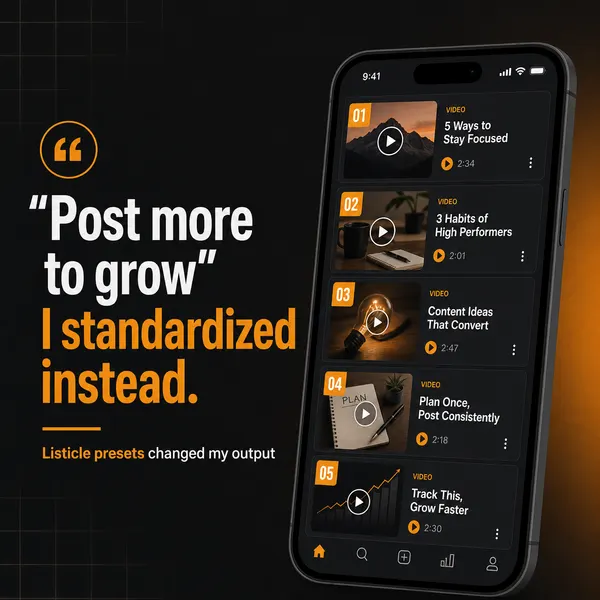
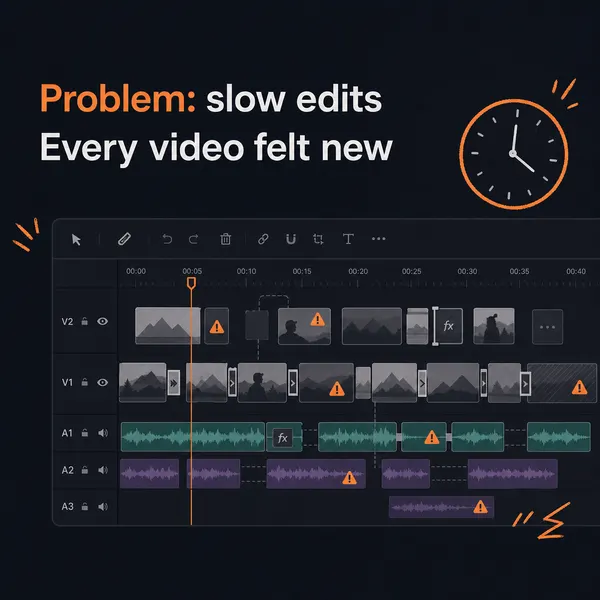
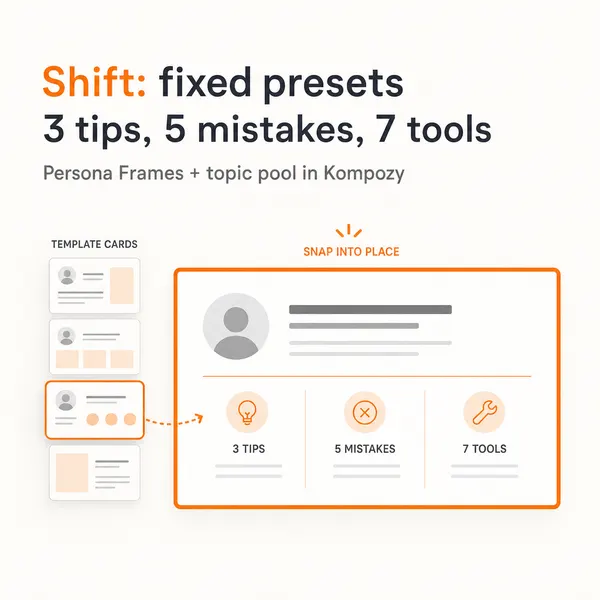
This five-slide carousel came out of the Kompozy workspace. It is the kind of finished post a creator could build from notes a reasoning model like MiMo drafts.


Who is this for, and who should skip it?
Best for:
- Creators and teams who want a cheap, open-weight model to read long transcripts, PDFs, audio or video
- Developers who want to self-host a large omni-modal model under an MIT license
- Anyone comparing reasoning models for research and first drafts
Not ideal for:
- Creators who need finished videos, carousels or scheduled posts, since MiMo outputs text only
- Teams without the hardware or API setup to run or call a trillion-parameter model
- Anyone who needs settled pricing and benchmarks today, since the series is new
Frequently asked questions
What is Xiaomi MiMo-V2.6?
MiMo-V2.6 is the September 2026 release in Xiaomi's MiMo family of large language models. It is a three-model series — Pro (a trillion-parameter flagship reasoning model), Flash (a low-cost, full-modality model for high-frequency use), and Pro-UltraSpeed (flagship performance up to 20x faster). All three are omni-modal, taking in text, images, audio, and video.
Is MiMo-V2.6 open source?
Largely, yes. Xiaomi published both MiMo-V2.6-Pro (the trillion-parameter flagship) and MiMo-V2.6-Flash as open weights on Hugging Face under an MIT license, permitting commercial use and self-hosting. Pro-UltraSpeed is listed on the Xiaomi API model page but is not among the Hugging Face downloads. Check Xiaomi's official MiMo pages for current status.
How can a content creator use MiMo-V2.6?
A model like MiMo is best at the ingestion and reasoning step — reading and summarizing long transcripts, PDFs, audio, or video and drafting raw material. It does not caption clips, build carousels, keep an avatar's face consistent, or publish. To turn that output into finished, on-brand posts across platforms, pair it with a content engine like Kompozy.
What is the context window of MiMo-V2.6?
The Hugging Face model cards for MiMo-V2.6-Pro and MiMo-V2.6-Flash list a 1M-token context window, large enough to hold a full book, a long webinar transcript, or a sizable research corpus in a single prompt. Confirm the exact figure for each model on Xiaomi's official MiMo documentation.
How do we know this?
We checked every figure, date, quote and product claim on this page against the sources listed below on 2026-10-23, and removed or rewrote anything we could not confirm. MiMo details come from Xiaomi's model update page and its Hugging Face model cards. Company history comes from Wikipedia. Kompozy plan and format details come from kompozy.io.
Sources
- Xiaomi MiMo — Model updates (MiMo-V2.6 series) (read 2026-10-23)
- Hugging Face — XiaomiMiMo/MiMo-V2.6-Pro-RL model card (read 2026-10-23)
- Hugging Face — XiaomiMiMo/MiMo-V2.6-Flash-RL model card (read 2026-10-23)
- Hugging Face — XiaomiMiMo organization (read 2026-10-23)
- Wikipedia — Xiaomi MiMo (read 2026-10-23)
- Kompozy — Pricing and plans (read 2026-10-23)
Related news
- New Research Says Google AI Mode and AI Overviews Are Cutting Clicks to Publishers — Here Is What the 2026 Data Actually Shows
- LinkedIn Is Testing a "Network" Tab — an Alternative Feed Built Only From Your Connections and Follows
- Alibaba Releases Qwen3.8-Omni-Flash, a 1M-Context Omni-Modal Model Built for Agentic Audio and Video — With Audio Input Costs Cut Roughly 98%
- StepFun Previews Step 5, a Cheap, High-Scoring Reasoning Model With a 1M-Token Context
- xAI Releases Grok 4.7, Its Most Powerful Model for Coding and Knowledge Work