Email vs newsletter vs nurture vs transactional: when each format wins in 2026
Broadcast, newsletter, nurture, and transactional email: the job each format wins, the deliverability rules behind it, and how to run all four together in 2026.
Published 2026-05-19 · Updated
Short answer
Email has four formats, and each does a different job. Broadcasts announce launches and time-sensitive offers. Newsletters are recurring content that builds an audience. Trigger-based nurture sequences convert people after a signup, trial or demo. Transactional emails such as receipts and password resets must stay purely functional. Strong programs run all four on one segmentation layer and watch total sends per subscriber.
Key takeaways
- Broadcasts carry news; newsletters build the audience.
- Nurture sequences fire on a user action and aim at one conversion.
- Keep transactional email free of marketing, ideally on its own subdomain.
- beehiiv is free up to 2,500 subscribers; Kit is free up to 10,000.
- Over-mailing in one format hurts all four.
This is the operator framework: what each format is for, the deliverability and cadence rules that govern it, the ESP pricing reality of running them (re-checked on vendor pricing pages on 2026-10-23), and the architecture that wires all four together off one segmentation layer. Pairs with our email-marketing-tools-2026 platform comparison and email-list-growth-ai growth playbook.
Which job does each of the four email formats win?
Email is not one channel — it is four formats with four different jobs, four different cadences, and four different deliverability profiles. Most programs treat them as interchangeable and pay for it: a launch buried in a newsletter slot, a nurture sequence that reads like a content digest and converts nobody, a receipt stuffed with upsells that drags the whole sending domain into spam. The honest mapping, before any of the nuance:
| Format | Job it wins | Cadence | Typical length | Primary metric |
|---|---|---|---|---|
| Broadcast | Launches, announcements, time-sensitive offers | Ad hoc, a few times a month at most | Short, single CTA | Clicks and conversion on the offer |
| Newsletter | Audience-building, retention, thought leadership | Recurring (weekly or biweekly) | Longer, multi-section | Engagement and long-term retention |
| Trigger nurture | Conversion: lead to trial, trial to paid, churn-risk to retained | Event-driven, tightly spaced, time-boxed | Short, single CTA each | Sequence conversion rate |
| Transactional | Utility: confirmations, receipts, resets, alerts | Real-time on user action | As short as possible | Delivery |
Read the table as a job-to-be-done allocation, not a ranking. You do not pick one format; a mature program runs all four, each doing the one job it is shaped for. The rest of this guide walks each format, then collapses them into a single architecture and a cadence plan that keeps them from cannibalizing each other or torching your sending reputation.
What is broadcast email for?
A broadcast is a one-time send to a segment, fired when there is a specific reason: a product launch, a price change, an event invite, a time-sensitive offer, a major company update. It is not scheduled and not recurring, which is what separates it from a newsletter. The discipline that makes broadcasts work is restraint: one clear CTA, a short body and a reason the recipient can feel in the first line. A broadcast that tries to carry three asks gets clicks on none of them.
The classic broadcast mistake is using it as a content channel ("here are five tips") when that belongs in a newsletter, or as a conversion channel (a multi-email drip) when that belongs in a nurture. Broadcast is for the thing that is true today and not next week. Cadence matters more than operators expect: an occasional broadcast reads as a brand with news, while frequent broadcasts teach the list to read every send as promotional, and that hurts engagement across all four formats because providers judge your whole domain.
What is a newsletter for?
A newsletter is a recurring, scheduled, content-driven send. Its job is to build and keep an audience that will still be opening in a year, which is the asset every other format draws on. Converting this week is the job of a different format. That is why a newsletter is judged on engagement and long-term retention, not immediate conversion. A newsletter that sells hard every week becomes a promotional broadcast on a schedule, and subscribers learn to ignore it. Keep it mostly genuine content with a light offer.
Cadence is the most consequential newsletter decision. Weekly is the common choice and the one many audiences attach to; biweekly works in slower niches; monthly sits at the edge where attachment fades because subscribers forget you between sends. The platform follows from your business model, and the cost curve matters. Newsletter-first creators often run beehiiv (free up to 2,500 subscribers, then Lite at $59/mo or Pro at $109/mo) or Kit (free up to 10,000 subscribers; Creator from $33/mo at 1,000 subscribers, rising with list size). The full breakdown lives in email-marketing-tools-2026; the point here is that newsletter cost grows with list size, so the platform choice is a multi-year commitment.
How does trigger-based nurture convert?
A nurture sequence is event-driven, not scheduled. It fires when a subscriber does something (signs up, starts a trial, hits a usage milestone, abandons a cart, drifts toward churn) and runs a short, tight sequence aimed at one conversion. Spacing inside a nurture is much tighter than a newsletter, and the sequence has a fixed window, after which the subscriber has either converted or rolls back into the regular newsletter. Each email is short with a single CTA, because a nurture email that offers three next steps converts on none of them.
The defining nurture mistake is writing nurture like a newsletter: content with no conversion ask, which wastes the trigger. The trigger is the most valuable signal email gives you, because the subscriber just told you where they are in the lifecycle. A nurture that answers with a generic "thanks for subscribing, here is some content" throws that away. Nurture is also where segmentation pays back hardest, because the trigger already gives you the lifecycle stage; layering persona and behavior on top is what makes the sequence feel written for the reader. The automation-depth comparison in email-marketing-tools-2026 covers which ESPs are strongest here.
Cold outbound is a special case of trigger-based sending with inverted rules: the recipient has no relationship with you, so warm-list tactics actively hurt. It runs on a different tool stack (Smartlead Base $39/mo, Pro $94/mo, Unlimited Smart $174/mo; Instantly Growth $47/mo) and a different deliverability discipline. If your "nurture" is really cold acquisition, treat it as its own program; the full playbook is in cold-email-2026.
What is transactional email, and why must it stay pure utility?
Transactional emails are system-generated and tied to an account action: order confirmations, receipts, password resets, security alerts, shipping updates. The job is pure utility: get the user the information they need, fast and short. They are among the most-opened emails anyone sends precisely because they contain nothing but what the user asked for.
That high engagement is exactly why the temptation to bolt marketing onto transactional is so destructive. A "your order shipped" email with three product recommendations underneath mixes your transactional sending reputation with your marketing reputation, and inbox providers increasingly score the blend as marketing — which drags deliverability on the emails users genuinely need. Worse, in many jurisdictions it converts a transactional email into a commercial one with the consent and unsubscribe obligations that follow. Keep transactional purely functional; if you have something to sell, that is a broadcast or a nurture email, sent separately. Many serious operators send transactional from a separate subdomain entirely to wall off the reputation.
How do you choose the right email format?
When operators ask "should this be a newsletter or a broadcast," the honest answer is a function of three things: is the content recurring, is there a conversion ask, and is it triggered by a user action. The matrix below resolves the four formats off those axes.
| Your situation | Format | Why | Common wrong pick |
|---|---|---|---|
| Recurring content with no hard conversion ask | Newsletter | Builds the audience asset every other format draws on | Broadcast (burns the news framing on routine content) |
| One-time, time-sensitive, single ask | Broadcast | Lands now, to a segment, with one clear CTA | Newsletter (arrives a week late on the wrong cadence) |
| Triggered by a user action, aimed at a conversion | Trigger nurture | Uses the lifecycle signal the trigger just gave you | Newsletter (wastes the trigger, no conversion ask) |
| System event the user needs to know about | Transactional | Utility, reliable delivery, walled-off reputation | Marketing email dressed as transactional (deliverability damage) |
| Reaching people with no prior relationship | Cold outbound (nurture variant) | Inverted rules + separate sending stack | Treating it as a warm broadcast (spam complaints) |
How do you run all four formats together?
The four formats are not a menu you pick from — they are a system. Run correctly, each one feeds the others: the newsletter builds the audience, intent signals from that audience drop people into nurture, broadcasts land into a warm list the newsletter has kept engaged, and transactional quietly does its job without dragging anyone's reputation down. The architecture, in order of dependency:
- Newsletter is the anchor. It builds the list, retains attention, and keeps the sending reputation warm so everything else lands. Without it, broadcasts and nurtures fire into a cold, decaying audience.
- Nurture sequences convert. Any subscriber who signals intent — starts a trial, downloads a lead magnet, books a demo, lapses into churn risk — gets pulled out of the general newsletter flow into a focused, time-boxed conversion sequence, then rolls back when it ends.
- Broadcast handles the news. Launches, price changes, events, urgent updates — anything true today and not next week. Sent to a segment, not the whole list, so the news is relevant to who receives it.
- Transactional handles utility, walled off. Functional only, ideally on a separate subdomain, so its high engagement never mixes with marketing reputation.
The connective tissue under all four is one segmentation layer. The same lifecycle, persona and behavior tags that route a subscriber into the right nurture also decide which segment a broadcast goes to and which newsletter variant they see. Four separate segmentation schemes is how programs become unmaintainable. The content side is the same story: one brand voice has to hold across a launch broadcast, a weekly newsletter and a long nurture, or the program reads as four different companies. That voice-consistency problem is what content-repurposing and a defined brand voice solve: one source of truth feeds every format instead of each being written from scratch.
Where do AI and Kompozy fit across the four formats?
AI does not change the architecture — it changes the production cost of three of the four formats. Newsletter, broadcast, and nurture are all content problems: someone has to write them in a consistent voice, on cadence, without sounding like generic AI slop. Transactional is the exception; it is a templated utility and AI adds nothing there. The leverage is in collapsing the authoring cost of the content-bearing three so a small team can actually run the full architecture instead of defaulting to whichever one format they have time for.
This is where Kompozy sits: upstream of the ESP, not competing with it. Kompozy's newsletter bucket produces the email payload (subject-line variants, preview text, body copy in your brand voice, inline images, CTA blocks) from your sources. Kompozy can send a newsletter through a connected Mailchimp account; for triggered sequences and conditional blocks, you load the drafts into the ESP that runs your automation. The same Persona Brief that voices the newsletter also voices the broadcast and the nurture copy, which keeps all four formats sounding like one company. Kompozy Starter ($199/mo, 5,500 credits) covers a solo or small operation; Pro ($499/mo, 18,000 credits) and Agency ($999/mo, 55,000 credits) cover heavier output. See pricing for current plans. The division of labor: Kompozy answers "what do I send and how do I keep it on-voice across formats," and your ESP answers "deliver it and track engagement."
How do you keep email formats from cannibalizing each other?
Running all four formats without a cadence plan produces over-mailing, which is the fastest way to torch a sending reputation — the inbox provider scores total volume and complaint rate across your whole domain, so a heavy week of broadcasts can suppress your newsletter open rate for a month. The honest cadence ceilings per format:
- Newsletter: weekly or biweekly. Pick one and commit; an irregular newsletter underperforms a consistent one, because attachment comes from predictability.
- Nurture: tightly spaced inside the sequence and time-boxed, after which the subscriber rolls back to the newsletter cadence. Never run two conversion nurtures at the same subscriber at once.
- Broadcast: occasional. Frequent broadcasts teach the list to read everything as promotional. Suppress recent broadcast recipients from the next broadcast segment to avoid stacking.
- Transactional: real-time and uncapped, but walled off on a separate subdomain so its volume never counts against your marketing reputation.
- Cross-format suppression ties it together: a subscriber mid-nurture should usually be suppressed from broadcasts, and a heavy broadcast week should pause the lowest-value nurture touches. Watch total touches per subscriber per week, not per-format volume.
Get the cadence plan right and the four formats compound: the newsletter keeps the list warm, nurtures convert the warm list, broadcasts land because the list is warm, and transactional stays clean. Get it wrong and they cannibalize — over-mailing on one format suppresses deliverability on all four at once.
What does this look like in Kompozy?
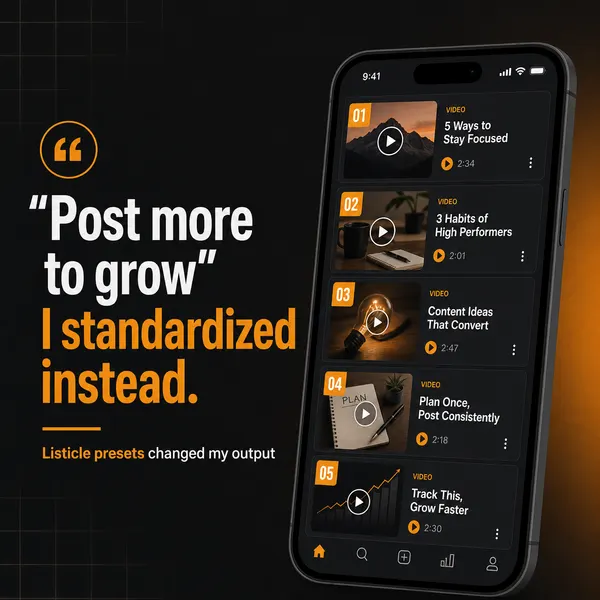
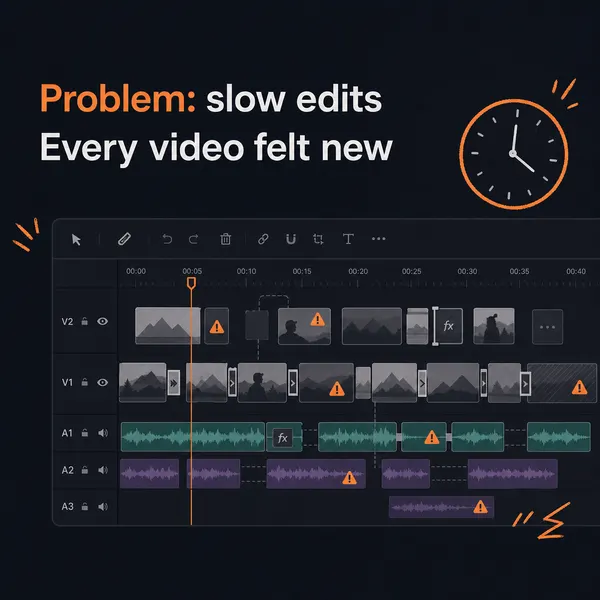
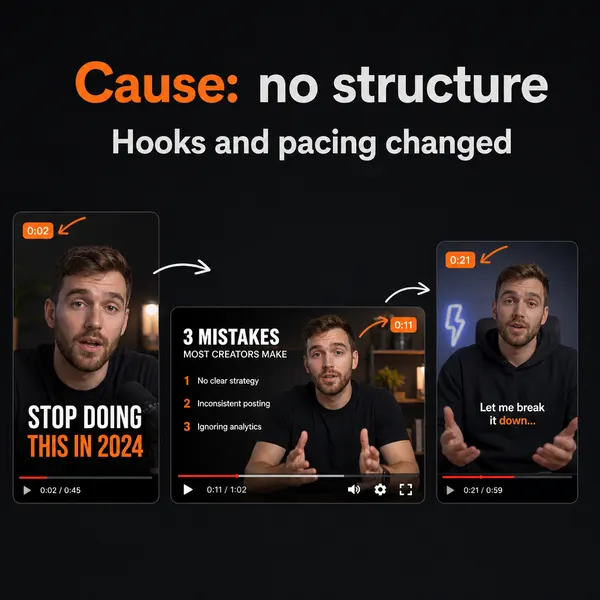
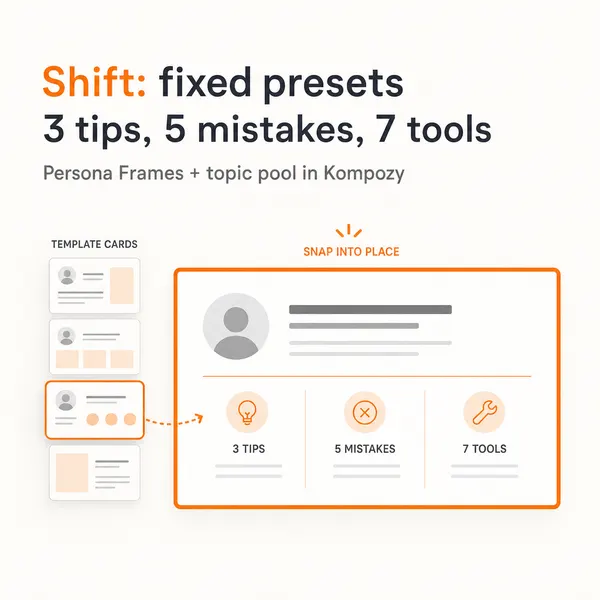
A five-slide carousel generated in the Kompozy workspace. The same Persona Brief behind it can write a newsletter, a broadcast and a nurture email in one voice.
Who is this for, and who should skip it?
Best for:
- Teams relying on one email format today
- SaaS companies with nurture but no newsletter
- Creators with a newsletter but no conversion sequence
Not ideal for:
- Cold outbound programs, which need a separate stack
- Teams looking for a full ESP comparison
- Senders with only transactional email
Frequently asked questions
What is the difference between a broadcast and a newsletter?
A broadcast is a one-off send for something true today, like a launch. A newsletter is a recurring, scheduled send built for audience retention.
Can transactional emails include marketing?
Avoid it. Mixing promotions into receipts and resets blends their reputation with your marketing mail and can create consent obligations.
What do beehiiv and Kit cost?
beehiiv is free up to 2,500 subscribers, then $59/mo on Lite and $109/mo on Pro. Kit is free up to 10,000 subscribers, with Creator from $33/mo at 1,000 subscribers.
Where does Kompozy fit?
Kompozy writes newsletter, broadcast and nurture copy in one brand voice. It can send newsletters through a connected Mailchimp account, and you load other drafts into your ESP.
How do we know this?
We checked the platform rules and tool prices on this page against the sources listed below on 2026-10-23. Benchmarks we could not trace to a published source were removed. Kompozy plan details come from kompozy.io/pricing.
Sources
- beehiiv: Pricing (read 2026-10-23)
- Kit: Pricing (read 2026-10-23)
- Smartlead: Pricing (read 2026-10-23)
- Instantly: Pricing (read 2026-10-23)
- Kompozy: Pricing (read 2026-10-23)
- Google Workspace Admin Help: Email sender guidelines (read 2026-10-23)
Which other AI email marketing guides should you read next?
- Designing email sequences with AI: welcome, nurture, win-back, retention — The 4 essential email sequence templates for 2026, the trigger architecture each requires, and the AI-augmented production workflow that ships them in days not weeks.
- Best AI email marketing tools 2026: ConvertKit, Beehiiv, Customer.io, HubSpot compared — The five leading AI-augmented email platforms in 2026 compared on automation depth, segmentation, AI-assist features, and price-per-active-subscriber.
- AI-augmented email list growth: lead magnets, opt-ins, and the new sources that work — The 6 list-growth tactics that work in 2026 — AI-generated lead magnets, exit-intent overlays, content upgrades, gated content, partnerships, social-driven opt-ins. With expected per-source conversion rates.
- AI subject lines that earn 40%+ open rates in 2026 — The 5 subject-line patterns that work in 2026, the AI workflow for generating variants, and the banned phrases that tank open rates instantly.
- Email deliverability in 2026: staying out of spam in the AI-content era — How spam filters changed in 2026 to detect AI-generated email at scale, the technical setup (SPF, DKIM, DMARC, BIMI) that still matters, and the content rules that determine inbox placement.
- Email personalization beyond {{first_name}}: behavioral + dynamic at scale — How to do real email personalization in 2026 — behavior-triggered content, dynamic blocks per segment, AI-generated paragraphs personalized to the recipient. With deliverability guardrails.
Which related topic clusters cover this from another angle?
- Content Automation — Daily publishing as engineering, not willpower. RSS feeds, webhooks, scrapers, Persona Briefs, and 9-platform scheduling, wired into pipelines that run without you.
- Creator Economy Tools — The creator economy in 2026 is more tooled than ever. This is the operator-grade map: which tools win which categories, where the consolidation is happening, and the minimum stack that builds a durable creator business.